A controversial bill seeking to legalize surrogacy and egg donation in Nigeria has ignited fierce opposition from medical experts, religious leaders, and civil society organizations.
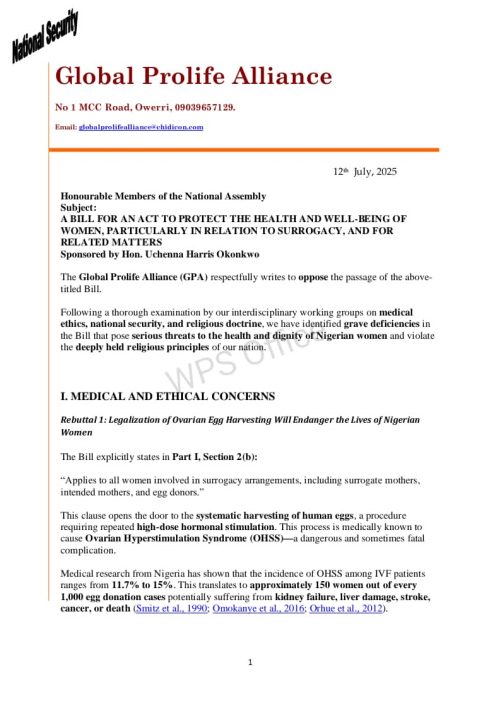
The proposed legislation, titled “A Bill for an Act to Protect the Health and Well-Being of Women, Particularly in Relation to Surrogacy, and for Related Matters”, is sponsored by Hon. Uchenna Harris Okonkwo and currently before the National Assembly.
The Global Prolife Alliance (GPA), a prominent advocacy group, has led calls for the bill’s rejection, describing it as a “fatal deception” that poses grave risks to women’s health, violates religious teachings, and threatens national security.
In a press release signed by its chairman, Academician Dr. Philip C. Njemanze, GPA warned that legalizing surrogacy could institutionalize the exploitation of Nigerian women by international fertility syndicates.
“This Surrogacy Bill is not a protective health measure—it is a Trojan horse for reproductive exploitation and global biotech profiteering. Nigerian women must not become commodities in a \$30 trillion fertility trade,”* Dr. Njemanze declared.
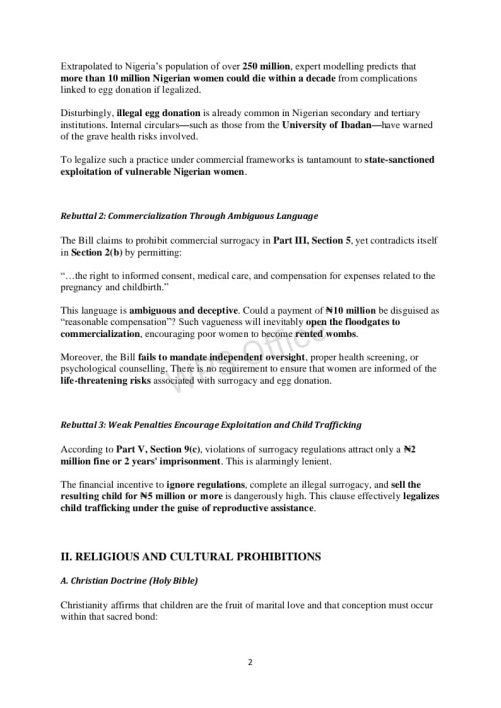
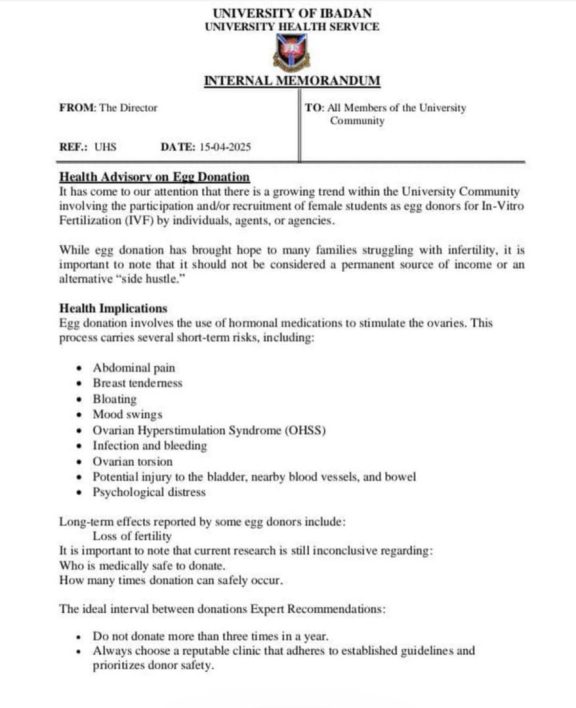
According to GPA, the bill’s inclusion of “egg donors” under Part I, Section 2(b), could have catastrophic consequences. The group noted that egg donation involves repeated hormonal injections that can cause Ovarian Hyperstimulation Syndrome (OHSS), a potentially fatal complication. Nigerian studies cited by GPA estimate OHSS incidence rates of 11.7% to 15% among IVF patients.
“When extrapolated to Nigeria’s population of over 250 million, this could lead to over ten million female deaths within a decade,”* GPA warned.
It also highlighted a disturbing rise in illegal egg donation among young women in secondary and tertiary institutions, describing the trend as “state-sanctioned exploitation” if legalized.
GPA also accused the bill of enabling commercialization of surrogacy through ambiguous language. Although Part III, Section 5 claims to prohibit commercial surrogacy, Section 2(b) authorizes “the right to informed consent, medical care, and compensation for expenses related to the pregnancy and childbirth.”
“The term ‘compensation for expenses’ is dangerously vague,”the group argued.
“Would a N10 million payout to a surrogate be considered ‘reasonable’? This loophole opens the door to full-blown commercialization and the exploitation of economically disadvantaged women.” part of the statement read.
Concerns were also raised about the bill’s lenient penalties for violations. Part V, Section 9(c) prescribes a fine of N2 million or two years imprisonment for offenders.
“Such a minimal penalty is trivial compared to the profits of illegal surrogacy and child trafficking, which can yield millions per transaction,”* GPA stated.
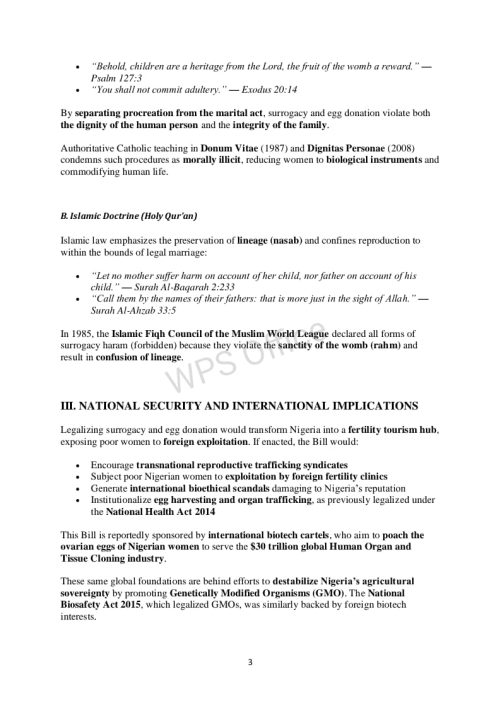
Religious opposition to surrogacy formed a key part of GPA’s submission. Citing Christian doctrine and Islamic law, the group argued that surrogacy violates both faiths.
The Catholic Church’s Donum Vitae (1987) and Dignitas Personae (2008) documents, as well as Islamic rulings by the Muslim World League (1985), were referenced.
“Christianity teaches that children must be conceived within the marital act. Surrogacy separates conception from marital love and turns women into biological instruments,”* GPA noted.
Similarly, it quoted the Quran: “Call them by the names of their fathers: that is more just in the sight of Allah.” — Surah Al-Ahzab 33:5.*
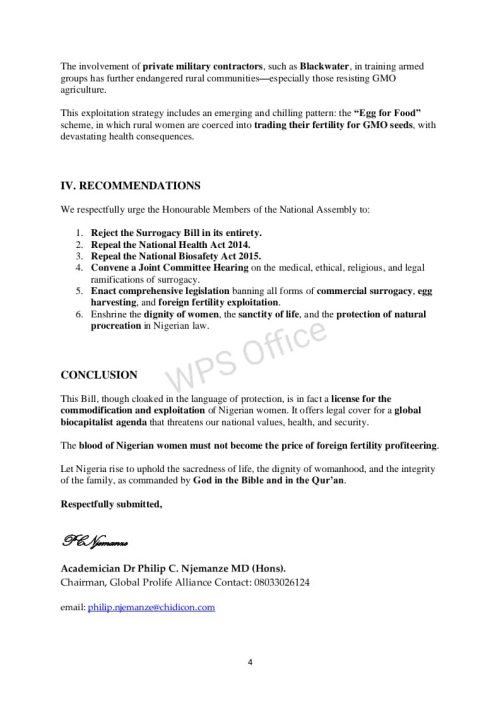
On the national security front, GPA warned that legalizing surrogacy would make Nigeria a global hub for fertility tourism, attracting international reproductive syndicates and exposing poor women to foreign exploitation. The group likened the bill to the National Health Act 2014 and National Biosafety Act 2015, which it claims enabled organ trafficking and GMO crop infiltration.
“The involvement of billionaire-funded biotech cartels and private military contractors like Blackwater in destabilizing rural communities is well-documented. Legalizing surrogacy will only deepen this exploitation,”* Dr. Njemanze alleged.
GPA further described an emerging “Egg for Food” scheme, where rural women are allegedly coerced into trading fertility for genetically modified seeds.
As a solution, GPA called on the National Assembly to reject the bill outright and repeal existing laws that it claims facilitate foreign exploitation of Nigerian women.
“We urge lawmakers to uphold the dignity of women, the sanctity of life, and the integrity of the family,”* the statement read.
The organization also demanded a joint committee of medical, legal, ethical, and religious stakeholders to review the implications of surrogacy and draft protective legislation for women.
“We must preserve the soul of our nation by defending sacred values enshrined in both the Bible and the Qur’an,”* GPA concluded.