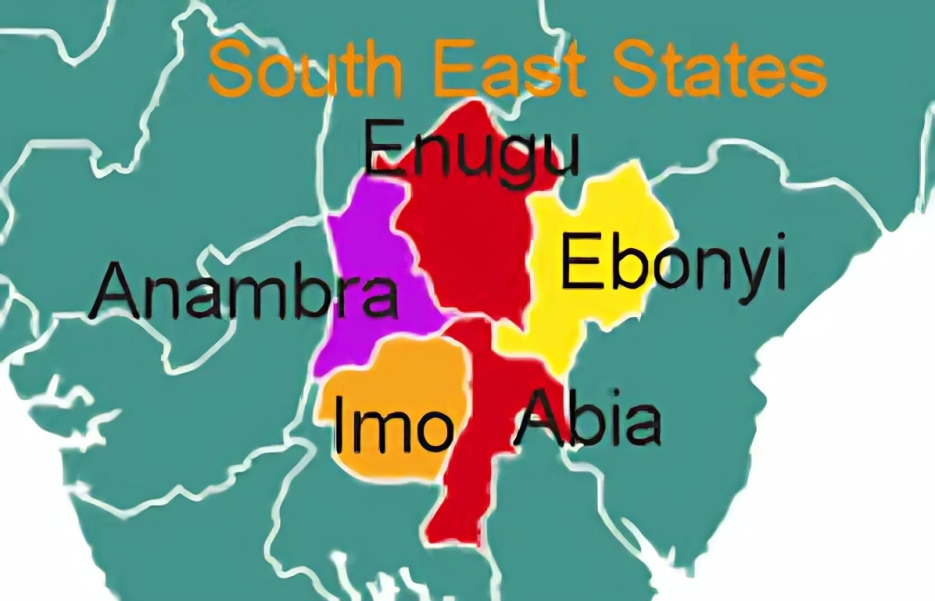
The renewed call for the creation of new states in the South-East as a remedy for marginalisation is not only misguided but dangerously misleading. It is a political bait—designed to seduce the people with false promises while diverting attention from the structural rot and leadership failures that are the real sources of the region’s woes.
At a time when the South-East is grappling with insecurity, economic collapse, and widespread disillusionment, it is absurd to suggest that multiplying the number of states will provide the magic cure. What the region needs is not more governors and legislatures but a complete overhaul of governance, coupled with a united demand for true federalism and equity in resource control.
The notion that additional states will give the South-East greater representation in national institutions is a shallow argument. Representation is meaningless when those already in office have consistently failed to leverage their positions for the benefit of their people. More senators, more ministers, and more federal appointments have not changed the fortunes of the ordinary Igbo man. Instead, they have often served as tools for political patronage and elite enrichment.
State creation in Nigeria’s history has rarely been about improving governance or delivering development. More often, it has been about satisfying political ambitions and consolidating the power of a privileged few. More states mean more governors, more assemblies, and a ballooning bureaucracy that consumes scarce resources while rural communities remain in darkness. If five states in the South-East have failed to deliver good governance, why should seven or eight suddenly succeed?
Even the argument that proposed new states would be economically viable, due to natural resources like oil, rings hollow. Nigeria’s experience has shown that oil wealth without good governance only breeds corruption, conflict, and environmental degradation. A new state will not be immune to these pitfalls unless the prevailing governance culture changes radically.
What the South-East needs is not geographical balkanisation but political courage and a return to the principles of regional development. A collective push for constitutional restructuring would empower existing states to control their resources, design their development priorities, and address local challenges without depending on Abuja. This approach offers a more sustainable path to ending marginalisation than the creation of artificial state boundaries.
Moreover, multiplying states in a relatively small region risks entrenching divisions, fuelling local rivalries, and weakening the zone’s collective bargaining power at the national level. A fragmented South-East will struggle to speak with one voice, perpetuating the very marginalisation the proposal claims to solve.
State creation is not a magic bullet. It is, at best, a placebo—a convenient excuse for political actors to avoid confronting the real issues of failed leadership, poor governance, and systemic inequity. The South-East must reject this dangerous distraction and focus on building a new political culture rooted in accountability, justice, and people-centred development.
Until that happens, new states will not empower the region. They will only create new empires for the political elite to exploit, leaving the masses to languish in poverty and neglect. The South-East deserves better.
Ohale, a Public Policy Analyst, Writes From Owerri