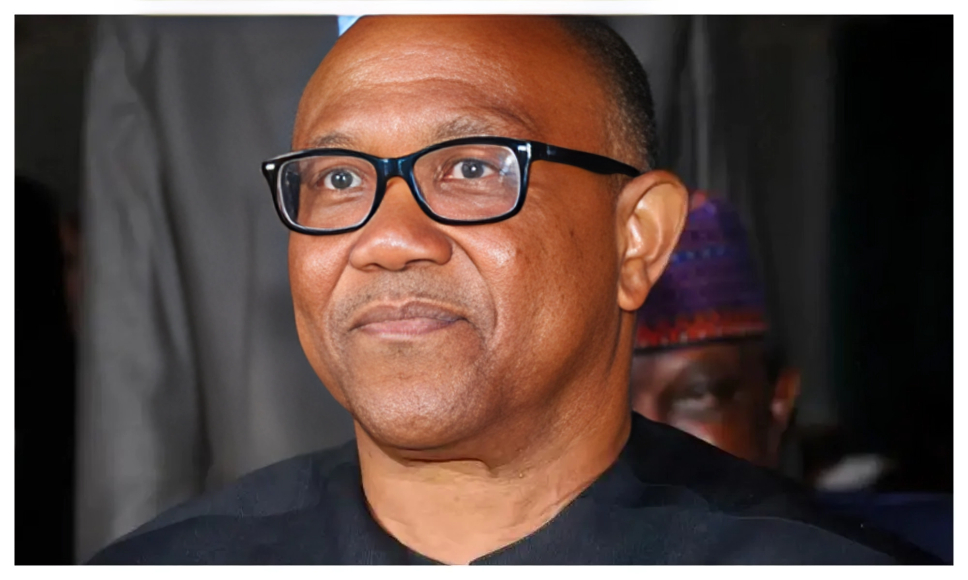
Peter Obi’s recent reaffirmation that he would serve only a single four-year term if elected president in 2027 has set off a wave of public debate in a country where promises often dissolve the moment power is attained.
In a political environment polluted by broken oaths, institutional decay, and endemic corruption, Obi’s vow stands out — bold, unusual, and, to many, suspiciously idealistic.
“My one-term, four-year vow is sacrosanct,” Obi declared in a recent statement.
He compared his commitment to that of iconic leaders such as John F. Kennedy and Nelson Mandela, arguing that real leadership isn’t about tenure but impact. “Purposeful, transparent leadership does not require an eternity,” he added.
Obi, who ran for president under the Labour Party in 2023 and is widely expected to return to the race in 2027, insists he is not playing by the old political playbook.
“They are judging me by their own standards – where political promises are made to be broken,” he said, taking aim at the deeply entrenched culture of dishonesty and personal gain that has defined Nigeria’s ruling class for decades.
To his supporters, Obi’s statement is more than a campaign line — it is a battle cry against the status quo.
“This is the kind of moral disruption Nigeria needs,” said Everest Okoro, a public affairs analyst.
He told INNONEWS “Obi is drawing a line in the sand and challenging the toxic obsession with second terms that has plagued this country.”
But critics are less enthusiastic.
“Obi is not the first Nigerian politician to make lofty promises,” fires Ephraim Emenalo, a political sociologist.
He said “Let him first win, then govern. Power in Nigeria is addictive, and even saints change once they enter Aso Rock.”
Beyond the personalities, the country itself is not built for quick fixes. Nigeria’s challenges are hydra-headed — collapsing infrastructure, economic regression, crippling debt, insurgency, inflation at record highs, and a decaying moral order. Can these be tackled meaningfully in four years, especially in a system wired to resist reform?
Veteran journalist, Mr Goddy Umeh thinks not.
He told this newspaper “The moment Obi steps into office, the same establishment he wants to reform will begin to fight back. Civil servants, lawmakers, party lords — they’ll frustrate him. That’s the reality,”
“And if he makes genuine progress, Nigerians themselves may beg him to run again.” he argued.
Obi’s defenders say that is precisely the point.
“He wants to govern like Mandela — one term, no distractions, no re-election politicking. Just pure focus on reforms,” said Okoro.
They argue that even if he cannot fix Nigeria entirely, he could lay a solid foundation and ignite a new leadership culture.
Indeed, Obi’s governance style in Anambra — defined by fiscal discipline, transparency, and minimal fanfare — has become a reference point in Nigeria’s chaotic political landscape. He is seen as frugal, data-driven, and allergic to waste.
Mr Emenalo said “Obi has a proven track record of doing more with less. If anyone can maximize four years, it’s him.”
Yet, Nigerians are understandably skeptical. This is a country where campaign promises are often written in sand and washed away by the tides of ambition.
Mr Umeh however stated that ” Obi’s one-term promise is strategic. It’s meant to appeal to our frustrations,”
“It’s brilliant politics — but will it be brilliant governance?” he asked.
There’s also the question of whether Nigeria’s elite will allow such an agenda to thrive. A one-term president, unwilling to share the spoils or play ball with vested interests, may find himself isolated, impeached, or rendered ineffective.
Still, Obi has thrown down a gauntlet — not just to his opponents, but to the Nigerian people. If he’s serious, then his one-term presidency could be a reset button in a country weary of prolonged failure. If not, it will go down as one of the most sophisticated cons in modern Nigerian politics.
As the race toward 2027 gathers momentum, Obi’s promise will face its ultimate test — not at the ballot box, but in the crucible of power, where ambition and integrity are often at war. Whether his vow holds firm or fades like the rest will determine how history writes his name.