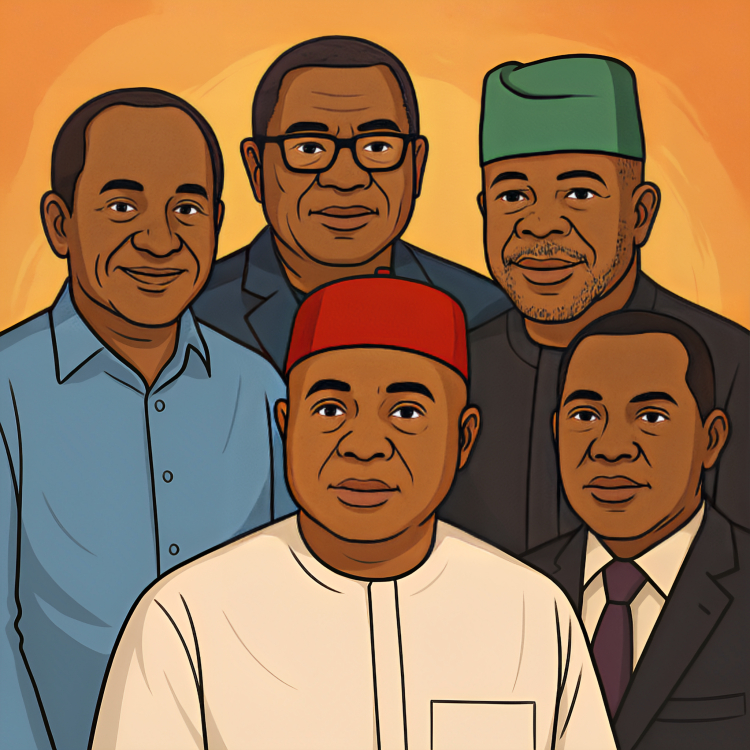
The 2027 governorship election in Imo State is shaping up to be a high-stakes political war. No longer business as usual, the contest promises to be bruising, uncompromising, and decisive for the state’s political future.
The fundamental question echoing across political quarters is glaring: Can the opposition dismantle the All Progressives Congress (APC)’s iron grip on Imo? Right now, the answer is complicated—and far from comforting for opposition figures.
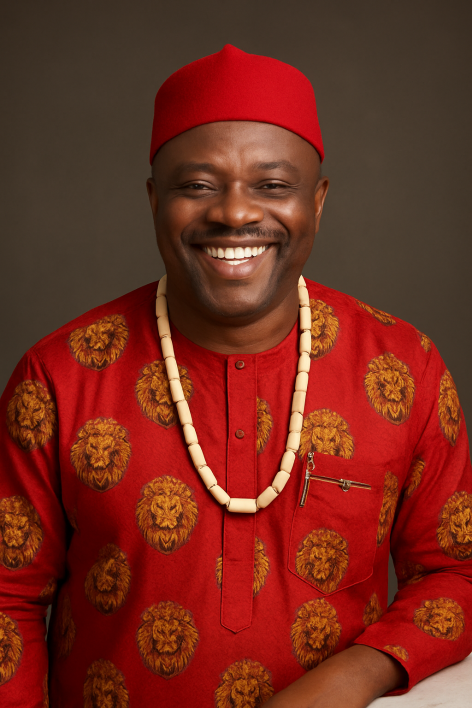
Since the return of democratic rule in 1999, no political party in Imo has built the kind of machinery the APC currently wields. The party enjoys full control of all 306 electoral wards, dominance across the 27 local government areas, and an overwhelming majority in the State House of Assembly with over 20 lawmakers.
Its influence extends to the National Assembly, where Imo APC boasts three serving senators and multiple members in the House of Representatives.
Tony Onwuka, a top APC chieftain in Owerri Municipal, offered a blunt assessment of the party’s hold: “No other party in Imo has a structure that comes close. We don’t just win elections; we dominate them. We are in every home, every booth, every street. That’s the difference.”
Indeed, this is not a political party struggling to stay afloat—it is a ruling entity fortified by incumbency, control of local government councils, and a deeply rooted web of loyalists.
Governor Hope Uzodimma continues to deploy strategic tools—ongoing road construction, urban renewal projects, media narratives, and political patronage—to consolidate the APC’s hold. All signs indicate that the party is gearing up for a do-or-die electoral defense in 2027.
But this dominance isn’t without its fragility. Public frustration in Imo is intensifying.
The economic pain is acute—spiraling inflation, rising cost of food and transportation, and the impact of subsidy removal by President Bola Tinubu’s APC-led federal government have left families reeling. Breadwinners are becoming beggars; the average Imolite, like in other parts of the country are drowning under the weight of survival.
Add to this, is an atmosphere of rising insecurity—kidnappings, robberies, and communal unrest—and the state’s political terrain becomes even more volatile.
While Uzodimma’s administration has leaned heavily on physical infrastructure and photo-op milestones, it’s the “invisible infrastructure”—food, security, and jobs—that Imo voters may be weighing come 2027
Then comes The Wildcard: Succession.
For the first time in eight years, the governorship seat will be vacant. Uzodimma, ineligible to run again, is expected to go all-out to install a successor—likely someone loyal, pliable, and capable of continuing his legacy.
This alone raises the stakes for what is shaping up to be a combustible political contest. The opposition will not just be up against the APC—they will be confronting the full force of a sitting governor’s influence, party machinery, and state resources.
But Are They Ready?
The once-mighty Peoples Democratic Party (PDP) is limping. Once dominant in Imo, having produced Governors like Achike Udenwa, Ikedi Ohakim, and Emeka Ihedioha, the PDP has suffered massive political erosion. In the last governorship poll in 2023, it failed to win even a single local government.
According to Hon. Ifeanyi Ekwebelem, a PDP chieftain, “The 2019 governorship election in Imo State was hijacked. It wasn’t a contest; it was a coronation. The APC manipulated the process from start to finish. But the PDP is not dead. We are re-strategizing and coming back stronger in 2027.”
Still, critics argue that electoral malpractice alone cannot explain the PDP’s collapse in the last guber election. Deep internal divisions, lack of charismatic leadership, and high-profile defections have hollowed the party’s foundation, most notably the defection of former governor, Emeka Ihedioha who has joined the African Democratic Congress, ADC.
Filling this vacuum—at least on paper thus far—is the African Democratic Congress (ADC). The party has been buoyed by the entry of political heavyweights like former minister of state for Education, Emeka Nwajiuba and former governor Emeka Ihedioha. For many observers, the ADC could become the much-needed alternative to APC-PDP duopoly in Imo.
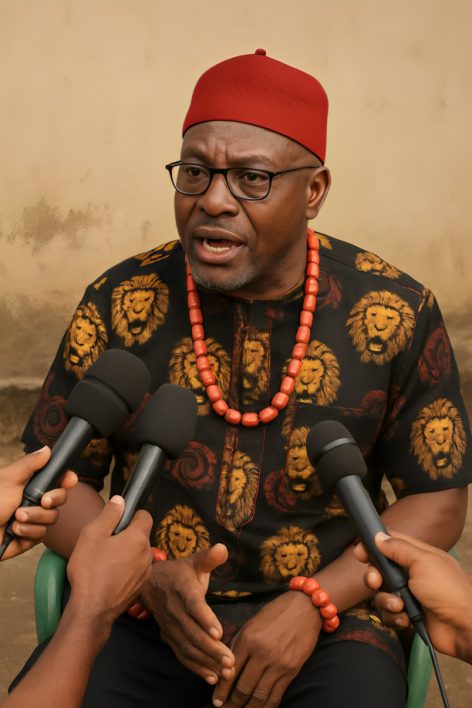
Names Win Media Attention; Structures Win Elections.
So far, the ADC is struggling to establish strong grassroots networks in the state. Stories of internal wrangling are already surfacing. Critics say the party risks repeating the PDP’s mistakes—elite-driven campaigns with no voter engagement at the grassroots.
Godson Ofoma, a political analyst based in Owerri, was blunt about the ADC. He said “Right now, ADC needs to come down from the clouds and enter the mud. Barely weeks after it came on board, we are hearing stories that the party machinery is being hijacked by those who joined the party. That’s not a good tale.”
Ofoma believes the game could change drastically—if a figure like Peter Obi emerges as ADC’s presidential candidate in 2027. That possibility, he says, could lead to a voter revolution and tilt electoral outcomes in the Southeast.
Mazi Austin Iwuala, an elder statesman towed the same line. He said the ADC risks political extinction in Imo, if it fails to field Peter Obi as its presidential candidate in 2027. ”
Iwuala said “Even if Ihedioha, with all his political sagacity emerges the party’s governorship candidate of the ADC in Imo, he and the party will crumble to the APC if the ADC does not present Obi as its presidential flag-bearer.
“In 2023, even an okada rider in Ebonyi State won a federal constituency seat under Labour Party. That tells you how deeply rooted Obi is. It’s not about party structure anymore—it’s about the man, his credibility, and the people’s connection to him.” he said.
Iwuala also noted that the APC in Imo moves with military precision.
“They know their acceptance ratio is low, but despite the criticisms and governance lapses, they understand that elections are won by mobilization, not outrage. And unless the opposition—PDP, ADC,—step up, they risk handing APC another easy victory on a platter in 2027 in Imo.
However, what is certain is that Imo 2027 will be more than just an election. It will be a brutal showdown—fought with money, influence, grassroots pressure, and survival instincts.
The people of Imo are tired. They are angry. They are hungry. But as history often shows, anger doesn’t win elections—structures do. And unless the opposition is strong enough to rival the APC’s political juggernaut, the outcome may already be written: APC retains Imo.