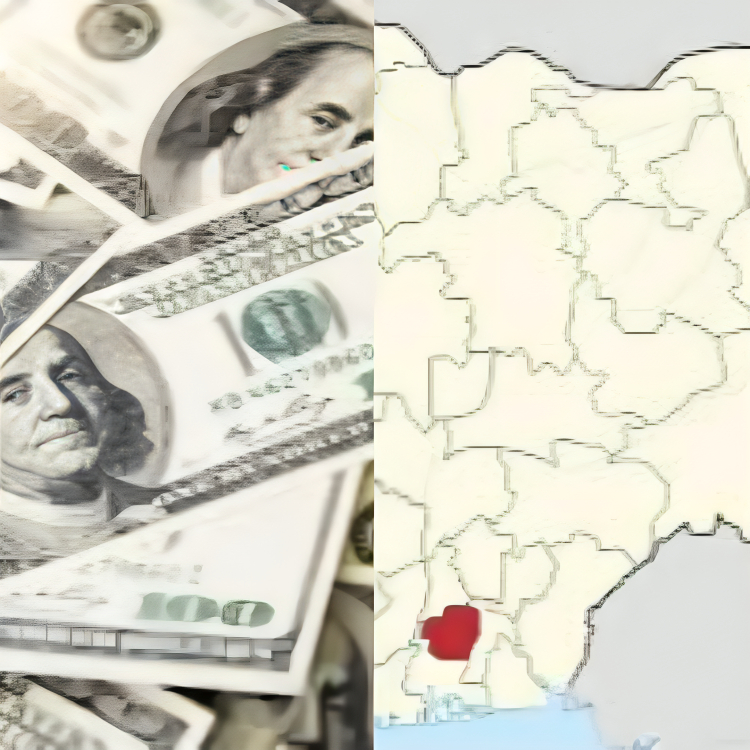
Despite a significant surge in foreign capital inflows into Nigeria in 2024, a staggering 32 states — including Imo, Anambra, Edo, Rivers, and Delta — failed to attract any slice of the \$12.32 billion foreign direct investment recorded last year. This is according to the latest Capital Importation Report Q1 2025 released by the National Bureau of Statistics (NBS).
The report reveals that while Nigeria experienced a remarkable 215 percent increase in capital importation compared to $3.91 billion in 2023, the investments were heavily concentrated in just a few states, with 32 others completely left out of the economic boost.
Capital importation refers to the inflow of foreign money into the country to finance business ventures across sectors such as trade, manufacturing, telecommunications, and financial services. It is often regarded as a key indicator of investor confidence and economic viability at the sub-national level.
But the NBS data paints a worrying picture for states like Imo, Akwa Ibom, Kano, Benue, and Cross River, which continue to struggle to attract foreign investors, raising serious questions about their ease of doing business, infrastructure readiness, security, and overall economic planning.
Most troubling, however, is that eight of these 32 states — including Bayelsa, Ebonyi, Gombe, Jigawa, Kebbi, Taraba, Yobe, and Zamfara — have failed to attract any foreign capital for five consecutive years, from 2019 to 2024, signaling what analysts say is a “total collapse of investor interest” in those locations.
“States like Imo need to stop relying on political grandstanding and start presenting bankable investment opportunities backed by clear incentives. It’s no longer about being oil-producing or having big names. It’s about creating a secure, investor-friendly ecosystem.”said Chuka Onwudiwe, an Imo born economic policy analyst based in Lagos
The investment drought is even more glaring considering that states like Lagos and the Federal Capital Territory (FCT) continue to dominate the foreign investment landscape, taking in the lion’s share of the $12.32 billion. The uneven spread underscores Nigeria’s long-standing problem of regional economic imbalance and poor decentralization of investment inflows.
As 2025 goes midway, analysts warn that unless states like Imo and its counterparts overhaul their economic policies, boost security, and market their unique comparative advantages, they risk being locked out of future capital inflows—perpetuating unemployment, poverty, and underdevelopment in their regions.