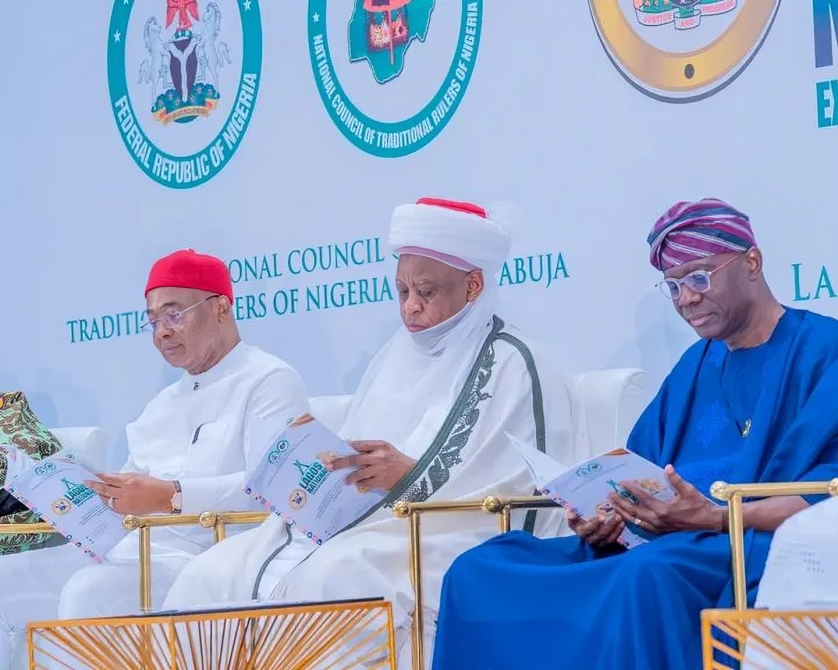
Imo State governor, Senator Hope Uzodimma, has canvassed the constitutional formalisation of the roles of traditional rulers to strengthen the institution for the diverse responsibilities before it.
He said the agitation by traditional rulers for constitutional recognition is not a privilege but a call for clarity on the role they are already playing for the stability of the communities and the nation at large.
The governor spoke in Lagos on Monday while presenting the keynote address at the meeting of the National Council of Traditional Rulers in Nigeria (NCTRN).
He noted that the theme of the meeting, The traditional institution: the imperative of its inclusion in effective and efficient governance in Nigeria, was not only appropriate, timely, and necessary, but reflects the reality that “traditional rulers across the country continue to carry out responsibilities that are essential to the stability, cohesion, and governance of our communities.”
Uzodimma said that such responsibilities, which are largely informal but acknowledged, should now have legal backing in the constitution.
According to him, the absence of a constitutional role for traditional rulers is a gap that ought to be filled, saying it was a failure that should be immediately rectified.
He said, “I believe the time has come to make it right, and not necessarily by creating a new role but by giving legal status to what already exists.”
Uzodimma described the traditional institution as very unique in the architecture of power, attracting the best of the nation from politics, law, the military, and the academia.
He noted that given the enormous responsibility of traditional rulers in peace mediation, conflict resolution, and as custodians of tradition and culture, they ought to be more respected through a constitutional role.
But he urged them to remain non-partisan to preserve their integrity, especially when it comes to politics.
Tracing their previous roles in the First Republic and comparing them to what currently obtains in some African countries, the Imo State governor totally supported their push for a more defined role in the constitution.
“I assure you that if this matter comes before the National Assembly or requires support at any level in government, I will stand with you without hesitation,” he submitted.
He commended them for turning out in their large numbers from different parts of the country for the meeting, declaring that the institution they represent “is alive, strong, and ready to lead where it must.”