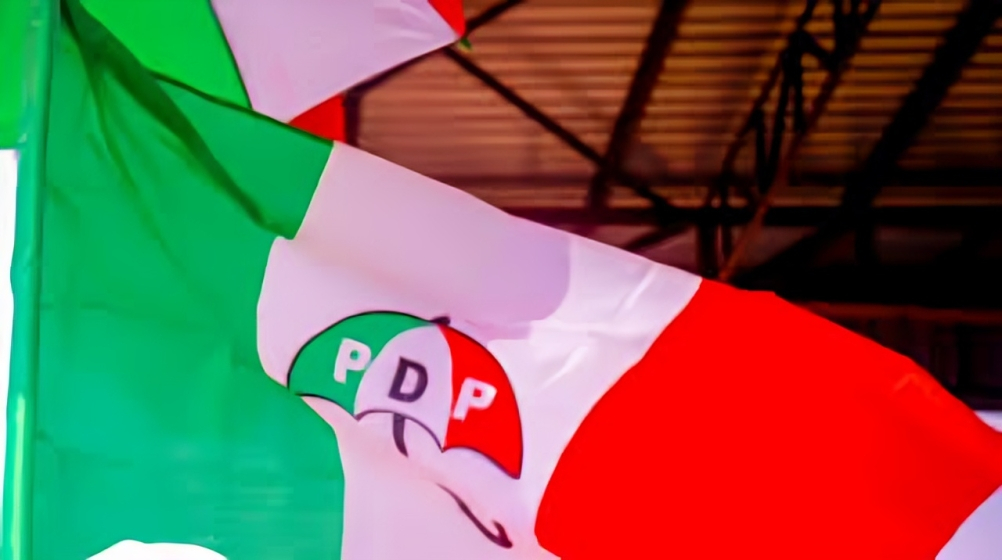
A fresh wave of crisis has hit the Peoples Democratic Party (PDP) as two opposing factions of its National Working Committee (NWC) announced the suspension of each other’s key officials on Saturday, deepening internal turmoil ahead of the party’s planned national convention.
A faction led by Samuel Anyanwu, the party’s national secretary and an ally of Nyesom Wike, minister of the Federal Capital Territory (FCT), declared the suspension of Umar Damagum, the acting national chairman, and several top officials including Debo Ologunagba, the national spokesperson; Taofeek Arapaja, deputy national vice-chairman (south); Daniel Woyenguikoro, national financial secretary; Sulaiman Kadade, national youth leader; and Setonji Koshoedo, deputy national secretary.
Anyanwu, who announced the decision in Abuja, said the suspended officials would face a disciplinary committee to “show cause why they should not be expelled” from the party. He also disclosed that Mohammed Abdulrahman, the national vice-chairman (north-central), had been appointed as the acting national chairman.
In a swift counter move, the officially recognised NWC under Umar Damagum fired back, announcing the suspension of Anyanwu himself and other top officers. Those affected include Kamaldeen Ajibade, the national legal adviser; Okechukwu Osuoha, deputy legal adviser; and Umaru Bature, national organising secretary.
Speaking during a press conference in Abuja, Ologunagba said the decision followed an emergency NWC meeting and would last for an initial period of one month pending the outcome of a disciplinary review. He explained that Setonji Koshoedo would now serve as acting national secretary, while the deputy legal adviser would replace Ajibade in an acting capacity.
The latest development comes amid rising tension within the PDP ahead of its national convention slated for November 15 and 16. However, the event now faces uncertainty following a court order halting the exercise.
On Friday, James Omotosho, a judge of the federal high court in Abuja, restrained the party from going ahead with the convention, ruling that the PDP failed to conduct valid state congresses across the country in line with its constitution, the 1999 Constitution, and Independent National Electoral Commission (INEC) guidelines.
Omotosho said the failure to comply with due process had “undermined the legitimacy” of the proposed convention, directing the party to correct all irregularities before proceeding. He also ordered INEC not to recognise or publish any outcome from the convention until the issues were resolved.
The crisis within the opposition party had also spilled into the courtroom earlier in October when Ajibade and Damagum clashed over who has the authority to appoint lawyers for the PDP. The disagreement erupted during a hearing when two senior advocates—Chris Uche (SAN) and another lawyer representing Ajibade—announced separate appearances for the same party, prompting confusion in court.
The presiding judge was forced to suspend proceedings temporarily and advised the party to “put its house in order” before the case could continue.
Adding to the drama, Anyanwu recently alleged that his signature was forged on documents sent to INEC notifying the commission of the planned convention. The PDP’s national leadership, board of trustees, and other senior officials have, however, dismissed the allegation as baseless.
With rival factions trading suspensions and legal disputes deepening, analysts say the crisis threatens to weaken the PDP’s already fragile unity as it struggles to position itself as a credible opposition force ahead of future elections.