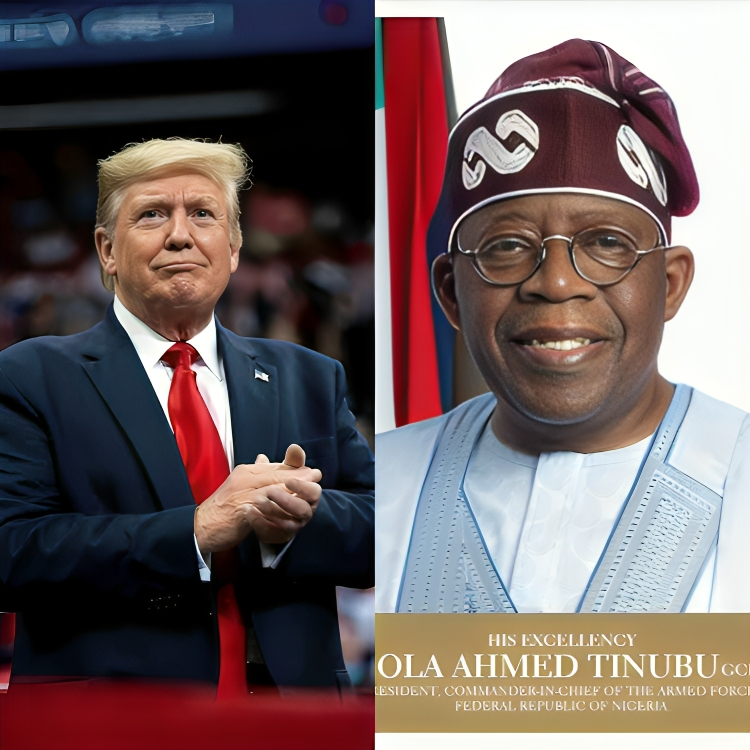
U.S. President Donald Trump’s recent threat of military intervention in Nigeria has ignited fierce debate — not over American motives, but over Nigeria’s own failure to stem years of unchecked bloodshed. The issue at its core is not conspiracy theory. it is lives lost.
Since 2009, the nation’s northeast has been ravaged by the insurgent group Boko Haram, which launched its jihadist campaign in July of that year and has claimed tens of thousands of civilian lives. Killings in northern part of the country, mass abductions and terrorist-Raidings have become grim hallmarks of failure.
So when Trump designated Nigeria a “Country of Particular Concern” and threatened force, the question was not whether America had an ulterior motive — it was why Nigeria itself remains unable to halt the carnage. If the killings had stopped, would Trump’s threat even have been necessary?
Under President Bola Ahmed Tinubu’s administration, the suffering has only escalated. Reports suggest more than 15,000 Nigerians have died in violent attacks since 2023. Entire communities have been razed, worshippers slaughtered in churches and mosques, and bandits now levy unofficial “taxes” from terrified villagers.
In the north-central and northwestern zones, as well as the northeast, the government’s grip on security seems to be evaporating. Jihadist factions such as the Islamic State West Africa Province have openly claimed operations on Nigerian soil.
Critics argue that the Muslim-Muslim ticket of the APC presidency only heightens fears of Christian vulnerability. But the failure is not simply sectarian; it is systemic. The real concern is the state’s inability — or unwillingness — to protect any citizen from being killed by bandits..
Many analysts who dismiss Trump’s threat as neo-imperialist miss the point. The bone-chilling truth is Nigeria is still bleeding. When world leaders cite Nigeria’s insecurity, we should ask ourselves: why? Because the failure to act has become international business.
Consider the precedent. Trump ordered the drone strike that killed Iranian General Qasem Soleimani in 2020 — a move he followed through despite global criticism. That record stands as a warning to Nigeria that threats from Trump may not stay as rhetoric.
Diplomatically, Nigeria appears disengaged. Since 2023, the Tinubu administration has leaned toward France and China, cooled its alignment with the U.S., and supported positions like Palestine at the UN that clash with U.S. interests. These shifts may weaken Nigeria’s standing when crises demand rallying global support.
The real risk for Nigeria isn’t external invasion — it’s internal collapse. When governments stop valuing life, others step in. If Nigeria keeps failing its people, the world may decide Nigeria has failed itself.
Nigeria’s sovereignty is at stake not because the U.S. threatens it, but because Nigeria has ceded it. Ignoring tens of thousands of deaths is the real betrayal — one that cannot be shrugged off.
Action, not excuses, is needed. A thorough audit of the nation’s security architecture and a diplomatic reset. Lives can still be saved, but only if sovereignty begins at home. Until then, threats will keep landing — not because others want war, but because Nigeria has proved war is still raging inside.