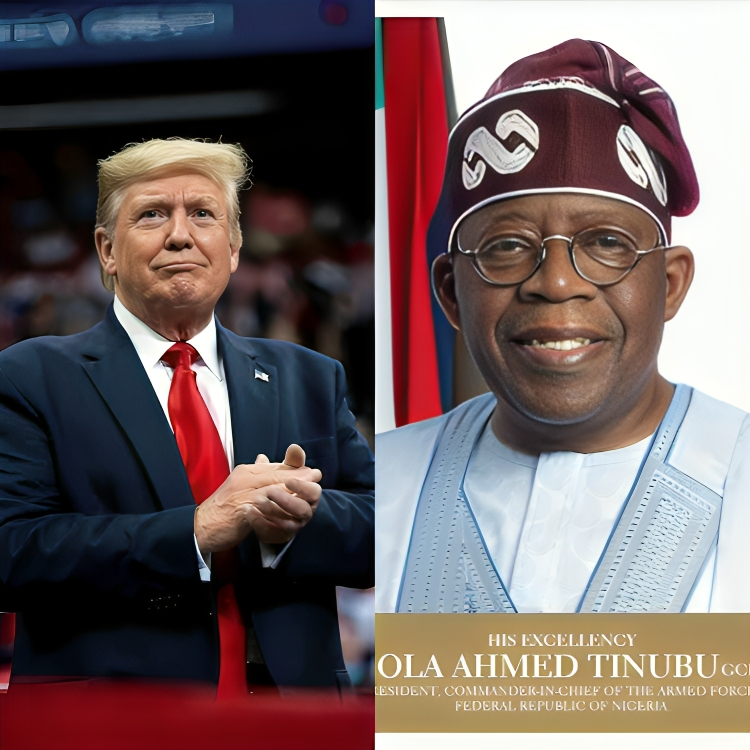
The New York Times has reported that the United States military has drawn up plans for potential intervention in Nigeria following President Donald Trump’s order to the Pentagon to “prepare to act” in response to the killings of Christians by Islamic militants. The report, published on November 5, 2025, by Pentagon correspondent Helene Cooper, says American defense officials have reviewed several military options but remain skeptical that any intervention could quell a decades-long insurgency in Africa’s most populous nation.
According to the report, senior U.S. defense officials acknowledged that the Pentagon has limited options to stop the violence in Nigeria unless Washington launches a full-scale campaign similar to those in Iraq or Afghanistan—an option few in the administration or military appear willing to consider. However, officials confirmed that the United States Africa Command (AFRICOM) has prepared a range of contingency plans, from light to heavy military involvement, to respond to President Trump’s directive.
Under the “light” option, the U.S. would provide intelligence and operational support to the Nigerian military in its ongoing fight against Boko Haram and Islamic State West Africa Province (ISWAP). This would involve targeted operations against insurgent groups in the country’s north. However, the report noted that Washington’s capacity to act has been hampered by the closure of U.S. drone bases in Niger, now occupied by Russian forces, and the withdrawal of USAID operations from Abuja in July.
The “medium” option involves drone strikes using MQ-9 Reaper and Predator drones to target insurgent bases and convoys across northern Nigeria. Yet, logistical challenges remain, as the U.S. must now operate from distant bases in southern Europe or Djibouti after vacating facilities in Niger. Defense sources told The Times that launching strikes from these new locations would reduce efficiency and increase operational risks.
The “heavy” option, viewed as the least likely, would see the deployment of an aircraft carrier group to the Gulf of Guinea and the launch of air strikes deep into northern Nigeria. Military analysts described this plan as “highly escalatory” and politically untenable, given America’s current commitments in the Middle East and Pacific. “It would be a fiasco,” retired Maj. Gen. Paul D. Eaton told the paper, adding that there is little public appetite in the U.S. for another protracted ground war.
The New York Times report further revealed that AFRICOM officials submitted their operational plans to the Joint Staff at the Pentagon following Trump’s weekend post on social media threatening to take military action against “radical Islamic terrorists killing cherished Christians.” The president’s statement has ignited intense debate in diplomatic circles, with many warning that U.S. intervention could inflame religious and ethnic tensions rather than resolve them.
Helene Cooper’s report quoted unnamed officials describing Trump’s directive as “confounding” and politically charged. Defense Secretary Pete Hegseth reportedly responded swiftly to the president’s order, directing AFRICOM to “move with urgency” and forward a set of options for immediate review. The plans include coordination with local partners and possible joint operations with Nigerian forces.
The Nigerian government, according to the report, has welcomed U.S. assistance but insisted that any operation must respect the country’s sovereignty and territorial integrity. Abuja has also urged Washington to focus on humanitarian and intelligence support rather than direct military engagement.
The Times observed that the violence in Nigeria’s north has deep social and economic roots, often fueled by corruption, ethnic rivalries, and disputes between farmers and herders over land. Militant groups have exploited these divisions to expand their influence, resulting in thousands of deaths among both Christians and Muslims since 2009.
While the U.S. plans are still under review, defense experts warn that any American military involvement could entangle Washington in one of Africa’s most complex conflicts. The report concludes that President Trump’s threat of military action, though dramatic, may be more of a political statement than a strategic plan—but one with the potential to reshape U.S.–Nigeria relations.