*Chekwas Okorie, Ajumbe, Sam Amadi Others Brainstorm On Way Forward
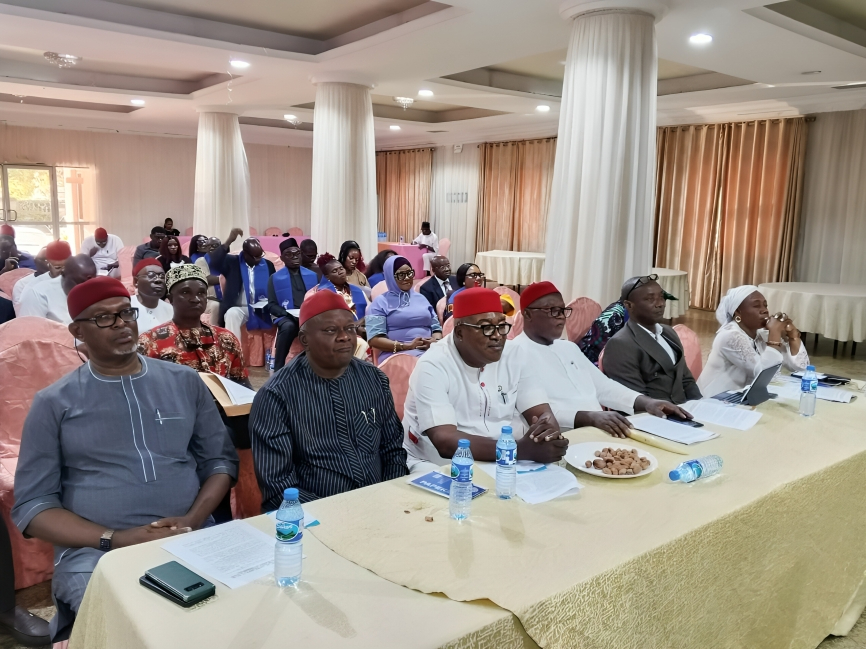
The Igbo Agenda Dialogue (IAD) has announced major political mobilisation steps ahead of 2026 and 2027, placing the demand for additional states in the Southeast and a comprehensive political charter at the centre of its new roadmap. These resolutions emerged from its second meeting held on Wednesday, 19 November 2025, at Chelsea Hotel, Abuja.
At the session, which drew notable Igbo leaders including Chief (Dr) Chekwas Okorie, Convener of the IAD; Orikeze Vitalis Ajumbe, former Commissioner in Imo State; and Dr Sam Amadi, former Chairman of the Nigerian Electricity Regulatory Commission (NERC), participants reiterated that the persistent imbalance in state creation and local government allocation remains one of the most damaging legacies of post-war marginalisation.
The Dialogue recalled its inaugural meeting of 27 August 2025, noting the robust contributions and overwhelming encouragement received from Igbo communities across Nigeria and the diaspora. That momentum, it said, has strengthened the resolve to build a broad-based, non-partisan socio-political platform uniting unions, associations, professional groups, youth and women bodies, civil society networks, and diaspora stakeholders.
Members also reviewed the extensive consultations undertaken since August, including a virtual diaspora town hall hosted by NJENJE MEDIA on 7 September 2025. The increasing interest shown by Igbo professionals abroad was described as evidence that the agenda is gaining traction across continents.
A major highlight of the meeting was the announcement of the first Igbo Political Summit, scheduled for the first quarter of 2026 in Enugu. At the summit, the IAD will unveil the First Igbo Political Charter, envisioned as a formal, collective statement of the political aspirations, rights, and obligations of the Igbo within the Nigerian federation.
To ensure the charter reflects broad inputs, the Dialogue urged individuals, groups, and institutions to submit recommendations. Dr. Emeka Okengwu was appointed to coordinate the collation and harmonisation of these inputs in preparation for the summit.
Chief Okorie reaffirmed his public withdrawal from partisan politics, arguing that neutrality is essential to ensure credibility, unity, and trust in the IAD process. He noted that staying above partisan divides gives the project moral authority and broad acceptance.
The meeting restated that the Igbo remain one of Nigeria’s largest and most widely dispersed ethnic nationalities, a demographic strength that should naturally translate into significant political influence. Participants stressed that there is no justification for political marginalisation or disrespect toward the Igbo going forward.
However, the Dialogue warned that historic disadvantages imposed after the Nigeria–Biafra war continue to shape today’s political realities. These include the Southeast being left with only five states—compared to six or seven in other geopolitical zones—fewer LGAs (95 compared to 188 in the Northwest), and boundary adjustments that stripped Igbo communities of substantial landmass and oil-bearing territories. Such disparities were described as systemic efforts to weaken the region politically and economically.
Rather than continue lamentations, the IAD declared that the time has come for coordinated political action within Nigeria’s constitutional framework. It observed that repeated attempts at national restructuring since 1999 have achieved little, making strategic self-mobilisation the most viable option for the Southeast.
The Dialogue therefore adopted a mobilisation plan urging all eligible Igbo voters to participate actively in the 2027 general elections and subsequent electoral cycles. This renewed political consciousness, it said, is crucial to “redrawing the political map of Nigeria” and restoring equitable representation to the Southeast.
The IAD further resolved that its mobilisation blueprint will be formally presented at the 2026 Igbo Political Summit for adoption as a core pillar of the forthcoming Igbo Political Charter. Participants expressed confidence that unified action can reposition the Igbo nation for fairness, dignity, and stronger national relevance.