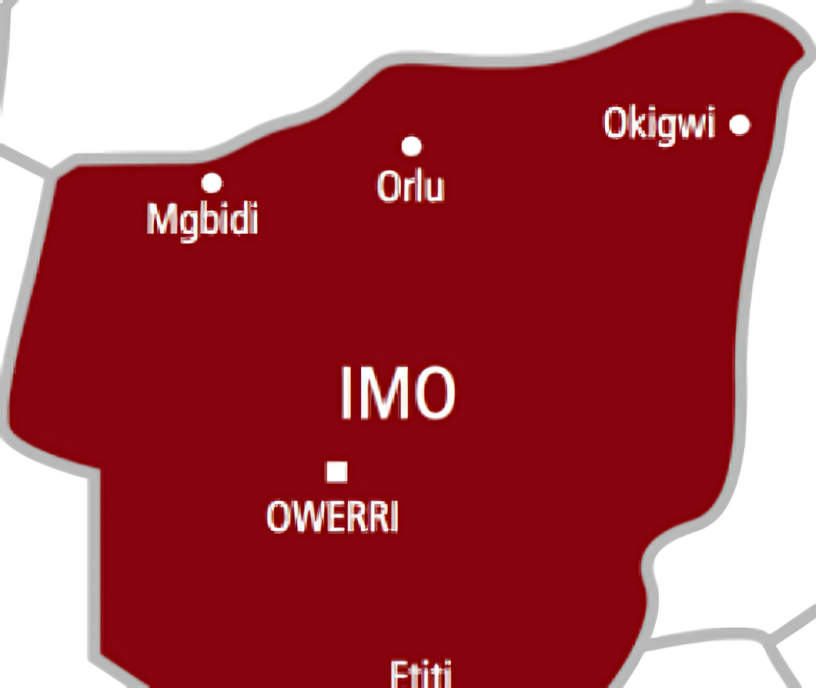
After decades of reliance on human capital export and unharnessed natural wealth, the state known as the Eastern Heartland is staging its most consequential act of self-redefinition. This week, the Imo Economic and Investment Summit 2025 is a meticulously engineered launchpad for industrial takeoff, built upon a foundation of structural reforms that directly address Nigeria’s most persistent investment bottlenecks.
The global validation of this effort is evident in the unprecedented roll call of attendees. President Bola Ahmed Tinubu, former UN Secretary-General Ban Ki-Moon, former UK Prime Minister Boris Johnson, the President of Liberia Joseph Boakai, and former Mauritian President Ameenah Gurib-Fakim are slated to converge. Their presence establishes the summit as a premier gathering for investment and policy in West Africa this season.
The event, championed by the administration of Governor Hope Uzodimma, is the culmination of a six-year, sustained effort to create a de-risked and predictable investment environment. This strategic pivot is intended to attract the global capital needed to achieve the state’s ambitious target of building a $1 trillion economy. The summit, themed “Unlocking Imo’s Economic Potential: Partnership, Investment, and Innovation,” confirms that Imo’s economic transformation is not theoretical, but proven and actionable.
The administration focused intensely on tackling the primary deterrents to industrial growth in Nigeria – security, infrastructure, and land administration – creating a new framework of “Core Certainty” to attract capital.
This certainty begins with security and stability, which the state has aggressively partnered with the Federal Government to restore, ensuring the predictability necessary for capital deployment. Infrastructure has been similarly transformed and used as an economic tool, with over 120 strategic roads and bridges constructed to ensure seamless physical connectivity between the 27 Local Government Areas and connecting Imo’s markets directly to commercial hubs like Port Harcourt, Aba, and Onitsha.
Crucially, the state is poised to tackle the single largest drag on Nigerian manufacturing: unreliable energy. The imminent launch of Phase 1 of the Light Up Imo Project this month promises to dismantle the high operational cost associated with “diesel-powere economics” by providing parts of the state with uninterrupted power supply.
Perhaps the most radical reform is in land administration. The state launched the Imo Land Information Centre (ILIC), replacing the analogue system with a digital, blockchain-utilising platform. This breakthrough ensures that Certificates of Occupancy can be processed swiftly and titles verified anywhere in the world, eliminating the uncertainty that has historically plagued land acquisition in Nigeria.
With the foundation set, the summit is designed to showcase where private capital can find exponential returns, highlighting Imo’s unique dual advantage in resources and human capital.
Imo State’s most compelling asset is its immense hydrocarbon wealth. It possesses vast proven natural gas reserves, placing it at the heart of the nation’s gas-to-industry strategy. The government is championing the Orashi Energy Free Trade Zone, aiming to leverage this gas to fuel industrial parks, power generation, and petrochemical industries. The presence of key local players like Seplat Energy and Waltersmith Petroman Oil Limited (operator of the largest modular refinery in Nigeria) affirms the immediate viability of this sector.
Beyond the energy revolution, Imo is repositioning its agricultural base. Focusing on its vast arable land and the iconic Adapalm (one of West Africa’s largest palm plantations), the state aims to attract investment for downstream agro-processing, turning raw materials into refined products for the massive Nigerian and global consumer markets.
Finally, the Skill-Up Imo Initiative, which has trained over 50,000 youths in digital and technical skills, ensures that any investor setting up shop in Imo State does not face the customary African challenge of finding a suitably skilled, digitally native workforce. Imo is, therefore, marketing itself not merely as a resource frontier but as a hub for digitally-enabled services and manufacturing.
The two-day schedule is structured for tangible results, moving beyond generalized discussions to facilitate direct engagements between capital and opportunity.
The opening day is focused on high-level strategy and unlocking development finance. Former UN Secretary-General Ban Ki-Moon is slated to deliver a critical address on “Positioning African Subnational Economies for Global Capital.” Following this, the focus shifts to infrastructure and economic zones, with discussions featuring the expertise of financial heavyweights like Prof. Benedict Oramah on Special Economic Zones and innovative financing models. Later sessions will zero in on logistics development and the technical aspects of ensuring reliable energy, with the participation of leaders from the banking sector and key energy firms like ANOH Gas Processing Company Ltd.
The second day shifts focus to long-term sustainability and digital transformation. A keynote address will explore “Youth, Technology, and Africa’s Economic Future,” directly linking the Skill-Up Imo program to future investment. This will be followed by dedicated sessions covering agro-industrialization, digital transformation, and the harnessing of tourism and the creative economy as economic catalysts. The programme culminates in business matchmaking sessions, an SME Pitchathon, investment showcases, and crucial closed-door meetings involving regulators, government officials, and Development Finance Institutions (DFIs)
This structure, supported by the attendance of Nigeria’s top banking CEOs, including Mrs. Adaora Umeoji (Zenith Bank) and Mrs. Nneka Onyeali-Ikpe (Fidelity Bank) signals a robust banking sector alignment with the state’s economic direction.
The Imo Economic and Investment Summit 2025 is the moment Governor Uzodimma’s administration presents its meticulously built foundation of security, energy, infrastructure, and integrity to the world’s most discerning investors. The takeaway would be that the opportunity is real, the state is derisked, and the time for the Eastern Heartland to become a manufacturing and digital hub is now.
Udemba is a public affairs analyst based in Owerri