FIFA’s nationality rules are neither elastic nor sentimental. They are rigid, legalistic, and unforgiving. At their core lies a simple doctrine: a player’s eligibility to represent a country flows directly from that country’s domestic law. Where a constitution expressly forbids dual nationality, FIFA will not invent legality where none exists. This is the hard truth now confronting the Democratic Republic of Congo.
If, as alleged, DR Congo fielded players who hold dual nationality in clear violation of its own constitutional provisions, then the issue before FIFA is not technical, procedural, or debatable. It is a straight case of ineligibility. A player who is not legally Congolese under Congolese law is not eligible to wear the national jersey, no matter how talented, marketable, or convenient his inclusion may be.
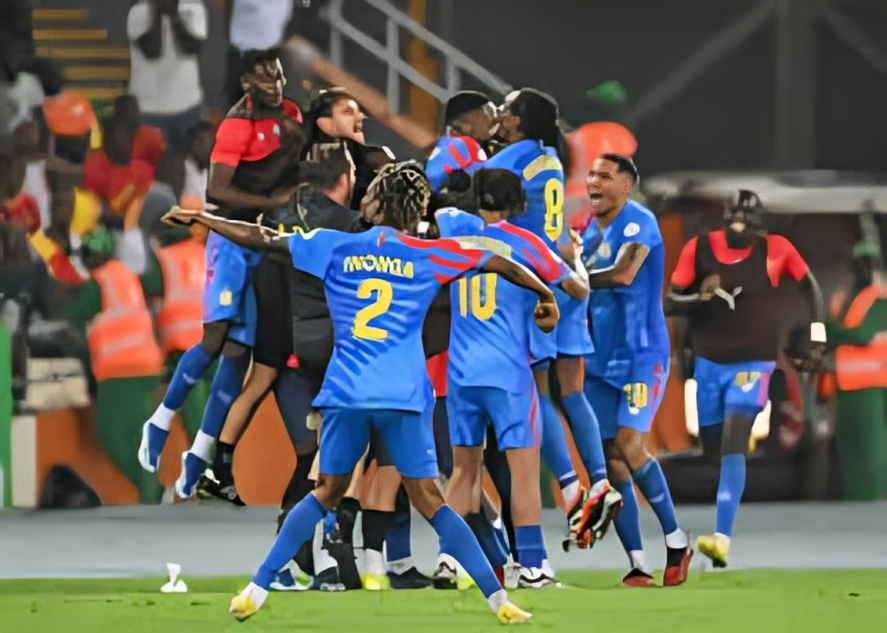
This controversy is sharpened by the competitive context. DR Congo actively participated in the Africa World Cup playoffs, recording victories over Cameroon and Nigeria—two heavyweights of African football. These were not ceremonial fixtures or friendly matches; they were decisive qualification games that shaped Africa’s World Cup landscape. Any illegality established at this stage does not merely taint results; it contaminates the integrity of the entire qualification process.
At the centre of the dispute is Article 10 of the Constitution of the Democratic Republic of Congo, which is unequivocal. It provides that “Congolese nationality is one and exclusive. It may not be held concurrently with any other nationality.” The same constitutional provision makes it clear that any Congolese who voluntarily acquires another nationality automatically loses Congolese nationality. There are no exceptions hidden in the text, no discretionary loopholes, and no administrative escape routes.
This constitutional position is not symbolic or aspirational; it is operative law. It means that a player who holds a European passport—French, Dutch, Belgian, or otherwise—without formal renunciation is, in the eyes of Congolese law, no longer Congolese. FIFA’s statutes defer to this reality. A passport waved before FIFA officials does not cure a constitutional defect at home.
This is why the exposure for the Congolese Football Association is acute. Once it is established that players featured in the playoff victories over Cameroon and Nigeria while retaining foreign nationalities contrary to domestic law, FIFA will treat them as ineligible players. Administrative excuses, ignorance of constitutional provisions, or emotional appeals to ancestry will offer no protection. FIFA jurisprudence is settled: eligibility is a legal test, not a sentimental one.
The sporting consequences are as predictable as they are brutal. Matches in which ineligible players participated are liable to forfeiture, typically by a 3–0 scoreline in favour of the opposing team. Points can be annulled, standings rewritten, and qualification tickets reassigned. In a World Cup race, such sanctions do not merely punish wrongdoing; they fundamentally alter outcomes.
Beyond the pitch, the disciplinary fallout could be severe. The Congolese FA risks fines and formal reprimands, while officials responsible for player documentation may face deeper scrutiny if FIFA concludes that inaccurate or misleading information was submitted during the clearance process. Where misrepresentation or concealment is established, sanctions escalate. Players themselves may face suspensions, adding personal consequences to institutional failure.
What makes this episode particularly damning is that it was entirely avoidable. Nationality law is not a grey area when a constitution speaks with clarity. Where dual nationality is forbidden, compliance is mandatory, not optional. Football associations are duty-bound to conduct rigorous legal due diligence before presenting players as eligible. Anything less is negligence dressed up as ambition.
African football has lived through too many self-inflicted disasters born of administrative arrogance and legal shortcuts. Titles have been stripped, qualifications reversed, and reputations shredded—not by lack of talent, but by contempt for rules. DR Congo now risks joining that shameful catalogue if constitutional realities continue to be ignored for short-term gain.
FIFA will not be swayed by sentiment, reputation, or competitive drama. Its position remains consistent and unsparing: eligibility flows from law, not from goals scored or matches won. Once ineligibility is established, sanctions follow as a matter of course.
This controversy is therefore not about dual nationality in the abstract. It is about legality in practice and the supremacy of constitutional law over sporting expediency. If DR Congo’s constitution does not permit dual citizenship, then fielding dual nationals in World Cup playoff matches was a calculated gamble against the rulebook.
And when such gambles fail, FIFA’s response is neither emotional nor negotiable. It is decisive. For Congolese football, the choice is stark and unavoidable: respect the law or face a sporting and administrative reckoning that could erase World Cup dreams won on the pitch but lost in the law.