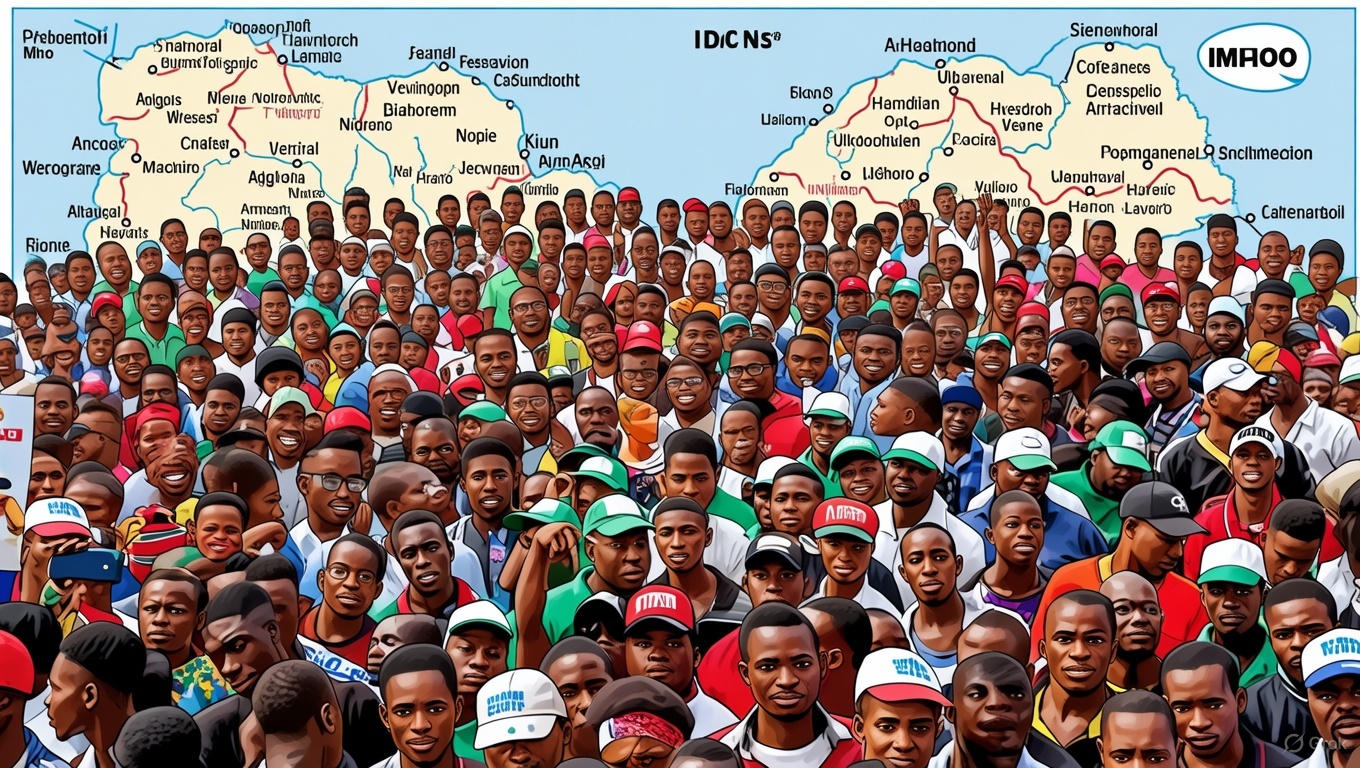
Political analysts say 2026 will mark a decisive turning point for Imo State, as covert political manoeuvres give way to open contestation ahead of the next general election cycle in 2027
2026 is expected to be dominated by intense political activity, with aspirants across party lines likely to formally declare their intentions for elective offices, ending months of behind-the-scenes calculations.
Opposition parties, observers note, are also projected to escalate criticism of government policies, sharpening their messaging and positioning themselves as viable alternatives as political engagement deepens across the state.
In response, the administration of Governor Hope Uzodimma is expected to place renewed emphasis on development-focused projects, aimed at reshaping public perception and consolidating gains recorded in 2025.
Analysts say political attention will increasingly gravitate towards Douglas House, as the battle over who succeeds Uzodimma begins to crystallise, with blocs, interest groups, and party structures quietly but firmly aligning behind preferred aspirants.
The succession contest, they add, is likely to intensify in 2026, driven by internal rivalries, elite negotiations, and increasingly aggressive political calculations within and outside the ruling party.
Zoning is also expected to return forcefully to public discourse, with Owerri and Okigwe zones stepping up campaigns for the governorship, each advancing arguments anchored on equity, rotation, and political balance.
Ben Onwukwe, a political analyst, told INNONEWS in Owerri that 2026 would be “the year when the political rider fully mounts the horse,” noting that many long-suspected aspirants would finally step into the open.
“Almost everyone nursing ambition will come out openly, and that is when the real power struggle begins,” Onwukwe said.
He added that the ruling party would not be immune to internal strains, warning that succession politics could test loyalties within government and potentially place governance under pressure as ambitions collide.
Onwukwe also cautioned against the influence of what he described as “black legs and moles” within the Uzodimma administration, arguing that internal sabotage could intensify as personal interests begin to override collective goals.
Rufus Nwokeji, a public affairs analyst, told INNONEWS that opposition forces would become more confrontational in 2026, stressing that criticism of government policies would “no longer be subtle.”
“Positioning for power would have fully started, and serious governorship aspirants will push harder—building grassroots networks, engaging traditional institutions, and mobilising resources ahead of party primaries,” Nwokeji said.
He added that the rising political temperature would place greater responsibility on the media and civil society to interrogate both government performance and opposition claims.
With ambition, zoning, succession politics, and governance performance converging, analysts agree that 2026 will signal the opening phase of a high-stakes political contest capable of reshaping Imo State’s political landscape.