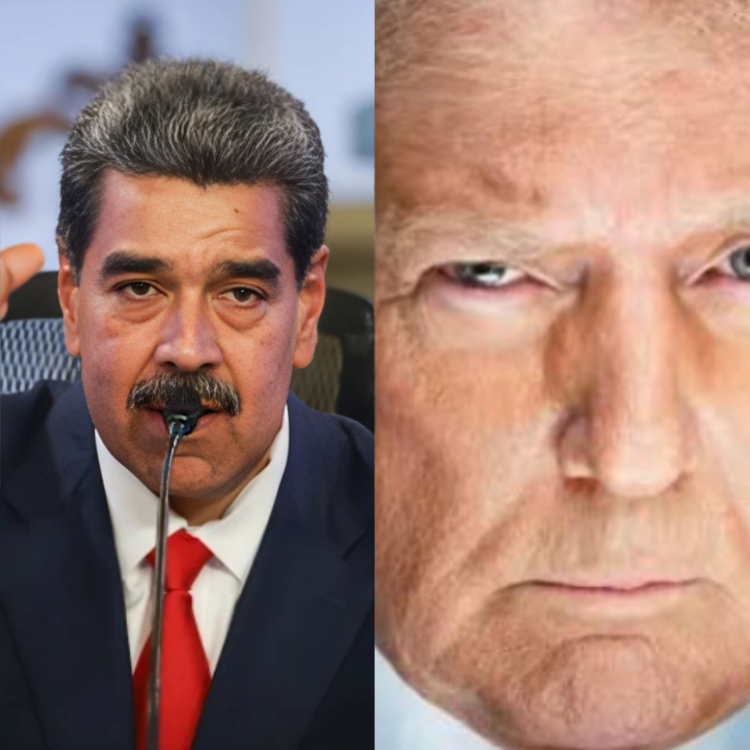
Reports that tore through global media about U.S. strikes on Venezuela and the forceful removal of President Nicolás Maduro and his wife—allegedly on the direct order of President Donald Trump—have unsettled the already fragile architecture of international order. Whether one treats these accounts as settled fact or as claims still contested in diplomatic backchannels, their symbolic weight is unmistakable. Sovereignty, once the sacred cow of global politics, now appears exposed to the harsh winds of raw power.
The recall of events, as widely narrated, is stark. Washington accused Caracas of presiding over a narco-state, alleged that drug shipments flowed through Venezuela in collusion with regional networks in Colombia, and justified kinetic action as a matter of U.S. national security. In this telling, air and naval interdictions that had previously targeted suspected drug-carrying vessels escalated into a decisive strike aimed at decapitating a regime long portrayed as criminal.
If this is indeed what transpired, it places the United States in uneasy tension with the very international legal order it helped midwife. Article 2(4) of the United Nations Charter is unambiguous: all members “shall refrain… from the threat or use of force against the territorial integrity or political independence of any state.” Article 2(7) further warns against intervention “in matters which are essentially within the domestic jurisdiction of any state.” On paper, the case seems closed.
Yet paper has never stopped missiles. The disquieting counter-argument—one Trump has voiced repeatedly—is that a punctilious observance of these rules can transform sovereignty into a sanctuary for impunity. If international law is applied mechanically, the claim goes, the world risks becoming a safe haven for those who orchestrate transnational crime, crush dissent at home, and export violence abroad while sheltering behind the blue flag of the UN.
Venezuela under Maduro supplied ample material for this indictment. Years of documented human rights abuses, brutal crackdowns on opposition voices, politicization of the judiciary, and a humanitarian catastrophe that drove millions into exile eroded the moral capital of the regime. To Washington, these atrocities collapsed the distinction between domestic tyranny and international threat.
This is the uncomfortable lesson Africa, Nigeria in particular must confront without sentimentality. The era when despots—whether in khaki or civilian garb—could commit the unthinkable and retire behind the alibi of sovereignty is waning. A new world order is emerging, uneven and often hypocritical, in which the canopy of sovereignty no longer guarantees protection for rulers who weaponize the state against their own people.
Terrorists, bandits, election riggers, and kleptocrats should take note. The signal being sent—however selectively enforced—is that there are fewer hiding places. The moral logic that equates mass human rights violations with international criminality is gaining traction, even if its application remains inconsistent and driven by power rather than principle.
Nigeria’s own tragic experience sharpens this point. Since banditry metastasized into full-blown terrorism around 2009, more than 20,000 lives have been lost. Successive governments have treated the scourge with what can only be described as kid gloves—negotiations without deterrence, outrage without accountability—allowing the menace to grow in leaps and bounds.
It took the shock of U.S. missile strikes on Christmas Day in 2025, reportedly linked to ISIS cells in Sokoto State, for many Nigerians to grasp the transnational dimensions of the threat festering within our borders. Whether or not every detail of that episode survives scrutiny, the underlying indictment remains that laxity in confronting terror invites external intervention and internationalizes what should have been decisively handled at home.
This logic extends beyond terrorism to the subversion of democracy. Those who trample on the will of the people through brazen election rigging occupy the same moral universe as Maduro’s repression. Electoral theft is not a lesser crime; it is a form of structural violence that corrodes legitimacy and incubates instability.
The Venezuelan moment, therefore, is not merely about Trump’s defiance of UN niceties or America’s selective moralism. It is about a world drifting toward a doctrine in which sovereignty is conditional—earned through responsible governance and forfeited through systematic abuse. That doctrine is dangerous, yes, but it is also a mirror held up to regimes that have long mistaken immunity for invincibility.
Africa’s leaders would do well to read the signs without denial. The age of unaccountable power is ending, not because the world has become more just, but because it has become less patient. In this unforgiving climate, the safest shield is no longer sovereignty alone, but legitimacy rooted in justice, credible elections, and the protection of human dignity. Anything less is an invitation for the winds of power to blow the roof off the state.
“This logic extends beyond terrorism to the subversion of democracy. Those who trample on the will of the people through brazen election rigging occupy the same moral universe as Maduro’s repression. Electoral theft is not a lesser crime; it is a form of structural violence that corrodes legitimacy and incubates instability”