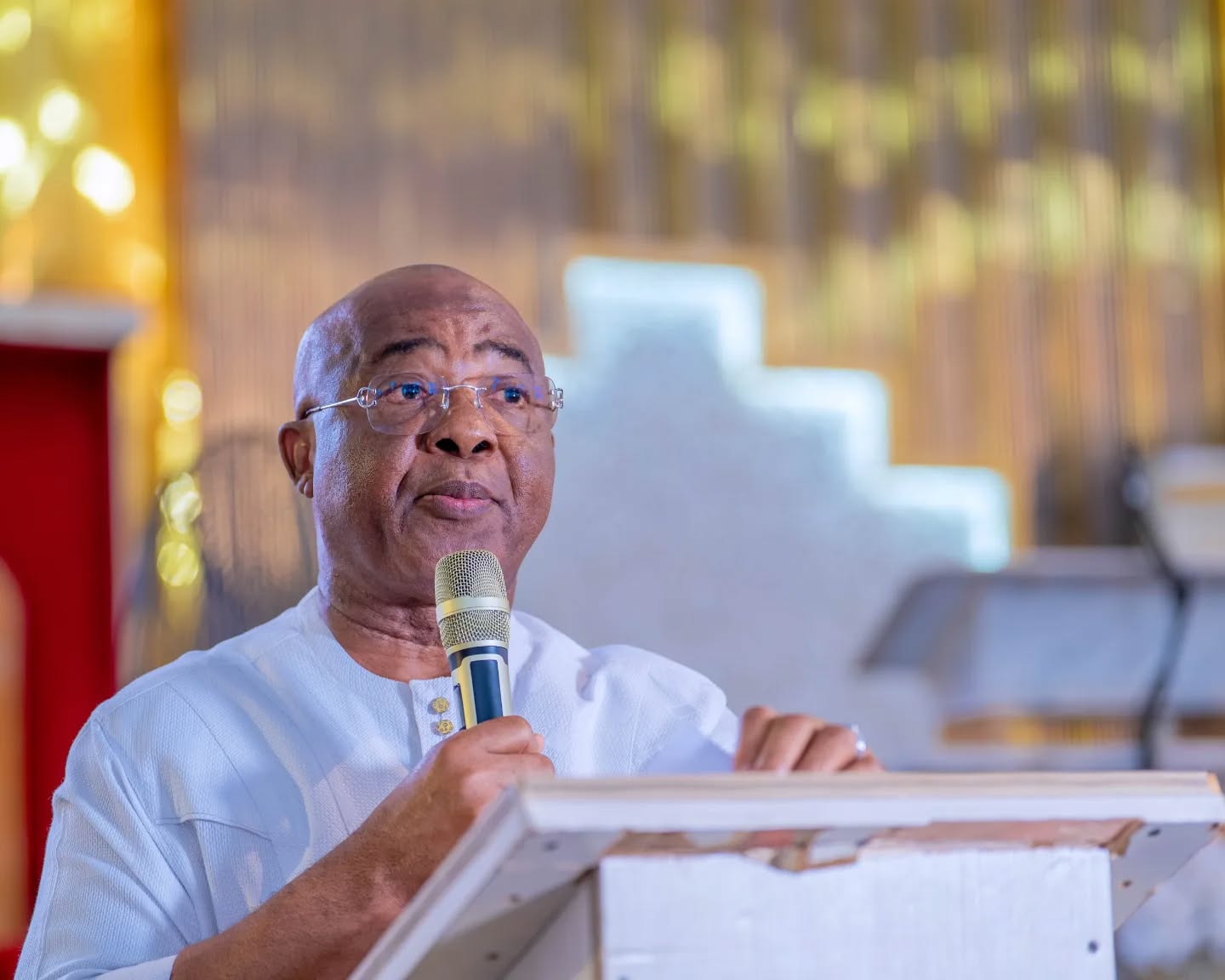
Six years in office is a long enough stretch for history to begin its quiet bookkeeping. It is also an appropriate moment to congratulate Governor Hope Uzodimma, not with the noisy cymbals of praise singing, but with the reflective restraint that comes from experience, memory, and civic responsibility. From the standpoint of a journalist, a citizen, and a stakeholder who has watched the political trajectory of Imo State over decades, six years is not a milestone to trivialize.
Much has been written about Governor Uzodimma’s journey to office, often framed through the reductive lens of judicial politics. What matters now is that he has largely succeeded in shedding the “Supreme Court governor” tag. Power, after all, ultimately derives its legitimacy not just from legality but from performance, presence, and political consolidation. On that score, Uzodimma has, over time, grown into the office and asserted ownership of his mandate.
This piece is deliberately not an inventory of achievements. In several key sectors, the record already speaks with reasonable clarity. Road construction stands out. The quality, spread, and durability of the roads across the state are difficult to dismiss, even by hardened critics. Infrastructure has received visible attention, and on balance, one could reasonably assign a performance rating in the region of 60- 75 percent. There is, however, one aspiration that would permanently inscribe his name in popular memory, which is delivering stable, near-constant electricity. A governor who achieves that would earn gratitude that outlives billboards.
Six years in, the administration can be described as “so far, so good.” But politics, like life, is governed by seasons. With two years left, Governor Uzodimma is now in the evening of his tenure. In governance arithmetic, two years is not expansive time; it is winding-down time. It is the phase when errors are costlier, distractions more dangerous, and focus absolutely non-negotiable.
This phase demands consolidation rather than experimentation. It is about tightening loose ends, finishing strong, and ensuring that the architecture of governance does not collapse the moment the builder steps aside. The final years of any administration often matter more than the early ones because they define the aftertaste of power, and aftertaste is what voters and historians remember most.
Two major issues now loom unmistakably before the governor. Succession and the 2027 election cycle. Uzodimma carries a historical burden—a jinx, if you like—common to many Imo governors who struggled, or outright failed, to produce successors. Breaking that cycle would be no small achievement. It would signal political mastery, not just administrative competence.
Encouragingly, the governor has so far avoided some of the more obvious mistakes of his predecessors. Yet, one unresolved challenge remains elite management. No governor succeeds in isolation. Political stability requires capturing, balancing, and pacifying elites. In and around the government are murmurs—quiet resentments from people who believe they have been loyal, visible, and useful, yet insufficiently recognized or rewarded.
These are the dangerous murmurers of power: supportive in the daylight, resentful at dusk. They clap in public and complain in private. Left unattended, they metastasize into internal saboteurs. A wise governor finds a way to either genuinely accommodate them or decisively neutralize their influence. Ignoring them is rarely a sustainable option.
At the same time, there exists a cohort of core loyalists—young, vibrant men and women, youth who stood with Uzodimma long before power made him fashionable. Some were with him even before his days in the Senate. They have invested belief, time, and political capital in his project. As the curtain begins to fall, these are the people who deserve reassurance, relevance, and recognition.
Succession, if it must be engineered, should emerge from this pool of tested loyalty, not from emergency friends or late-arriving allies—the political joiners who appear when the banquet is already served. Such actors are often insatiable, deeply transactional, and notoriously ungrateful. They discard long-standing loyalists with ease and demand everything from the system they barely helped to build. History counsels caution with such persons.
This final stretch also calls for a retooling of the cabinet. Not because the government has failed, but because renewal is a governing virtue. Fresh faces can inject urgency, ideas, and momentum into an administration approaching its final lap. Equally important is vigilance. Opposition forces are neither asleep nor sentimental. Imo’s succession politics has always been turbulent, and those positioning to take over are preparing with intensity, not goodwill.
Choosing a successor is perhaps the most delicate task of all. While the Charter of Equity remains a prominent part of public discourse, it should be treated as a guiding principle, not a mechanical formula. Ultimately, character matters. The state would benefit from a successor who is humane, restrained, and God-fearing—someone defined more by temperament and conscience than by size, noise, or political appetite. In the end, power is temporary, but the consequences of succession endure.
Onyeukwu writes under his column “Harvest”