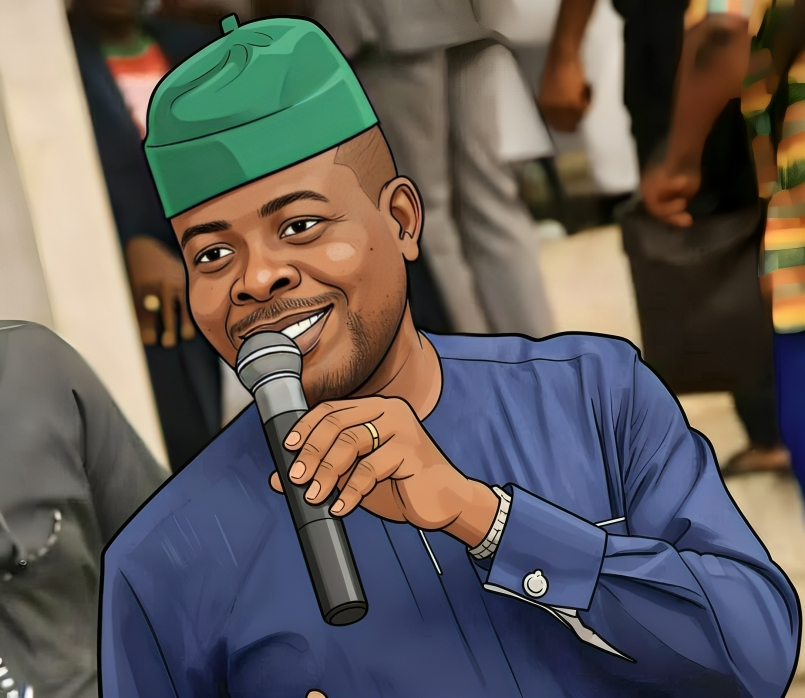
The attempt to cast Emeka Ihedioha as a political equivalent of Pelé is not just strained; it is an intellectual affront. Pelé is a universally acknowledged colossus whose achievements are settled by facts, trophies, and history. Three World Cups, global reverence, and an unassailable legacy define his name. To drag that towering sporting legacy into the muddied terrain of Imo politics, and staple it to Ihedioha’s chequered record, is not analysis; it is propaganda masquerading as metaphor.
Pelé won. Repeatedly. At the highest level. Under the most intense global scrutiny. Ihedioha did not. Politics, unlike poetry, is ultimately judged by outcomes, not intentions or revisionist storytelling. Pelé lifted Brazil from obscurity to dominance. Ihedioha presided over a brief, turbulent interlude that ended not in triumph, but in judicial repudiation. That difference alone collapses the entire analogy.
The claim that Ihedioha is a “master (re)builder” ignores the most brutal fact of his career; he was removed from office by the Supreme Court for illegally occupying the Imo governorship. This was not an electoral defeat fought honorably at the polls; it was a legal sacking that exposed grave structural weaknesses in his political project. Pelé was never stripped of his medals. Ihedioha was stripped of power, authority, and legitimacy.
Even the narrative of victimhood does not survive scrutiny. Pelé was injured by opponents; Ihedioha was undone by his own house. The court’s verdict was not an act of political violence but a consequence of systemic failure—poor party management, flawed documentation, and strategic complacency. Leaders who build enduring structures do not see their mandates collapse under judicial examination.
The romanticisation of Ihedioha’s post-removal period as a “reset” mirrors the worst excesses of political self-delusion. Pelé returned to conquer the world. Ihedioha returned to irrelevance, factionalism, and serial party-hopping. The PDP did not rise into a disciplined, cohesive force under his watch; it fractured, bled members, and lost its moral authority in Imo State.
Invoking 2027 as a looming redemption arc is equally dishonest. Pelé’s comeback was powered by universal acceptance and fear from opponents. Ihedioha’s so-called resurgence is built on press releases, recycled loyalties, and wishful thinking. There is no mass movement, no electoral groundswell, and no evidence that Imo voters are eager to relive an administration remembered more for controversy than competence.
The attempt to frame the African Democratic Congress as a nationwide force driven by Ihedioha is another exaggeration bordering on fantasy. Political parties grow through electoral victories and grassroots penetration, not through naming ceremonies and headline engineering. ADC remains peripheral, and Ihedioha’s influence within it is neither transformative nor commanding.
History is unforgiving to those who confuse proximity to power with performance. Pelé is remembered because he delivered glory to his country. Ihedioha is remembered for a tenure so fragile that it collapsed entirely under legal review. One is etched in gold; the other is footnoted in litigation.
This comparison must therefore be rejected in the strongest terms. Pelé is a benchmark of excellence; Ihedioha is a cautionary tale of political overreach and institutional failure. Dressing political collapse in sporting glory does not change the record. It merely exposes how far narrative engineers are willing to stretch the truth in the service of ambition.