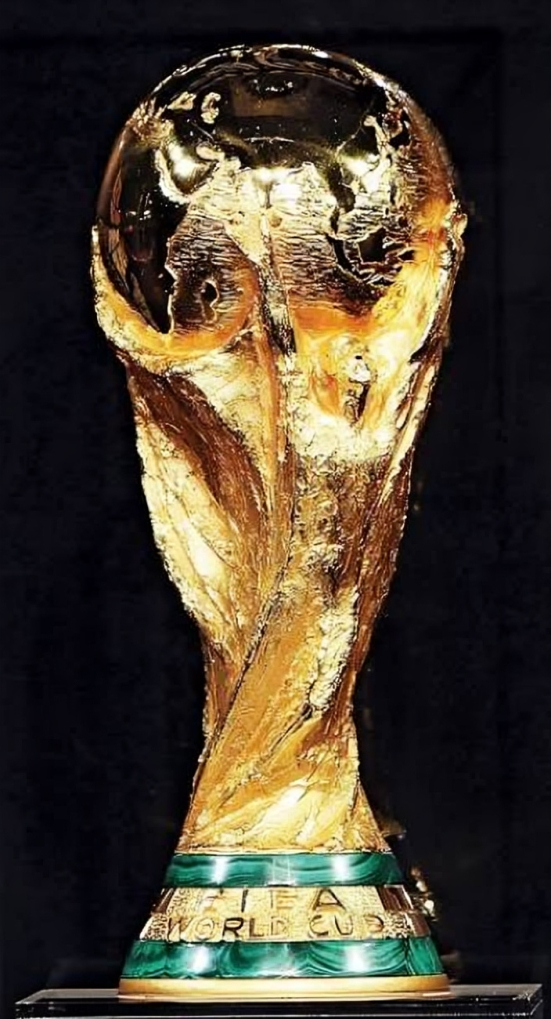
From Montevideo in 1930 to Doha in 2022, the FIFA World Cup has delivered a consistent but often overlooked lesson: football’s biggest prize has been won exclusively under the guidance of homegrown coaches. A review of every men’s World Cup-winning manager since the tournament’s inception shows a striking pattern of national alignment between coach and champion team.
The trend began at the very start of the competition when Uruguay lifted the inaugural trophy under Alberto Suppici, a Uruguayan leading his own country on home soil. That template—local knowledge, cultural fluency and tactical identity rooted in national footballing traditions—has endured for nearly a century.
Italy quickly set an early benchmark through Vittorio Pozzo, who remains the only coach in history to win the World Cup twice. Pozzo led the Azzurri to consecutive titles in 1934 and 1938, embedding a disciplined, tactically rigid approach that defined Italian football for generations and cemented his unique place in the sport’s history.
South America reasserted its influence in 1950 when Uruguay, again guided by a native coach, Juan López Fontana, claimed the title in Brazil. Four years later, West Germany’s Sepp Herberger masterminded the famous “Miracle of Bern” in 1954, reinforcing Europe’s growing tactical sophistication in the post-war era.
Brazil’s golden age followed, driven by Brazilian coaches Vicente Feola in 1958 and Aymoré Moreira in 1962. Their stewardship coincided with the emergence of Brazil’s expressive, attacking identity, blending structure with individual brilliance and establishing the country as a global football powerhouse.
England’s sole World Cup triumph came in 1966 under Alf Ramsey, another domestic coach whose pragmatic approach delivered success on home soil. The pattern of national alignment continued in 1970 when Mário Zagallo, a Brazilian icon, guided Pelé’s Brazil to one of the most celebrated titles in football history.
Germany and Argentina dominated the late 20th century under coaches deeply rooted in their national football cultures. Helmut Schön led West Germany to victory in 1974, while César Luis Menotti and Carlos Bilardo secured Argentina’s titles in 1978 and 1986 respectively, each reflecting contrasting philosophical schools within Argentine football.
Italy returned to the summit in 1982 under Enzo Bearzot, before Franz Beckenbauer—already a legend as a player—completed a rare double by winning the World Cup as coach with West Germany in 1990. His success underscored the value of leadership steeped in national footballing experience.
The modern era has followed the same script. Brazil’s 1994 triumph came under Carlos Alberto Parreira, France’s breakthrough in 1998 was engineered by Aimé Jacquet, and Luiz Felipe Scolari returned Brazil to glory in 2002, each reinforcing the dominance of indigenous coaching leadership.
Italy’s 2006 victory under Marcello Lippi and Spain’s historic 2010 success with Vicente del Bosque further demonstrated how tactical cohesion and cultural continuity can outweigh the appeal of foreign expertise on the biggest stage.
Germany’s Joachim Löw in 2014 and France’s Didier Deschamps in 2018 extended the sequence, before Lionel Scaloni led Argentina to their third title in 2022. Scaloni’s triumph, achieved amid intense pressure and global scrutiny, reaffirmed the enduring relevance of national identity in World Cup success.
As the football world increasingly embraces cosmopolitan club coaching, the World Cup remains an outlier. Nearly a century on, the evidence is unequivocal: no nation has ever won the men’s World Cup under a foreign coach. In football’s ultimate test, the bench—like the badge—has remained resolutely national.