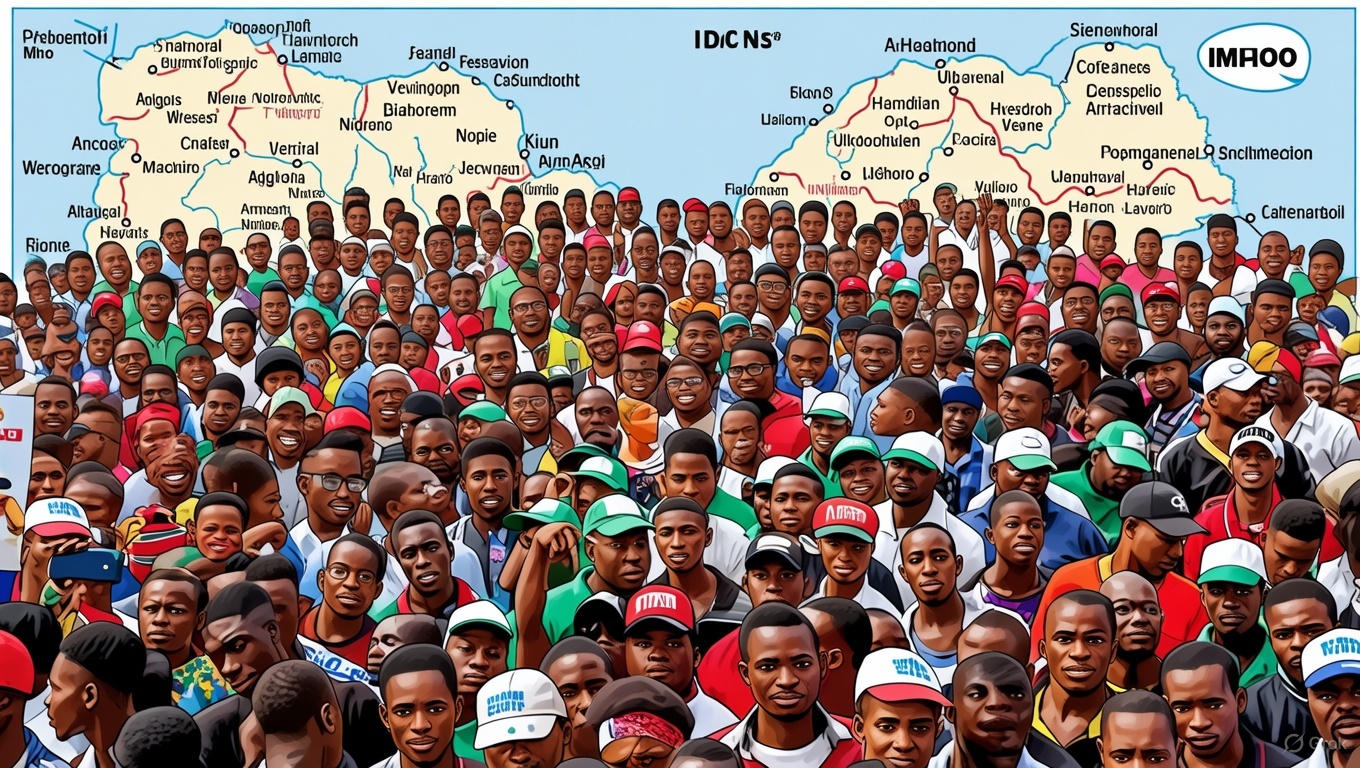
Since Nigeria’s return to civil rule in 1999, Imo State has been locked in an unending conversation with itself—one that oscillates between disbelief and resignation. It is the kind of question that gnaws at the collective conscience because it defies easy answers: why has a state so richly endowed with human capital persistently failed to translate that advantage into transformative leadership? After more than two decades, this question has ceased to be rhetorical; it has become an indictment.
The post-1999 leadership trajectory of Imo reads less like a story of development and more like a catalogue of squandered possibilities. From Achike Udenwa through Ikedi Ohakim to Rochas Okorocha and now Hope Uzodimma, each administration arrived with lofty promises. Some departed leaving behind a trail of unmet expectations. The common denominator has been not just policy failure, but the absence of a governing philosophy anchored in institutional growth and public interest.
Rochas Okorocha’s governorship stands out as a cautionary tale of populist overreach and personalistic rule. He was marketed—and widely embraced—as a political messiah, a man who would disrupt the complacent order and reinvent Imo. What followed, however, was governance driven by spectacle rather than substance, personalization rather than institution-building.
Emeka Ihedioha’s truncated administration offers a glimpse into what might have been. In a few months, he signaled seriousness of purpose, administrative order, and respect for process—qualities that had long been absent from Imo’s political landscape. The Supreme Court judgment that abruptly terminated his tenure did more than remove a governor; it reinforced a sense of democratic fragility and deepened the cynicism of a people already skeptical of the political system.
What sharpens Imo’s sense of failure is comparison. Abia State, long dismissed as a hopeless case of infrastructural decay and elite capture, has experienced a perceptible revival of public confidence under Alex Otti. Whatever the ultimate verdict on his administration, hope—arguably the most powerful fuel of development—has returned to public discourse. Imo, by contrast, still struggles to inspire belief.
Anambra and Enugu have benefited from relative leadership continuity and a culture of incremental progress. Ebonyi’s journey has been uneven, sometimes chaotic, yet marked by a relentless search for identity and direction. Imo alone appears trapped in a loop of stagnation, perpetually restarting its development narrative without ever advancing beyond the prologue.
This persistent underperformance would be understandable if Imo were short on talent. The opposite is true. Imo boasts one of the highest concentrations of educated citizens in Nigeria. Its sons and daughters dominate universities, hospitals, boardrooms, and innovation hubs across the world. The state exports excellence with remarkable efficiency—yet imports mediocrity into its political leadership.
The paradox is striking: brilliance thrives in exile while governance at home languishes. This disconnect exposes a deeper problem—politics in Imo is structurally hostile to competence. Candidate(s) emergence at party primaries is often determined by money, manipulation, and patronage networks rather than ideas, integrity, or capacity. Politics becomes a closed shop, insulated from the very human resources that could redeem it.
Consequently, governance is reduced to survivalist calculations. Leaders focus on consolidating power, appeasing godfathers, and managing elite bargains, while long-term planning and institutional reform are treated as optional luxuries. Development becomes episodic, not systemic; projects exist without policy coherence, and vision is sacrificed on the altar of expediency.
Governor Hope Uzodimma’s tenure illustrates this dilemma. There are areas where effort is visible and initiatives that deserve acknowledgment. But governance is not a checklist of projects; it is the articulation of a compelling vision that mobilizes citizens and builds trust. For many Imo people, that overarching narrative—one that explains where the state is going and why—remains frustratingly elusive.
At its core, Imo’s leadership crisis is not about individuals but about values. The state has struggled to produce a governor who is visionary yet grounded, courageous yet consultative, people-centered yet institutionally disciplined. Until politics is reimagined as a platform for service rather than self-enrichment, leadership failure will continue to reproduce itself with depressing regularity.
Imo’s case, therefore, is not destiny; it is choice. A state bursting with talent has normalized mediocrity by tolerating a political culture that rewards the wrong incentives. Breaking this cycle will require citizens to demand more, elites to rethink their complicity, and politics to be reanchored in ideas, competence, and moral clarity. Until then, Imo will remain a sobering lesson in how abundance of human capital can coexist with chronic poverty of leadership.
*Onyeukwu writes On His Column “Harvest”