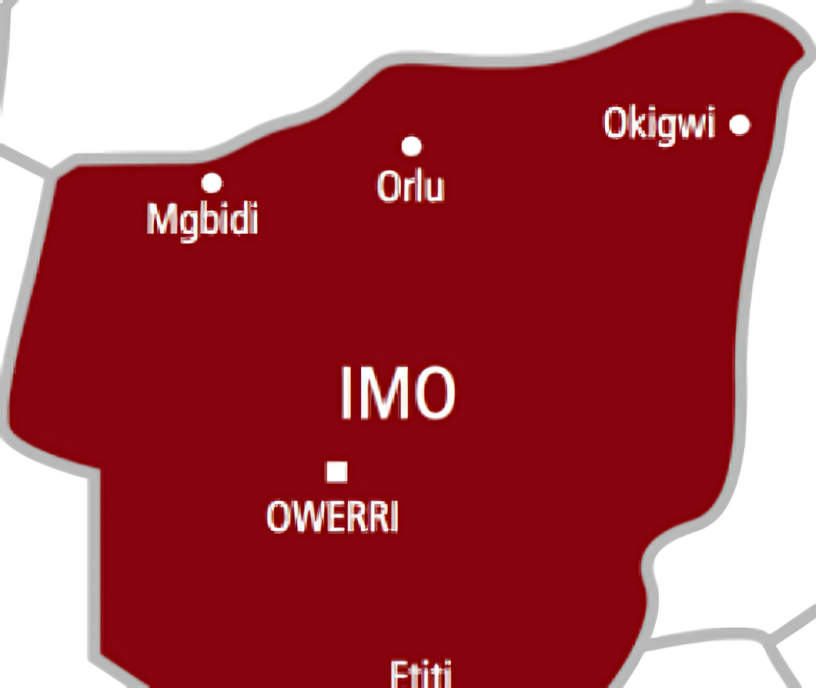
If states possessed foresight, Imo would approach its future with guarded pride and deep anxiety. Its creation on February 3, 1976, was not an act of military largesse but the culmination of disciplined agitation, elite bargaining and strategic persuasion. That provenance matters because polities born through seriousness cannot afford futures governed by frivolity.
At birth, Imo was not the compact entity it is today. It encompassed territories that later became Abia and Ebonyi States, making it one of the most expansive and administratively ambitious products of the 1976 state-creation exercise. This was not accidental. It reflected a federal confidence in the organisational capacity, demographic heft and political maturity of the Imo axis. The later fragmentation of that original Imo is a reminder that political relevance is not permanent; it can be diminished by mismanagement even as challenges multiply.
The architects of Imo understood governance primarily as a structural problem. East Central State was too large, too distant and too unwieldy to serve its constituent communities effectively. Their solution was proximity, coherence and administrative logic. The next fifty years will test whether today’s leaders understand that development is a function of institutions, not incantations.
Sam Onunaka Mbakwe and his contemporaries did not fight for Imo so it could degenerate into a battleground of elite rivalries. They envisioned a state capable of planning, mobilising its formidable human capital and asserting its relevance within Nigeria’s federal architecture. Any serious projection of Imo’s future must recover this founding rationality.
Imo’s demography is both its comparative advantage and its existential dilemma. The state consistently produces educated, mobile and entrepreneurial citizens, yet lacks the economic depth to retain them. Over the next fifty years, Imo must choose between becoming a productive hub that absorbs its talent or remaining a staging post for migration to Lagos, Abuja and foreign capitals.
Economic growth, however, will not occur by aspiration alone. Infrastructure—power, transport, healthcare, water and digital connectivity—will determine whether Imo participates meaningfully in the modern economy or languishes on its margins. A state that once governed territories stretching into present-day Abia and Ebonyi cannot manage its reduced geography with reduced ambition.
Equally critical is politics. Imo’s next fifty years demand a decisive break from personality-centred governance toward institutional stability. The state was created through consensus and discipline; it cannot be sustainably governed through improvisation and transactional politics.
Most crucially, going forward competence must supersede mundane and outdated considerations in determining who governs Imo. The state’s future cannot be hostage to primordial calculations, sentimental considerations or political shortcuts that privilege familiarity over capacity. In an era of economic complexity and fiscal constraint, leadership incompetence is no longer merely unfortunate; it is catastrophic.
Imo’s economy must also outgrow its civil-service dependency. Agriculture, manufacturing, technology and the creative industries offer scalable opportunities that were unimaginable in 1976. The decisive variable is whether governance can create policy environments that reward productivity, innovation and value creation rather than proximity to power.
The lesson of Imo’s expansive birth is that relevance is earned continuously. Once, Imo was strong enough to midwife two additional states. Today, it must reconstruct significance through ideas, policy coherence and governance excellence rather than nostalgia.
Collective memory will shape this future. A state that forgets the discipline that secured its creation risks normalising mediocrity. Imo’s history should be taught not as political folklore but as civic instruction—evidence that progress requires organisation, sacrifice and clarity of purpose.
In the next fifty years, Imo will either exemplify how historical advantage can be squandered or demonstrate how self-awareness can renew a political community. This outcome will not be determined by anniversaries or rhetoric but by deliberate, often uncomfortable, choices.
Ultimately, Imo’s future will be measured against the seriousness of its birth. A state created through consensus, strategy and sacrifice has no moral justification for drift. The next fifty years remain unwritten. Whether Imo produces a future worthy of its origins will depend on governance—and on whether citizens insist that competence, not convenience, determines leadership.
*Onyeukwu Writes Under His Column ‘Harvest