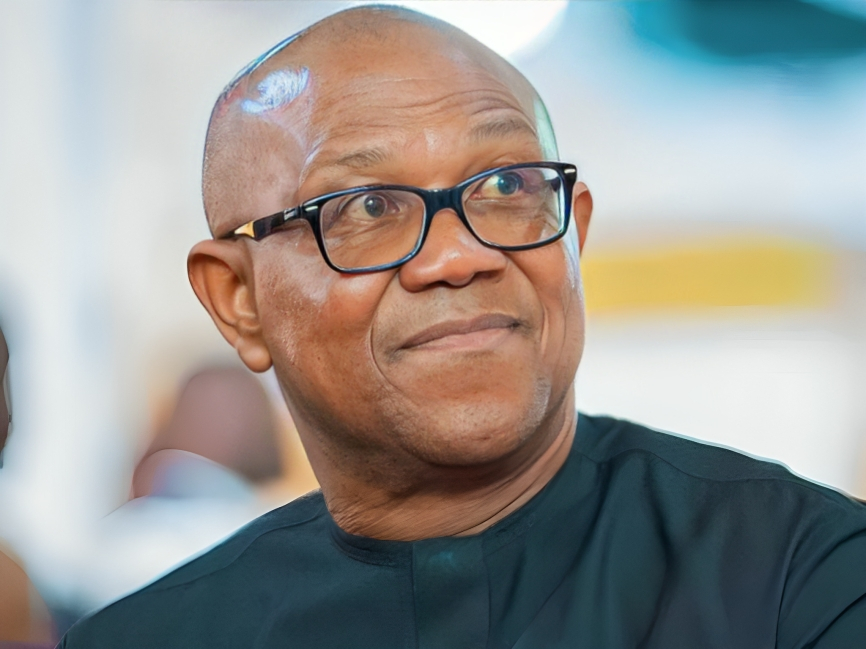
Nigerian politics has an uncanny talent for converting insurgent energy into establishment entropy. When Peter Obi sauntered out of the Labour Party—a platform that once throbbed with insurgent zeal—and found accommodation in the African Democratic Congress, many of his followers interpreted it as strategic recalibration. Others saw it as a bewildering detour, perhaps even a wild goose chase in a party that is, at best, an uneasy coalition of the good, the bad, and the incorrigibly transactional.
To appreciate the magnitude of the gamble, one must revisit 2023. Before that election, Obi inspired what sociologists would call a quasi-messianic movement. The “Obidients” were not merely supporters; they were evangelists. They weaponized social media, colonized civic spaces, and transformed a previously marginal party into a formidable national vehicle. In sheer intensity and geographical spread, no post-1993 election approximated the civic fervor that attended Obi’s candidacy.
Indeed, since the annulled June 12, 1993 election—widely believed to have been won by Moshood Abiola—Nigeria had not witnessed a plebiscitary wave of that amplitude. Obi swept the South East and South South with the force of a cultural renaissance. He breached Lagos, the political Kingdom of Bola Tinubu, and registered impressive numbers in parts of the North Central. No Igbo politician in Nigeria’s Fourth Republic—indeed, no Nigerian outside Abiola’s mythic 1993 coalition—had commanded that breadth of cross-regional enthusiasm.
Yet politics is arithmetic before it is poetry. What Obi gained in southern consolidation, he lacked in the demographically decisive North. The North is not just a geographical abstraction; it is an electoral colossus. Without substantial northern buy-in, presidential ambition in Nigeria remains aspirational rhetoric. Obi’s strategists must have concluded that moral victory without demographic ballast is merely a consolation prize.
This perhaps explains his migration to the ADC. The Labour Party, even at the height of its unexpected glory, was riven by factional intrigues and parasitic power brokers who saw in Obi’s candidacy a windfall rather than a philosophical reorientation. The ADC, by contrast, offers a broader northern footprint and an infrastructure that aspires to national viability. But it also carries the baggage of entrenched political actors whose ambitions are neither subtle nor sacrificial.
Enter Atiku Abubakar, the indefatigable presidential marathoner. The ADC is widely perceived as his political nursery. Atiku’s body language betrays no appetite for retirement. He has run for president so often that his candidacy has become a quadrennial ritual. If the ADC becomes the arena for 2027’s opposition recalibration, will he graciously cede the ticket to Obi? Nigerian politics does not reward romantic optimism.
This is where the existential question arises: is Obi prepared to play second fiddle? The vice-presidential slot, while constitutionally significant, would be ideologically anticlimactic for a movement that tasted the intoxicating nearness of presidential victory. Many Obidients are viscerally opposed to the idea. For them, 2023 was not a dress rehearsal; it was a near-miss that demands completion, not compromise.
There is also the delicate matter of momentum. Political capital, like kinetic energy, dissipates without motion. The cult-like fellowship that powered Obi’s 2023 bid has thinned—not vanished, but attenuated. Movements require continuous mobilization, narrative reinforcement, and visible institutional anchorage. In the absence of these, even the most passionate followings can morph into nostalgic online communities.
Moreover, the ADC is not a tabula rasa. It is an amalgam of disparate tendencies, some progressive, others opportunistic. Obi must navigate internal power equations that are less about ideology and more about elite bargaining. If he fails to secure the presidential ticket, will he remain within the party and subordinate his ambition? Or will he once again seek an alternative platform, thereby reinforcing the perception of political itinerancy?
Obi’s central challenge, therefore, is clarity. Is his sojourn in the ADC a tactical maneuver to harvest northern votes and construct a truly pan-Nigerian coalition? Or is it a miscalculation that underestimates the entrenched ambitions of party stalwarts? Nigerian voters, especially his ardent base, deserve candor about his 2027 roadmap.
If he is on a mission, he must articulate it with strategic lucidity. If he is merely hedging his bets in a party whose internal dynamics may ultimately constrict him, then history may record this move as a dilution of a once-electric insurgency. Politics rewards audacity but punishes ambiguity. The question is not just whether Peter Obi is wasting his time in the ADC; it is whether he can convert a party of contradictions into a vehicle of coherence—or whether the contradictions will consume him first.