The military has a simple doctrine: obey the last order. In barracks language, it means that the most recent directive from a superior overrides all previous ones. It demands instant compliance, discipline without hesitation, and loyalty to the chain of command above personal judgment.
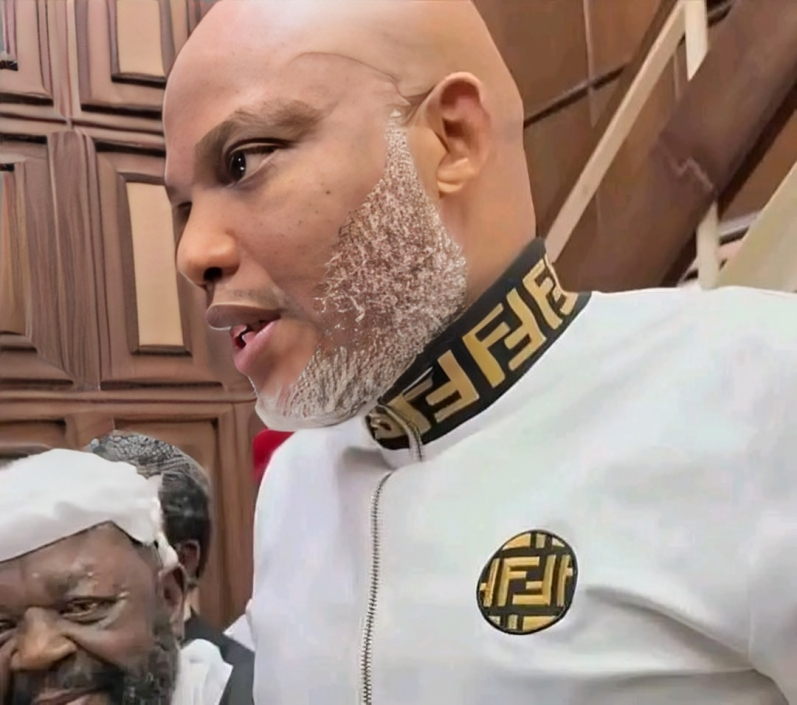
That principle now echoes, ironically, in the politics of agitation. Freedom fighter Nnamdi Kanu, though in detention, still commands enormous influence among members of the Indigenous People of Biafra, IPOB. His last order, as widely reported, is this: end the Monday sit-at-home now.
The sit-at-home policy emerged as a tool of passive resistance by a group seeking the actualisation of Biafra out of Nigeria. IPOB’s complaint is not new. It is rooted in the claim of sustained marginalisation of the people of the South East and the broader eastern region. Their call has been consistent: let there be a referendum so the people can decide.
The Monday sit-at-home gained traction across the South East. It became both a symbol of protest and a pressure tactic, especially after Kanu was apprehended abroad and returned to Nigeria to face trial. For many, it was the loudest non-violent way to demand his release.
But the question remains: did the order to end it truly come from “Onyendu,” as his followers call him? Beyond the circulating video of some IPOB members declaring that enforcement had ceased, what firm proof exists? Was the message formally transmitted through his lawyers? Skepticism lingers, especially among those who believe the sit-at-home, however disruptive, kept the agitation alive.
Even Governor Chukwuma Soludo of Anambra State faced backlash from IPOB sympathisers when he penalised traders in Onitsha who shut their shops on Mondays. The friction revealed how deeply embedded the protest had become.
Yet we must ask a harder question: how much did the sit-at-home truly advance the cause of Ndigbo? And was the cause itself justifiable?
To deny the legitimacy of Igbo grievances is to ignore history. The Nigeria–Biafra war ended on the battlefield, but its psychological and structural consequences did not. The eastern region emerged physically shattered, politically displaced, and emotionally scarred. General Yakubu Gowon’s “no victor, no vanquished” policy promised reintegration, but many believe it fell short in practice.
Since then, there has been a persistent perception among many Ndigbo that access to top political and military positions remains constrained, and that economic decisions have not favoured the region. Whether fully substantiated or not, that perception has shaped identity, politics, and protest in the South East.
The sit-at-home was meant to dramatise that frustration. It certainly drew attention. It also inflicted economic pain on the very people it sought to defend. Markets closed. Schools shut. Transport halted. Businesses suffered. Government may have been irritated, but ordinary citizens bore the brunt.
IPOB did not secure Kanu’s release. But the agitation, crude as some of its methods were, forced the nation to confront uncomfortable conversations about federalism, equity, and belonging.
It is also true that some groups, operating under the IPOB label, have muddied the waters through actions inconsistent with Kanu’s declared ideals. That makes it harder to accept every pronouncement attributed to him without caution.
Still, strategy must evolve. If indeed Kanu has ordered an end to the sit-at-home, it may signal a recalibration rather than a retreat. Resting that strategy does not mean abandoning the broader struggle for dignity and inclusion.
On the matter of Kanu’s release, traditional voices have joined the appeal. At the National Traditional and Religious Leaders Summit in Abuja, Igwe Lawrence Agubuzu publicly urged President Bola Ahmed Tinubu to consider his freedom, drawing comparisons with Sunday Igboho, who once championed Oduduwa Republic yet now walks free. The appeal was direct and unambiguous.
If we are to move forward, two issues cannot be avoided. First is the question of Kanu’s continued detention. Second is the deeper issue of restructuring Nigeria into a genuinely federal system where no region feels like a “dot in a circle,” to borrow a phrase once used in a controversial political context.
If Kanu’s last order is indeed authentic, then it should be obeyed: stop the sit-at-home. But ending a tactic does not end a grievance. Only justice, inclusion, and sincere federal reform can do that.
On a candid note, the release of Nnamdi Kanu and the entrenchment of true federalism remain the clearest paths to burying the Monday sit-at-home—and perhaps, in time, the Biafra question itself.
Dr. Odu can be reached through [email protected] or SMS 07016722929