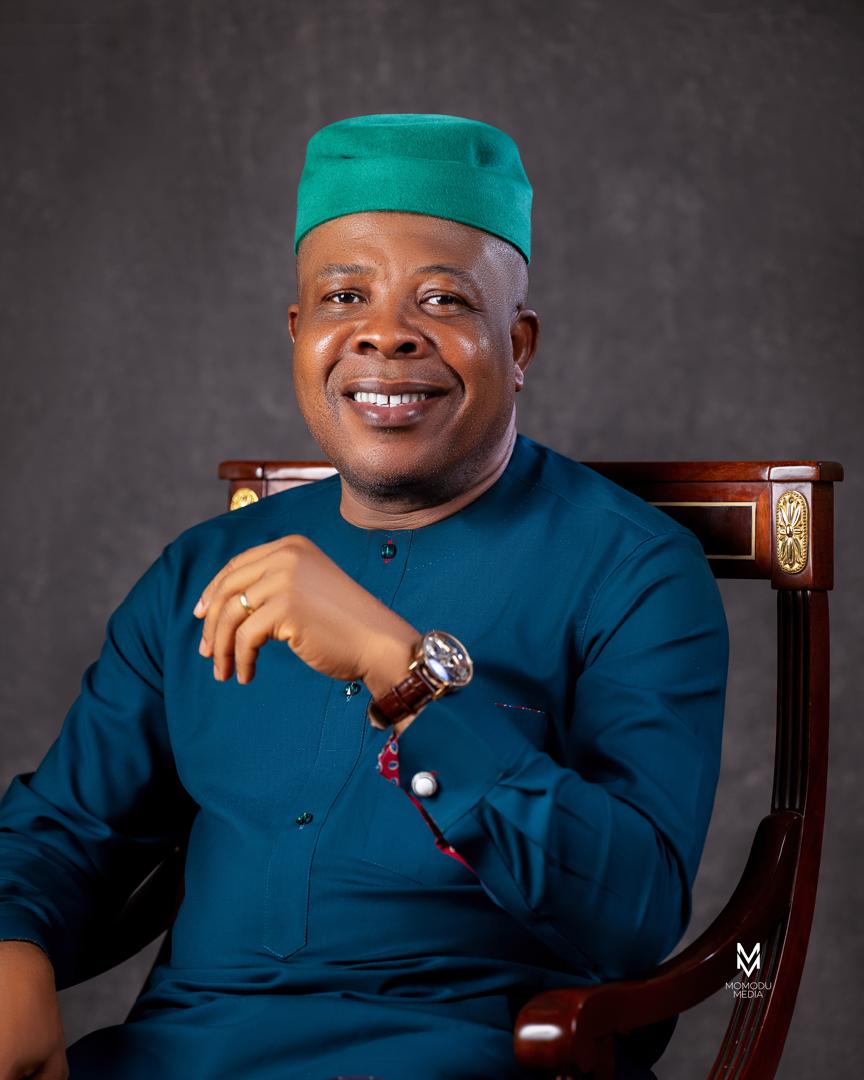
The question of whether Emeka Ihedioha can stage a dramatic return to Government House, Owerri, continues to animate political discourse in Imo State, as permutations ahead of the 2027 governorship election gradually take shape. His re-emergence in the political arena, now on the platform of the African Democratic Congress (ADC), signals a renewed determination to reclaim a mandate many of his supporters insist was prematurely truncated.
Ihedioha’s governorship came to an abrupt end on January 20, 2020, following a landmark Supreme Court judgment that removed him from office and declared Hope Uzodimma of the All Progressives Congress (APC) as the duly elected governor. The ruling, which recalculated votes from previously excluded polling units, instantly altered the political trajectory of the state and remains one of Nigeria’s most controversial electoral verdicts in recent history.
In the immediate aftermath, Imo witnessed a tense transition, marked by public outrage in some quarters and political recalibration in others. Ihedioha, who had assumed office on May 29, 2019 under the Peoples Democratic Party (PDP), accepted the judgment, urging calm among his supporters while describing the development as a “temporary setback.”
Despite his short stint of about seven months, his administration was widely described by allies and some neutral observers as impactful. Anchored on the “Rebuild Imo” agenda, his government initiated reforms in public finance management, restored due process in procurement, and embarked on road rehabilitation across key urban centres. His administration also prioritized civil service reforms, prompt payment of salaries, and attempted to sanitize state institutions weakened by years of alleged mismanagement.
Before his governorship, Ihedioha had built a formidable national profile, serving as Deputy Speaker of the House of Representatives — a position that cemented his reputation as a seasoned legislator with deep political networks. That experience has continued to shape his strategic calculations in Imo politics.
Since his removal, he has not disguised his ambition to return to Douglas House. However, in the buildup to the 2023 governorship election, Ihedioha abruptly stepped aside after losing control of the PDP structure in Imo State to Senator Samuel Anyanwu, the party’s National Secretary. Announcing his exit from the PDP, Ihedioha declared that the party had been “hijacked by forces that do not share our vision for a new Imo,” a statement widely interpreted as a direct swipe at his internal rivals.
Beyond the internal party setback, some analysts argue that his decision not to contest in 2023 was also strategic. At the time, the PDP appeared ill-equipped to unseat an incumbent governor with significant federal backing. This assessment proved largely accurate, as Uzodimma secured a landslide victory in the November 2023 election, polling 540,308 votes to defeat Anyanwu, who garnered 71,503 votes.
An Owerri based political analyst, Magnus Eke offers a more critical interpretation of Ihedioha’s pattern, arguing that the former governor tends to avoid direct confrontations with sitting governors. He recalls Ihedioha’s defeat to Rochas Okorocha in 2015, noting that his eventual victory in 2019 came against Uche Nwosu — Okorocha’s son-in-law — rather than an incumbent. According to Eke, “Ihedioha calculates his battles carefully, and history suggests he prefers open contests without incumbency advantage.”
More recently, Ihedioha stirred fresh controversy after reportedly stating during a visit to Ghana that Peter Obi could not become President — a remark that drew backlash, particularly from supporters of the former Anambra governor. Though the comment remains politically sensitive, it added another layer to perceptions about his positioning within the evolving opposition landscape.
His defection to the ADC is widely seen as part of a broader strategy to rebuild a viable political platform outside the PDP. The move is also interpreted as an attempt to recreate the 2019 coalition that propelled him to victory at that time against entrenched political interests aligned with Okorocha’s preferred successor.
However, the terrain has shifted considerably since then. Analysts like Barr. Solomon Onuoha argue that while Ihedioha retains name recognition and a loyal base, the sympathy that followed his Supreme Court removal may have significantly waned. He notes that the ADC has yet to demonstrate the organizational strength or statewide appeal required to challenge a deeply entrenched APC structure in Imo.
Similarly, Mr. Ben Okafor, a political analyst with INNONEWS, points to the formidable influence of Governor Uzodimma, who is widely expected to play a decisive role in determining his successor. Historically, no outgoing governor in Imo has successfully installed a successor — a pattern Uzodimma may be keen to break, thereby raising the stakes for any challenger, including Ihedioha.
There is also a growing sentiment among sections of the electorate that the state should move beyond its traditional political elite. Critics argue that Ihedioha, despite his experience, represents an older political order, and that the moment may be ripe for a new generation of leaders to emerge and redefine governance in the state.
Another variable is the national outlook of the ADC, particularly its handling of the 2027 presidential race. Should Peter Obi fail to secure the party’s presidential ticket, analysts warn it could dampen enthusiasm for ADC candidates across the country, including Ihedioha in Imo. Although the Imo governorship election is scheduled for November 2027 — nearly a year after the presidential poll — the ripple effects of national party dynamics could prove decisive.
Yet, history offers Ihedioha a narrow pathway to optimism. Political comebacks, though rare, are not unprecedented. Figures like U.S President Donald Trump have demonstrated that electoral defeat or removal from office does not always signal the end of political relevance. For Ihedioha, the challenge lies in translating past goodwill into present-day electoral strength within a significantly altered political environment.
Ultimately, his chances of returning to Government House will depend on a complex interplay of party structure, voter sentiment, elite alliances, and the strategic decisions of his opponents. What remains clear is that while the ambition is intact, the path back to power for him is far more uncertain than it was in 2019.