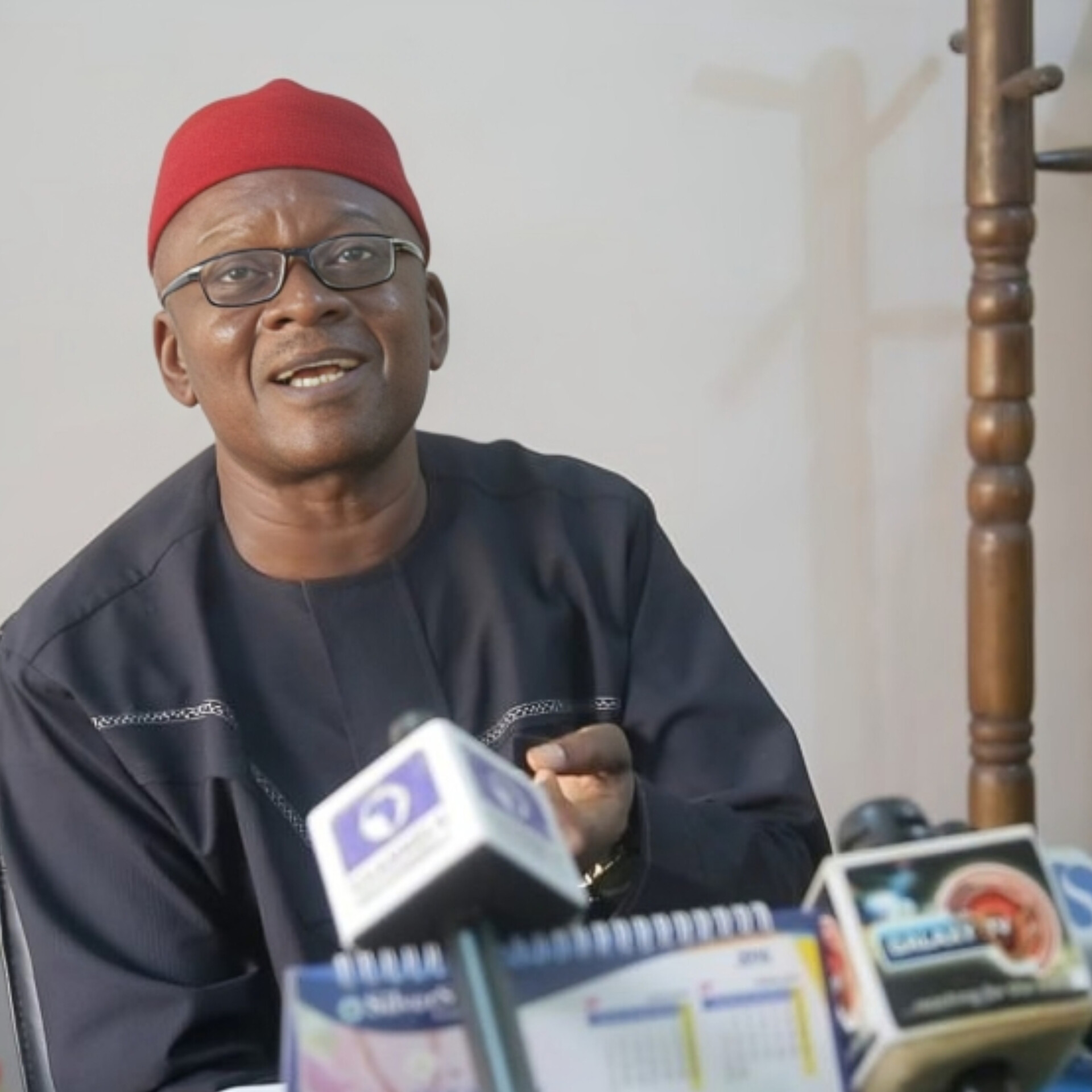
The Coalition of Southern Nigeria (CSN) has called on political parties to zone their presidential tickets to the South ahead of the 2027 general election, insisting that equity and national balance demand a continuation of the rotational arrangement.
The position was part of resolutions reached at an emergency meeting of the group, where political stakeholders and members convened virtually to deliberate on what they described as “crucial issues” shaping Nigeria’s political trajectory.
The meeting, held via Zoom, brought together key figures across the southern region, with participants framing their intervention as necessary to stabilise the country’s political equation ahead of the next electoral cycle.
The communiqué was signed by Prof. Vitalis Orikeze Ajumbe, chairman of the coalition, and Hon. Belo Osaretin, secretary-general.
In the communiqué issued after the meeting, the coalition said all registered political parties must respect zoning as a long-standing principle that has sustained Nigeria’s unity and corporate existence.
The group argued that the presidency should remain in the South for two terms of eight years, after which power would rotate back to the North in 2031, in line with what it described as the “true spirit of political balance”.
CSN said adherence to this arrangement would reinforce fairness and reduce tensions often associated with power distribution in the country’s multi-ethnic structure.
On the conduct of elections, the coalition urged the Independent National Electoral Commission (INEC) to deliver a credible, free, and fair process in 2027, noting that public trust in democracy hinges on the integrity of the electoral system.
The group also cautioned the electoral umpire against actions that could create the impression of bias, stressing that neutrality remains central to its constitutional role.
CSN further warned against a repeat of the 2023 presidential election, which it described as marred by the failure of the commission’s technology platform and a controversial shift to manual transmission of results, adding that any recurrence could plunge Nigeria’s fragile democracy into crisis.