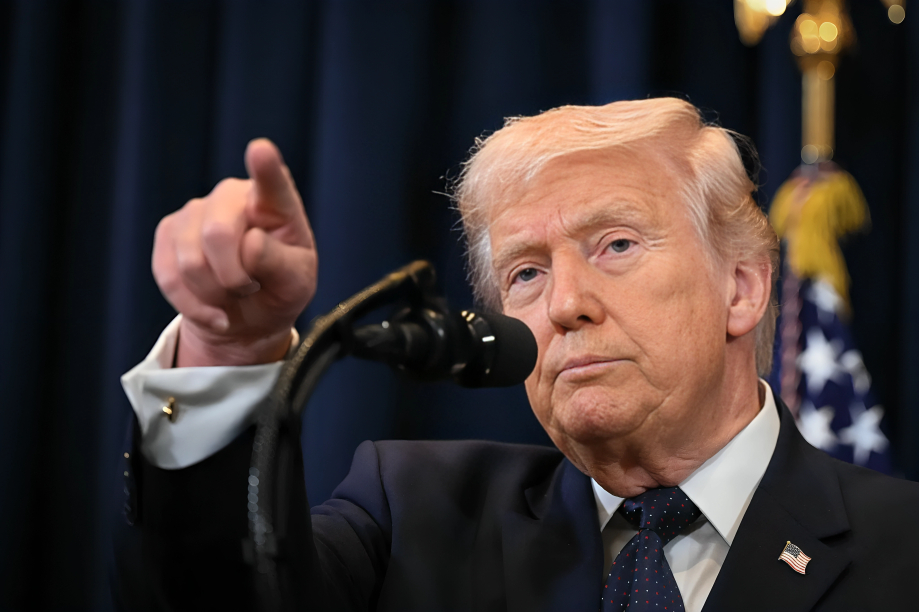
United States President, Donald Trump, has issued a chilling warning to Iran, declaring that the country’s “whole civilization will die tonight” if its leadership fails to reach a last-minute agreement with Washington.
Trump, who spoke over the weekend, said Iran had until Tuesday 8pm Eastern Time (1am WAT) to strike a deal, raising global tensions over the escalating crisis.
The US president is demanding that Iran fully reopen the Strait of Hormuz to international shipping or face severe military consequences, warning that failure to comply would unleash “hell”.
In a post on Truth Social shortly before the deadline, Trump said although he did not want such destruction, it was likely to happen.
“A whole civilization will die tonight, never to be brought back again. I don’t want that to happen, but it probably will,” he wrote.
He added that a possible regime change in Iran could create room for a breakthrough, expressing cautious optimism that “something revolutionarily wonderful” might still occur.
Trump described the moment as one of the most critical in world history, insisting that decades of what he called “extortion, corruption, and death” in Iran could come to an end.
On Monday, the US president escalated his rhetoric further, threatening to destroy Iran’s power infrastructure, including bridges and power plants, if Tehran ignored the ultimatum.
Following the warning, multiple strikes were reported across Iran, targeting key transport infrastructure such as bridges and railway lines.
In Kashan city, a reported strike killed two persons and left three others injured, according to Iran’s state news agency, IRNA.
Earlier, the Israel Defense Forces (IDF) had warned Iranian citizens to avoid rail travel and stay away from railway facilities for at least 12 hours amid fears of imminent attacks.
The United States has also reportedly struck Iran’s strategic Kharg Island, a critical export hub through which most of the country’s oil shipments pass.
Meanwhile, Iranian authorities have rejected calls for a ceasefire, insisting instead on a permanent end to the ongoing conflict.
The situation remains fluid, with the world watching closely as the deadline passes and tensions between Washington and Tehran reach a boiling point.