The United States Mission in Nigeria has announced sweeping new rules that will significantly alter the visa application process for Nigerians seeking entry into the country.
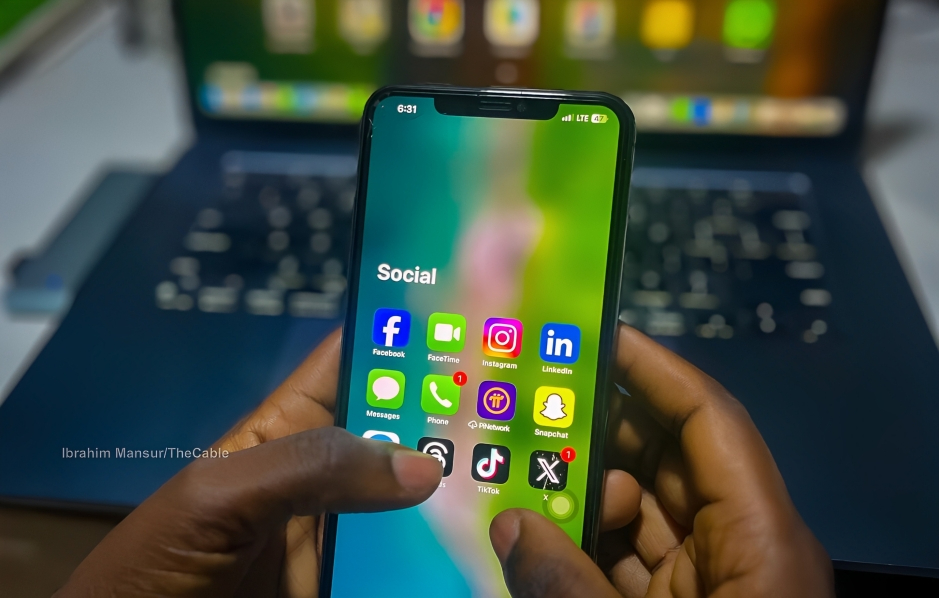
Under the new policy, all non-immigrant visa applicants are now required to provide details of their social media accounts covering the last five years.
The embassy made the announcement in a statement issued on Monday, warning that applicants who fail to comply with the directive risk outright denial of their visa applications and possible ineligibility for future visas.
“Visa applicants are required to list all social media usernames or handles of every platform they have used from the last 5 years on the DS-160 visa application form,” the mission declared.
It further emphasized the weight of the new requirement: “Applicants certify that the information in their visa application is true and correct before they sign and submit.”
The DS-160 is the standard online form mandated by the US Department of State for most non-immigrant visa categories. These include temporary visitors for business (B-1) or tourism (B-2); F and M visas for academic and vocational students; as well as H visas for temporary workers such as the H-1B program for specialty occupations.
The embassy explained that the policy is aimed at strengthening national security, pointing out that it builds on earlier measures. In June, international student applicants were instructed to make their social media accounts public for vetting.
Similarly, in July, those seeking F, M, and J non-immigrant visas were directed to adjust their privacy settings to “public” to allow US authorities unrestricted access during background checks. The mission stressed that omission of such details will no longer be tolerated.
These fresh requirements are consistent with broader measures adopted by Washington under successive administrations. The Trump-era State Department previously suspended student visa appointment scheduling and expanded surveillance of applicants it considered hostile to US interests.
Yet, the measures are not without controversy. They come at a time when Washington frequently criticizes foreign governments for suppressing free speech online.
In May, US Secretary of State Marco Rubio declared that the US would impose visa restrictions on foreign nationals who censor Americans on social media. He stressed that “free speech is among the most cherished American rights,” accusing certain foreign governments of silencing their citizens.
Defending the new rules, Richard Mills, the US Ambassador to Nigeria, insisted earlier this month that the visa policy shift was not designed to punish Nigerians. Instead, he argued, the changes were intended “to improve security and service delivery” in line with Washington’s evolving immigration strategy.