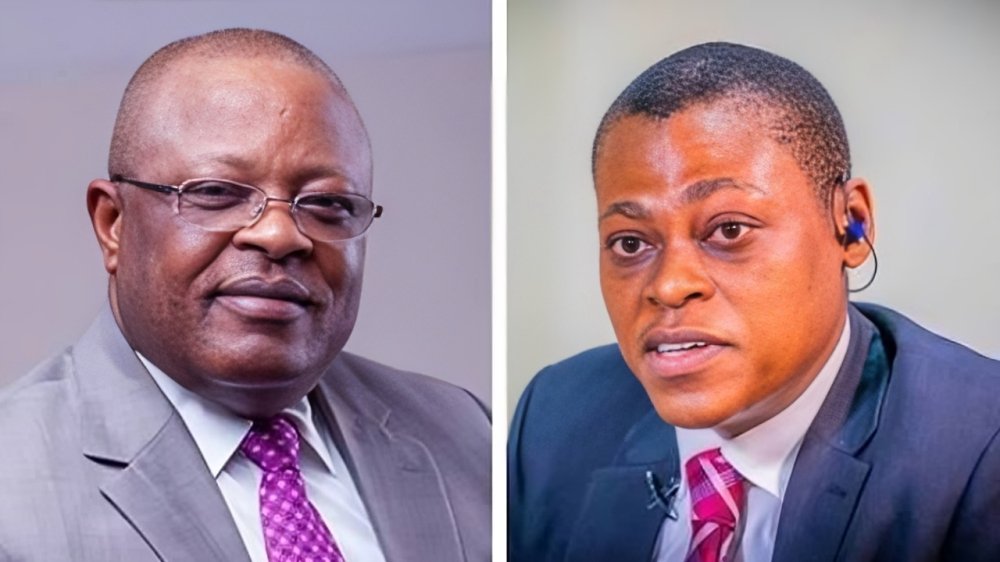
Let’s call it what it truly was — a test of courage in the face of power. Rufai Oseni, Arise TV Morning Show co-anchor, did what any true journalist worth the name should do — he stood his ground and demanded accountability from a public officer.
In an age where journalism has largely become timid, transactional, and compromised, Oseni’s confrontation with the Minister of Works, David Umahi, was not arrogance — it was professionalism.
Those who say Oseni “bullied” Umahi completely miss the point. Journalism is not about pleasing those in power; it is about holding them to account.
Rufai Oseni did not insult Umahi. He asked direct, factual questions about the Lagos–Calabar Super Highway — a project already shrouded in controversy and funded by over ₦700 billion in public loans.
Oseni’s question — how much does each kilometre of the road cost? — is one any responsible journalist should ask. It was Umahi’s reaction that exposed the problem with public office holders in Nigeria: a deep-seated disdain for accountability and a superiority complex that sees citizens as subjects.
When Umahi asked Oseni, “Who are you?” and declared that he was “too small” to report him to the President, he revealed more about Nigeria’s leadership crisis than he perhaps intended. That single remark was a loud confession of how most politicians view the Nigerian people — as inferiors to be lectured, not served. It was not Oseni who was disrespectful; it was Umahi who was arrogant, condescending, and intolerant of scrutiny.
In that exchange, Rufai represented the spirit of true journalism — fearless, factual, and uncompromising. He did not cower before power. He did not pander to privilege. He simply did his job — asking the kind of hard questions the Nigerian public deserves answers to. That is the journalism of integrity, not the brown-envelope kind that flatters the powerful for a few favours. Oseni’s persistence was a reminder that journalism is not a branch of public relations, and journalists are not subordinates to government officials.
Umahi’s attempt to shut Oseni down on live television was shameful and undemocratic. Public office is not a private estate. Ministers, governors, and presidents are servants of the people, not emperors. Every kobo spent on that Lagos–Calabar highway belongs to the people, and journalists are well within their rights — indeed, their duty — to ask how those funds are used. When a Minister reacts with anger instead of facts, it raises questions about transparency and integrity.
Nigeria’s journalism has been weakened by years of intimidation, poverty, and compromise. Many journalists today are content to recycle government press statements instead of challenging them. That is why Rufai’s brand of journalism — bold, informed, and independent — should be celebrated, not condemned. His exchange with Umahi should spark a larger conversation about the culture of impunity in governance and the need for citizens to demand better from their leaders.
It is important to remember that journalism is not about comfort; it is about truth. The late Dele Giwa once said, “If you must be afraid, then you have no business being a journalist.” Rufai embodied that fearless tradition on that fateful morning. He stood firm, not for himself, but for the millions of Nigerians who deserve to know how their collective wealth is being spent.
Umahi’s reaction betrayed an entrenched mindset — that public officials are above questioning. That thinking belongs to the past. In a democracy, ministers are not kings. Accountability is not an insult; it is an obligation. Oseni simply held up a mirror to power, and power did not like its own reflection.
Every Nigerian journalist should learn from Rufai Oseni’s composure and courage. Journalism is not about seeking validation from those in power; it is about defending the public interest. If asking how ₦700 billion of public funds is being used is considered “bullying,” then Nigeria is in deeper trouble than we thought.
Rufai Oseni did what journalism is meant to do — confront power with truth. And until every Nigerian journalist regains that courage, our democracy will remain half-formed, and our leaders will continue to act like gods. On that day, it was not just Rufai Oseni who spoke; it was the conscience of the nation reminding the powerful that the people still have a voice — and it cannot, and must not, be silenced.