On Tuesday, February 3, 2026, Imo State marked a remarkable milestone: 50 years since its creation on February 3, 1976. Half a century after its establishment, the state has journeyed from the hopeful aspirations of its founders into a compelling story of growth, resilience, innovation and renewed purpose. This golden jubilee is not merely an anniversary; it is a week of celebration of collective identity, a moment for reflection, thanksgiving and a recommitment to the promise of a prosperous future.
The celebrations began with an interdenominational church service on Sunday, February 1, 2026, at Dan Anyiam Stadium, Owerri, serving as a fitting occasion for gratitude and introspection as the people of Imo gathered to honour the state’s history and pray for its future. The week-long festivities, culminating in a grand finale on Saturday, February 7, include cultural showcases, honours for distinguished sons and daughters of the state, and the unveiling of “Imo @ 50: The Full Story”, a commemorative publication chronicling five decades of political, social, economic and cultural evolution.
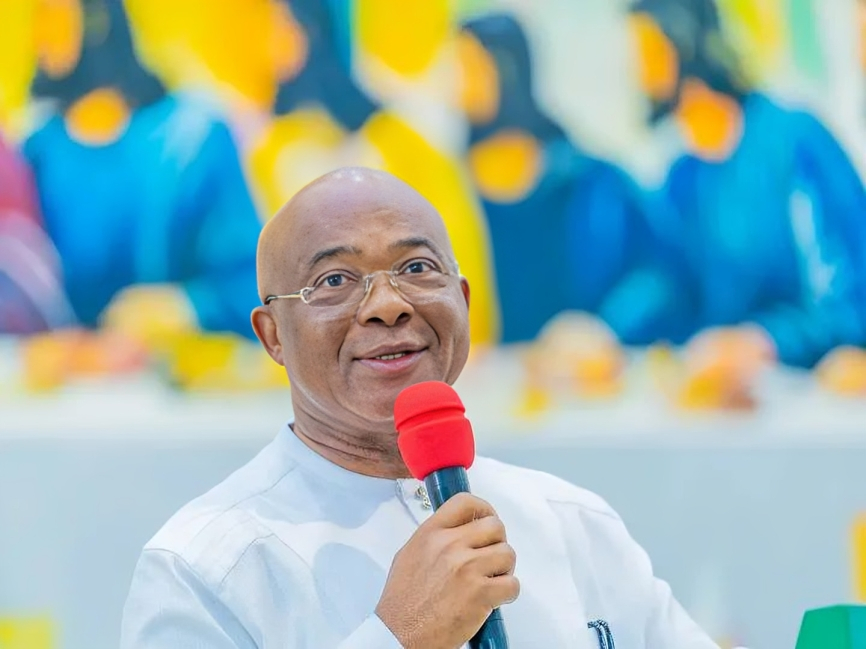
At the heart of the narrative today is Governor Hope Uzodimma, whose leadership over the last six years has become deeply intertwined with Imo’s transformation. His administration has lifted the state into national prominence through ambitious development programmes, strategic security reforms, economic revitalisation and infrastructure investment. Yet, this era is also rooted in the broader 50-year story of a state that has grown through adversity, opportunity and the ceaseless aspirations of its people.
Imo State was carved out of the then East Central State in 1976, during the second republic era of Nigeria. It was a period defined by reorganisation, cultural awakening and the pursuit of political identity for Nigeria’s diverse ethnic regions. For the Igbo speaking people, Imo State represented not just administrative convenience but also a distinct political, cultural and economic unit, a land of promise where local potential could be harnessed for national contribution.
From its earliest years, Imo State grappled with the typical challenges of a newly created entity: establishing viable governance structures, building infrastructure from scratch, and nurturing institutions in education, health and security. Over time, successive administrations laid roots for schools, roads, civil service systems, universities and local governance traditions. But like many sub-national units in post-civil war Nigeria, Imo faced persistent socio-economic hurdles: under-investment in infrastructure, insecurity, youth unemployment, and the slow pace of industrialisation. By the time Hope Uzodimma assumed office, these realities had become familiar refrains in political discourse: how to secure the state’s territory, generate jobs for its youth, and maximise its rich human capital for sustainable growth.
Governor Hope Uzodimma’s tenure, beginning in 2020 and continuing into the jubilee year, has been characterised by a bold leadership agenda aimed at repositioning Imo State for the demands of a new century. His approach marries ambition with pragmatism, seeking to confront long-standing challenges with comprehensive policy responses.
Security, the fundamental bedrock for progress and development, was among the most daunting challenges Imo faced in the years leading up to Uzodimma’s administration. Like many states in the Southeast and across Nigeria, Imo experienced periodic spikes of insecurity that undermined public confidence, disrupted commerce and stifled community life. Under Governor Uzodimma, security has become a priority, not an afterthought. One of the most significant innovations has been the establishment of the Imo State Vigilance Services Organisation, a 7,000-member trained security outfit deployed to serve as community watchers and intelligence gatherers, reinforcing early warning systems and preventative action. This community-focused approach helped bring a new level of calm and normalcy to neighbourhoods. Uzodimma himself noted that recent festive seasons passed without security breaches, a testament, he said, to the efficacy of the vigilance architecture.
Additionally, partnerships with federal security agencies and disciplined engagement with community leaders have anchored the state’s security matrix on cooperation rather than confrontation. This collaborative model underscores a recognition that security is not won overnight but through persistent, layered efforts that build trust between citizens and state institutions. Today, the peaceful environment in Imo has become a magnet for investment, cultural life, and economic activity, and this is a significant shift from the volatile landscape of the recent past.
A central feature of Governor Uzodimma’s developmental blueprint has been massive infrastructure investment – not for vanity, but as an engine of economic transformation. One of the boldest hallmarks of the administration has been the expansion and rehabilitation of the state’s road network. More roads have been constructed under his watch than in any previous administration since 1999. Strategic corridors such as the dualised Owerri–Orlu and Owerri–Okigwe roads, the MCC–Toronto–Uratta corridor, and numerous urban connectors have transformed mobility across the state. These arteries do more than carry cars; they connect markets, stimulate commerce, unlock rural productivity, and bring citizens closer to opportunity.
Also notable are landmark projects like the Assumpta Flyover, the Emmanuel Iwuanyanwu International Conference Centre (EIICC), and the construction of new social and governmental edifices that elevate the state’s profile as a centre for business, diplomacy and civic engagement. The expansion of the Sam Mbakwe International Cargo Airport, including facilities that enable night operations, positions Imo significantly on aviation and logistics maps, supporting trade that extends well beyond state borders.
Meanwhile, ambitious plans like the Orashi River dredging project, spanning over 160 kilometres, envision the creation of a new economic artery that will expand trade, industrial opportunity and connectivity within the Southeast region. The Light Up Imo Project and the establishment of the Imo State Electricity Regulatory Commission and the Orashi Electricity Company Ltd are aimed at weaning the state off a generator-dominated economy by attracting reliable power infrastructure. The availability of consistent electricity is foundational for businesses, large and small, and elevates Imo’s attractiveness to investors.
Imo State’s economy under Uzodimma has not relied solely on traditional expectations of federal allocations. Households and businesses have felt the impact of a diversified fiscal strategy, one that nurtures local revenue and catalyses investment. The state’s Internally Generated Revenue (IGR) skyrocketed in recent years, increasing from about ₦400 million monthly in 2020 to nearly ₦4 billion in 2025. This is an astounding growth that has given the government fiscal space to invest more broadly.
This revenue buoyancy has enabled Imo to weather national uncertainties, reduce debt burdens, and present ambitious budgets such as the ₦1.44 trillion “Budget of Economic Breakthrough” for 2026, a forward-looking plan focused on infrastructure, industrialisation, job creation, and inclusive development. Uzodimma has also placed emphasis on education and health. These are sectors that underpin long-term prosperity. Primary and tertiary education institutions have been rehabilitated or expanded, with improved teacher welfare and enhanced accreditation standards.
Healthcare has seen a renaissance: hundreds of primary health centres have been upgraded, general hospitals built or renovated, and significant enhancements in maternal and child health outcomes reported as access to quality care has widened. Youth empowerment initiatives such as the Skill-Up Imo Programme have trained thousands in digital skills, positioning a new generation for jobs in the digital economy and beyond.
At 50, Imo State stands not as a relic of past hopes, but as a living testament to what persistence, vision and collective commitment can achieve. Governor Uzodimma’s leadership reflects a pivotal moment in this ongoing story, one where security anchors stability, infrastructure unlocks opportunity, and economic strategies deliver livelihoods. The Golden Jubilee is a reminder that development is not a destination but a journey. As Imo honours five decades of existence, it looks to a future defined by innovation, inclusion, investment and dignity – a future that honours its heritage even as it races towards transformation.
As the state enters its next half-century, the narrative has shifted dramatically: from surviving challenges to shaping destinies; from tentative beginnings to bold architectural, economic and social strides; from fragmented dreams to a consolidated vision of what a regenerated Imo can be. It is a story worthy of celebration, and worthy of the faith and aspirations of its people.
Collins Ughalaa is the Special Adviser to the Governor on Public Orientation.