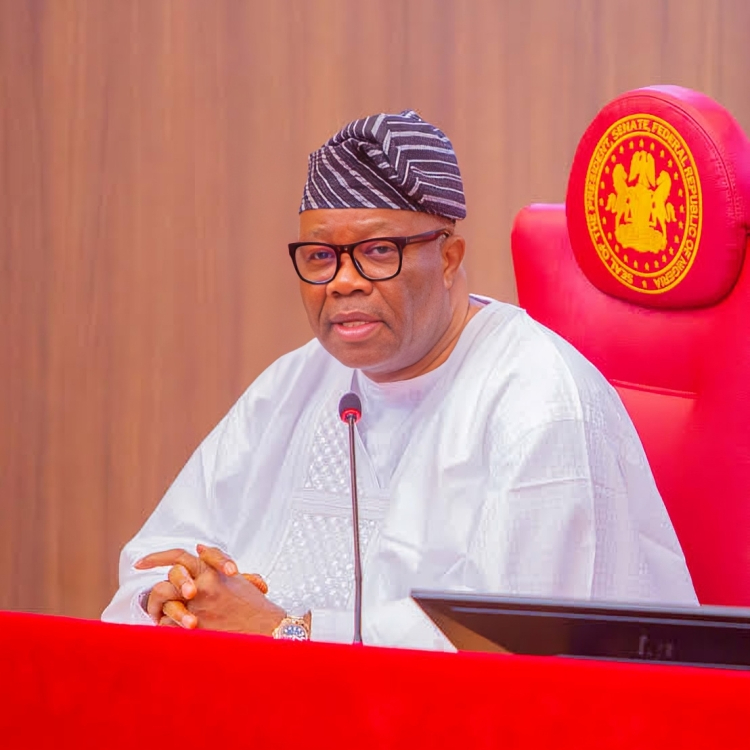
The South East Coalition for Good Governance (SECG) has taken a swipe at Senate President Godswill Akpabio over remarks credited to him on the proposed creation of Anioma State, describing the claim that it would serve as a sixth state for the south-east as “misleading and untenable.”
In a statement in Enugu jointly signed by Donatus Ibe, president-general, and Emeka Offiah, secretary, the group said it is improper for the south-south to gain an additional state under the guise of addressing the long-standing imbalance against the south-east.
SECG argued that the south-east remains the only geopolitical zone with five states, while others have six or more, insisting that any genuine attempt at equity must prioritise the creation of a new state within the region.
The coalition dismissed the suggestion that Anioma State would belong to the south-east, stressing that its proposed capital, Asaba, is firmly located in the south-south zone.
“Is Asaba in the south-east? No. It is in the south-south. Is Warri in the south-east? Certainly not,” the statement read, adding that the narrative being advanced distorts geographical and political realities.
The group said most of the local government areas expected to form Anioma State are drawn from the Niger Delta axis, further weakening the argument that the new state would benefit the south-east.
It also noted that Senator Ned Nwoko, who has been at the forefront of the Anioma agitation, is a political figure from the south-south, raising questions about the true regional alignment of the proposal.
SECG maintained that presenting Anioma as a south-east state amounts to being “economical with the truth,” warning that such claims could deepen distrust among regions already grappling with perceived marginalisation.
The coalition insisted that if President Bola Tinubu intends to create a new state for the south-east, it must emerge from the “heart of Igboland,” not from territories outside its recognised boundaries.
It specifically recommended the creation of either Anim or Adada State, arguing that such options would clearly address the structural imbalance confronting the region.
The group further recalled that disparities in state distribution across Nigeria’s geopolitical zones have remained a contentious issue, with the south-east consistently shortchanged since the current structure was established.