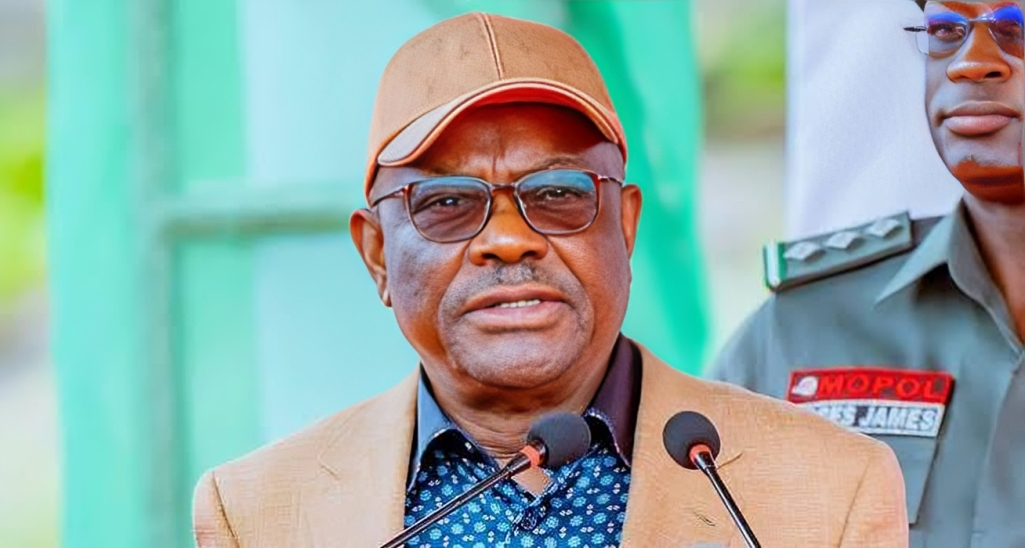
The most intriguing question arising from the latest political collision between FCT Minister, Nyesom Wike, and the APC governors, led by Imo State Governor, Hope Uzodimma, is not whether Wike is troublesome, combative, or politically ambitious. Nigerians have known that side of him for years. Wike is a raw, audacious, and fiercely transactional politician who rarely hides his intentions and has never been known to whisper when he can speak loudly. I do not hold brief for him. I have no political relationship with him. I met him as a journalist only once, in 2023, when he came to Owerri for a political event. So this is not a defence of Wike. It is an attempt to look at the politics behind the noise and ask a simple question: is Nyesom Wike really acting alone in the unfolding scuffle with APC governors?


There is something curious about this sudden discovery of Wike’s political danger. Why didn’t the APC governors raise the alarm when Wike supported Tinubu in 2023? Where were the political antibodies in the ruling party when Wike and the G-5 governors broke ranks with the then PDP presidential candidate, Atiku Abubakar, and helped create the political circumstances that favoured Tinubu’s emergence? Where was the anxiety when Wike accepted an appointment into the Tinubu administration and became one of its most politically visible ministers? Wike did not suddenly become Wike yesterday. His temperament, political networks, influence, and willingness to operate across party lines have been on display for years. What may have changed is not Wike himself, but the interests now threatened by the direction in which his political machinery, the Rainbow Coalition, is moving.
That is where the APC governors’ objection becomes interesting. Governor Uzodimma and his colleagues say they will not support any arrangement capable of weakening the APC or its candidates, insisting that their loyalty is to the party’s candidates. Wike, on the other hand, says his coalition is principally about securing Tinubu’s re-election and that supporting the President does not mean surrendering his political freedom or supporting every APC candidate in governorship and National Assembly elections. This is bigger than a quarrel between Wike and a group of governors. It is a struggle over political space. Who controls the machinery around Tinubu’s 2027 presidential project? The governors? The APC structure? Or political operators like Wike who can mobilise beyond the boundaries of one political party?
Then comes Wike’s own audacity. He has said that only President Tinubu can question him about his political decisions. He has also said that the President knows about the Rainbow Coalition and his political activities. Those are Wike’s claims, and they should be treated as such. But they raise a very uncomfortable question: if Wike is completely on his own, why is he so confident that his political activities fall within a relationship he has established with the President? And if the President knows what he is doing, why has this matter been allowed to develop into such an open confrontation between an appointee of the President and governors of the President’s own party? Something does not quite add up. And in Nigerian politics, when something does not add up, it is usually worth looking beyond the public quarrel.
The explanation may lie in the way Nigerian politics actually works. Formal party structures are one thing; informal political networks are another. Tinubu may need governors to control the APC machinery in their states, but he may also need politicians outside that machinery to reach people and political blocs the governors cannot reach. Wike is useful precisely because he is not trapped inside the APC’s internal command structure. He can talk to PDP members. He can talk to people in other parties. He can build alliances without asking an APC governor for permission. That independence may be precisely what makes him valuable to the President—and precisely what makes some APC governors uncomfortable. It does not prove that Tinubu ordered Wike to confront them. But it makes the present confrontation much more complicated than Wike versus the governors.
There is another uncomfortable lesson here. Politicians sometimes discover the danger of the political mercenary only after the mercenary begins choosing his own battlefield. You bring in a man because he can fight. You admire his ruthlessness because it is useful to you. You applaud his political courage while he is fighting your enemies. But political mercenaries do not remain permanently rented soldiers. They acquire their own networks, interests, loyalties, and calculations. Eventually, the man helping to build your political fortress may begin building one of his own. Wike’s political history shows that he is not the kind of politician who waits patiently for instructions before making his next move. So the question for the APC governors is not simply why Wike is behaving like Wike. The more important question is why they expected him to remain permanently within the political boundaries they are now trying to draw around him.
So, is Wike acting alone? There is no proof that he is acting on a direct presidential instruction, and it would be irresponsible to invent one. What is clear is that Wike says Tinubu knows about his coalition, Wike remains publicly committed to Tinubu’s re-election, and the APC governors under Uzodimma’s leadership are resisting a political arrangement they believe could undermine their party and its candidates. The real battle, therefore, may not be Wike versus the APC governors. It may be a battle over who controls the political architecture around Tinubu as 2027 approaches. And until the President himself draws a clear line between Wike’s political operation and the official APC structure, one question will continue to hang over this entire drama: is Nyesom Wike really acting alone?
Onyeukwu can be reached: 09138051325.