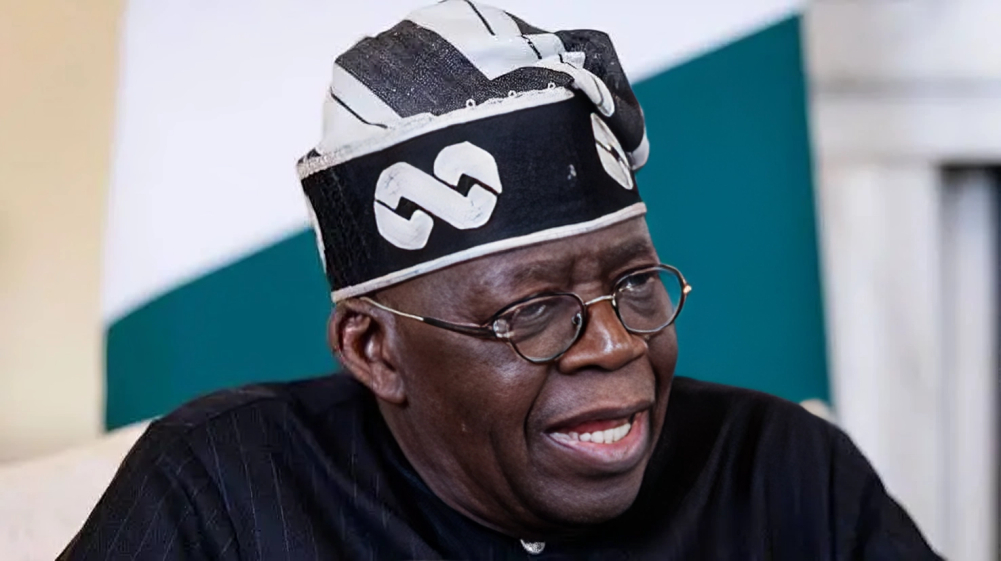
President Bola Tinubu is scheduled to make just one personal appearance at an All Progressives Congress (APC) presidential campaign rally in the South-East ahead of the 2027 general election, despite the party’s plan to campaign in all five states of the region. While Tinubu is expected to attend the Enugu rally on November 28, 2026, other geopolitical zones will receive multiple presidential visits, raising questions about the ruling party’s electoral calculations and the level of political attention it is giving the South-East.
The APC’s proposed nationwide campaign timetable provides for presidential appearances in 12 states across the country’s six geopolitical zones. Although the party’s campaign will extend to Abakaliki, Awka, Umuahia and Owerri, in addition to Enugu, the president’s personal attendance is scheduled for Enugu alone.
The contrast with other regions is striking. In the South-South, Tinubu is scheduled to attend rallies in Rivers State on November 7 and Delta State on December 12. The North-West will receive three presidential appearances in Kaduna, Sokoto and Kano, while the North-East will also get three in Borno, Bauchi and Adamawa.
The South-West has Ibadan and Lagos, with the latter hosting the grand finale on January 9, 2027. The North-Central has Plateau State on the presidential itinerary. Under the proposed schedule, the South-East will have the fewest presidential campaign appearances, despite having five states, the same number as the South-West and one more than the South-South.
The disparity raises questions about the APC’s electoral calculations. Is Tinubu concentrating his personal campaign appearances on states the party considers more competitive, or does the ruling party believe the South-East offers limited prospects for electoral gains?
Nevertheless, the decision to limit the president’s personal appearance to Enugu is politically significant, particularly when other zones are scheduled to receive multiple visits. For a party seeking to expand its national appeal, the question is whether campaigning across all five South-East states without the president physically attending rallies in four of them will be sufficient to improve its electoral fortunes in the region.
The 2023 presidential election provides important context. Labour Party candidate, Peter Obi won the presidential vote in all five South-East states, according to results declared by the Independent National Electoral Commission. Tinubu won the election nationally with 8,794,726 votes, while Obi secured 6,101,533 votes nationwide.
The South-East’s overwhelming support in 2023 for Obi demonstrated the strength of his regional appeal and his ability to mobilise voters beyond the traditional structures of the APC and Peoples Democratic Party. That outcome established the region as a formidable opposition stronghold and presented the ruling party with a challenge it must confront if it hopes to improve its electoral performance in 2027.
The voting pattern also raises questions about the relationship between electoral support and political representation at the federal level. Tinubu chose Kashim Shettima, from Borno State in the North-East, as his running mate, while the Senate presidency went to Godswill Akpabio of Akwa Ibom State in the South-South. Neither position went to the South-East.
These decisions were shaped by party calculations, political alliances and the arithmetic of the National Assembly, rather than by presidential voting results alone. Nevertheless, the absence of a South-East figure in either of those two prominent positions has remained a source of political debate, particularly in a region whose voters overwhelmingly backed Obi in 2023.
Could the South-East’s voting pattern and the opposition’s continued strength in the region explain the APC’s limited presidential campaign presence there for the 2027 general elections?
However, limiting the president’s personal campaign appearances in the South East could prove counterproductive. Rather than weaken opposition support, the decision could reinforce perceptions that the ruling party is giving the region insufficient attention. Conversely, a more visible presidential presence, supported by credible local candidates, effective mobilisation and tangible evidence of federal engagement, could give the APC an opportunity to challenge and change its poor showing in 2023.
Ultimately, the campaign timetable offers an early indication of where Tinubu and the APC intend to deploy the president’s personal political capital. It is not, however, a definitive verdict on the South-East’s place in the 2027 contest. The party’s planned rallies across all five states demonstrate that its campaign will reach the entire zone, even though the president’s personal attendance is scheduled for only one state.
The more consequential question is whether the APC intends to compete seriously for South-East votes or whether its campaign strategy will leave the region with less direct engagement from the president than other parts of the country. Presidential visits are not the sole measure of political commitment, but when other zones receive more personal attention from Tinubu, the disparity becomes difficult to ignore.
The South-East may have delivered overwhelming support to the opposition in 2023, but that does not make its electorate less deserving of presidential engagement. If Tinubu and the APC hope to build a broader national mandate in 2027, they must demonstrate that the South East is more than an afterthought in their campaign calculations.