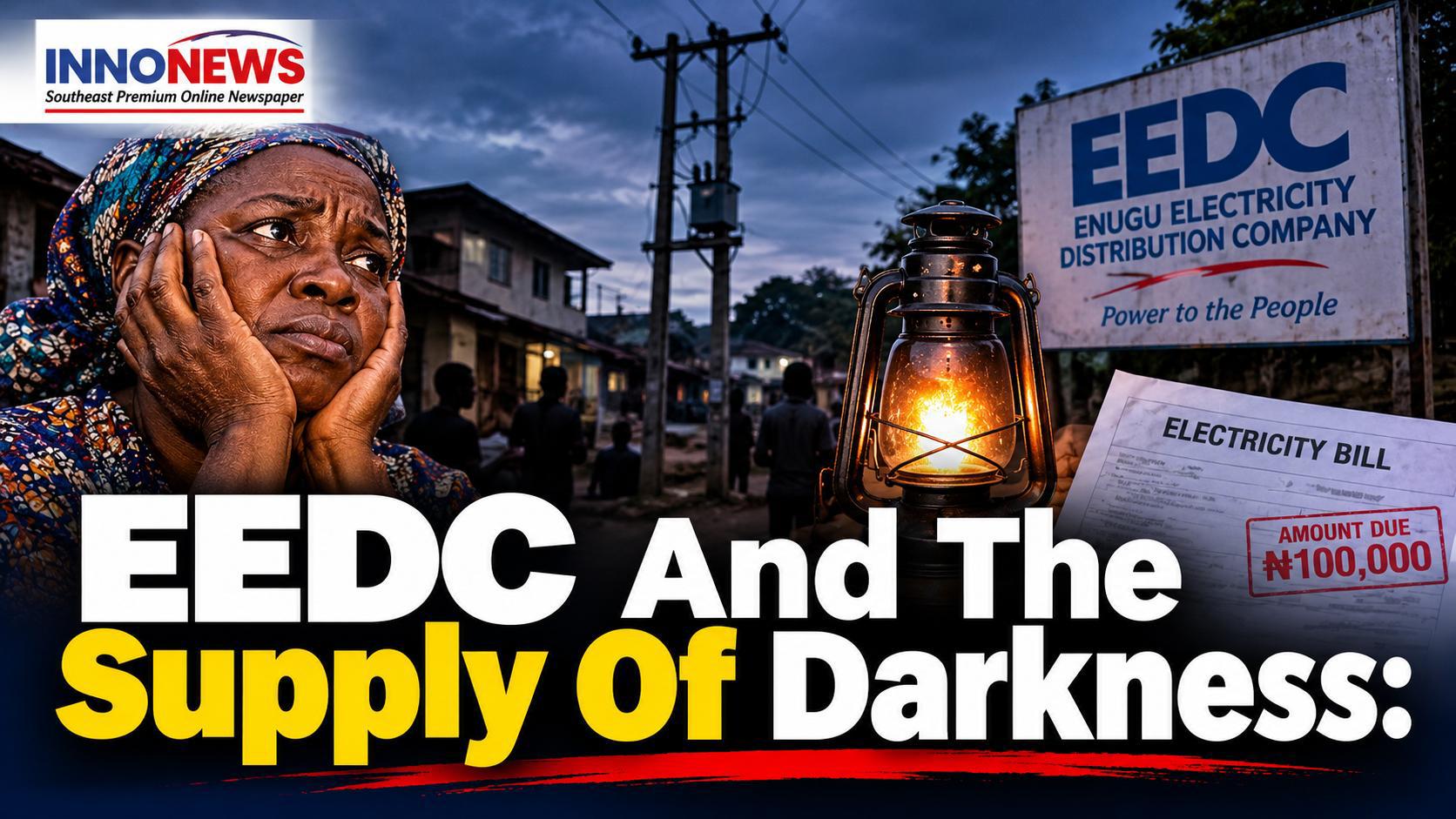
Residents of Egbu, a semi-urban community less than a kilometre from Owerri, the capital of Imo State, are lamenting prolonged electricity outages, despite the presence of a major Transmission Company of Nigeria (TCN) facility in the community. For months, residents say they have endured unreliable electricity supply, with power sometimes coming for barely an hour before going off for the rest of the day, and in some instances not returning until several days later. The situation is not peculiar to Egbu, as adjoining communities, including Agbala, Ihiagwa and Nekede, are also experiencing prolonged blackouts. Residents say the situation has become increasingly unbearable, with households and businesses forced to depend on generators to meet their electricity needs.

In Egbu, the situation is particularly troubling given that the community hosts a TCN transmission facility. Mr Ifeanyi Ukeje, a resident of the community, told INNONEWS that electricity supply had become extremely poor, leaving residents wondering why their community should remain in darkness despite hosting such an important national electricity infrastructure. He recalled an earlier incident when some youths, frustrated by the persistent outages, deposited a coffin at the entrance of the TCN facility in protest. According to him, electricity supply reportedly improved following the action, prompting appeals for the youths to remove the coffin. However, after it was eventually removed, residents say the poor supply returned and has continued to deteriorate. Ukeje said residents could no longer understand why they should continue to endure such conditions.
The impact on businesses has been severe. Mr Nnamdi Emeonu, who operates a football viewing centre in Egbu, said his business had dwindled significantly because of the unreliable electricity supply. He explained that virtually all the money generated from the business now goes into purchasing petrol to power his generator and provide electricity for customers who come to watch football matches. With a litre of petrol selling for about ₦1,400, he said the cost of keeping the business operational had become unsustainable, leaving him with little or no profit. Emeonu warned that he might be forced to close down the viewing centre if electricity supply did not improve by December, adding that continuing to operate under the prevailing circumstances was becoming increasingly difficult.
At Agbala, Mrs Evelyn Nlemoha, a trader, also lamented the financial burden imposed by the persistent blackout. She said she spends a substantial part of her earnings purchasing petrol to power her business, leaving her with little money after meeting operational expenses. Nlemoha disclosed that she was considering shutting down her shop because the cost of doing business had become unbearable. The complaints have also surfaced on social media. A Facebook user identified as MC Spiritual Cares, who spoke in the Igbo language, complained bitterly about the poor electricity supply in Agbala, Nekede and other communities. He said the situation was crippling businesses and making commercial activities increasingly difficult for residents and traders. His complaint adds to growing expressions of frustration over the electricity situation in the affected communities.
While Egbu, Agbala, Ihiagwa and Nekede struggle with prolonged outages, some parts of Owerri Municipal, particularly areas around Christ Church, Tetlow, Jiriba and Okigwe Road, reportedly enjoy comparatively better electricity supply. Residents in these areas, however, are also complaining about what they describe as excessive electricity bills. Some households reportedly receive monthly bills approaching ₦80,000, while others pay as much as ₦100,000. Commercial shops are said to receive bills reaching ₦120,000 monthly. Meanwhile, residents in parts of New Owerri served by Orashi Electricity Company report significantly longer hours of electricity supply, with some claiming to enjoy between 18 and 20 hours daily. The contrast has further heightened complaints among consumers who say they receive little electricity but continue to face substantial monthly bills from EEDC.
Residents of the affected communities are demanding explanations from the Enugu Electricity Distribution Company (EEDC) over the persistent outages and the basis for the electricity bills issued to consumers despite the poor supply. They have questioned why neighbouring communities in the Owerri metropolis should experience such different levels of electricity supply. Efforts by INNONEWS to speak with an EEDC official on the complaints, the prolonged outages and the billing concerns proved futile as the company could not be reached for comment before publication.
For residents and business owners in Egbu, Agbala, Ihiagwa and Nekede, the prolonged blackout has become a major source of economic hardship. Traders say their earnings are being consumed by the cost of petrol, while business operators are contemplating shutting down because they can no longer cope with the expenses of running generators. With electricity bills continuing to arrive despite the complaints over inadequate supply, residents are demanding an urgent explanation and improvement in service delivery from EEDC. For a community like Egbu, which hosts a major TCN facility and is located less than a kilometre from the state capital, the continued experience of prolonged darkness has become a source of particular frustration.