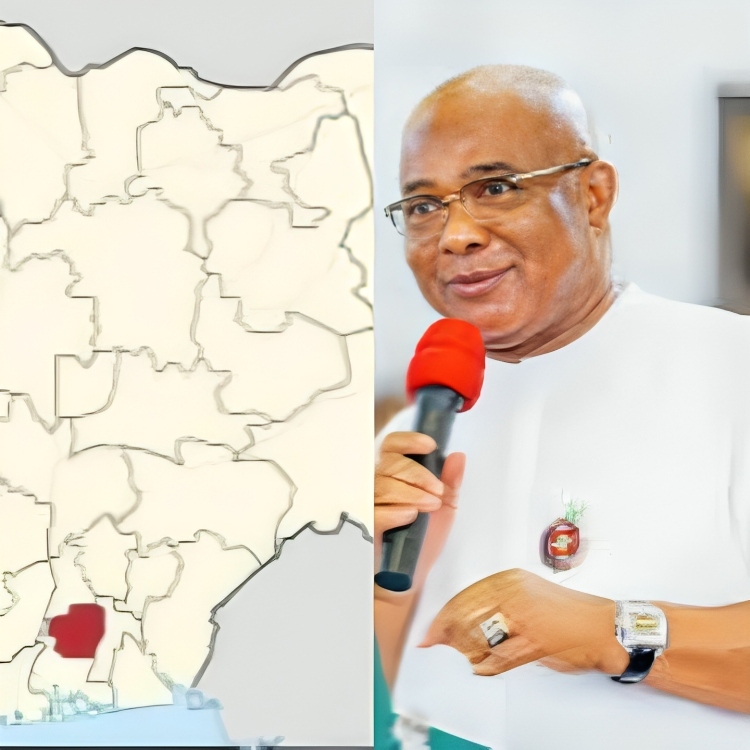
Governor Hope Uzodimma’s remarks to Owerri Zone leaders who visited him on Tuesday, August 20, at Government House, Owerri, on the Charter of Equity may, on the surface, sound like a call for unity, fairness, and inclusiveness.
But beneath the polished rhetoric lies a stark political reality: Uzodimma is not committing to handing over power to Owerri zone in 2027!
His words may have been carefully chosen, but the subtext is becoming clear — the next governorship contest is wide open.
For context, the Charter of Equity was conceived to stabilize rotation of Imo governorship by ensuring every zone has its fair share of power. It was designed to check the dominance of one zone over others, and to reduce cut-throat contests that usually tear the state apart.
By invoking it, Uzodimma seems to be aligning with fairness. However, his reluctance to categorically endorse any zone, particularly Owerri Zone which has long cried of marginalization, raises suspicion about his true intentions.
On one hand, Uzodimma deserves credit for stressing inclusivity. His statement that “the Charter of Equity should not be reduced to a tool for disunity or political agitation” aligns with those who fear the principle could be weaponized by desperate politicians. He is essentially saying that the Charter charter should guide, not dictate, and that elections must remain open and democratic.
This argument appeals to those who see zoning as undemocratic, since it limits choice and reduces competition.
But on the other hand, critics argue that Uzodimma is deliberately dodging the elephant in the room — succession.
His refusal to clearly state that Owerri Zone, which has not held power since 1999 except for Ihedioha’s seven-month tenure in 2019, should produce the next governor is a red flag.
To many, this is political double-speak: pacifying Owerri leaders with fine words while keeping the field open for Okigwe, even Orlu politicians who may be his preferred successors.
For supporters of the governor, his argument is pragmatic. They insist that zoning should not override competence, capacity, and electability. In their view, the Charter of Equity can guide political morality, but democracy demands that the people, not a prearranged agreement, should decide who governs.
They argue that by keeping the race open, Uzodimma is respecting democracy, ensuring that every qualified Imolite has the right to contest without being shackled by zoning arrangements.
A school of Thought is not buying this explanation. They accuse Uzodimma of playing a dangerous game of political survival. By refusing to commit to Owerri Zone, he is widening the rift between zones and leaving room for manipulation.
His critics insist that without zoning, Imo will remain under the stranglehold of Orlu Zone, which has already governed for 24 years since 1999. They argue that the governor’s “neutral stance” is nothing more than a calculated refusal to upset powerful interests in Orlu, where he hails from.
Furthermore, the governor’s call for Owerri leaders to “carry other zones along” reeks of subtle dismissal.
Why should Owerri Zone, already disadvantaged, be told to beg for inclusiveness? To some, this is an insult wrapped in statesmanship — shifting responsibility back to the marginalized.This adds to the suspicion that Uzodimma is deliberately watering down the Charter of Equity to justify possibly another Orlu grip on power.
Supporters of the governor counter this by pointing to his emphasis on governance issues — security, development gaps, livelihood improvements. They argue that Uzodimma is right to redirect focus away from succession politics, reminding leaders that governance must not be sacrificed on the altar of zoning. To them, his message is one of continuity and focus, not of betrayal.
Still, the political temperature in Imo is rising. By refusing to make a clear commitment, Uzodimma has left Owerri Zone stakeholders feeling shortchanged yet again.
The 2027 governorship race, by his own words, will not be bound by the Charter of Equity but left to the rough and tumble of open democracy. In simple terms: the field is wide open, and every zone is on its own.
In conclusion, while Uzodimma cloaks his message in the language of inclusiveness and democracy, the reality is that he has refused to bind himself to the spirit of the Charter of Equity.
His critics see this as betrayal, his supporters as pragmatism. What is beyond doubt, however, is that the 2027 Imo governorship race will not be a coronation for any zone. It will be a bruising battle for survival — and Owerri Zone may once again be left holding the short end of the stick unless it plays its cards with ruthless precision.