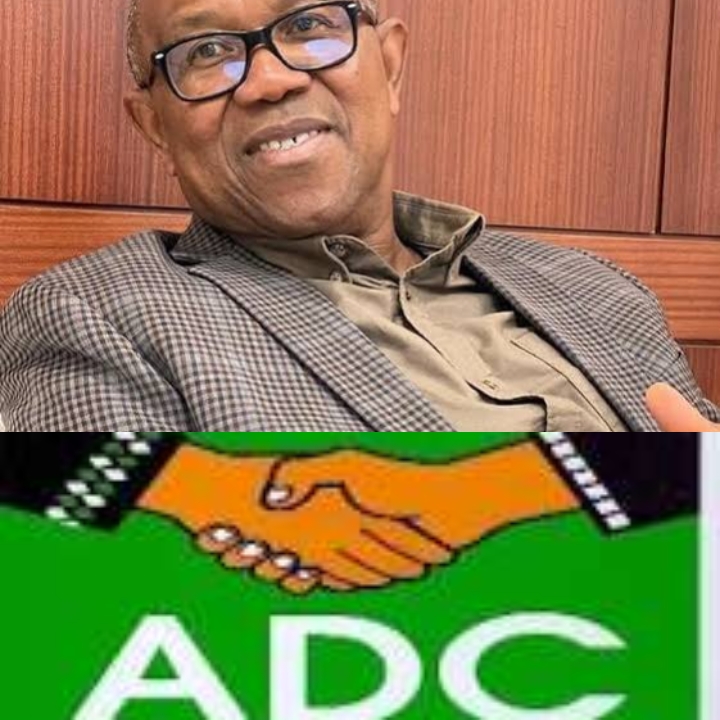
Questions are mounting within the African Democratic Congress (ADC) over whether former Labour Party presidential candidate, Peter Obi, could emerge as the party’s flag bearer in the 2027 presidential election—especially after the ADC’s poor outing in the recent Anambra governorship election, which was won by the All Progressives Grand Alliance (APGA).
The debate comes amid fresh calls for unity within the ADC following what some insiders described as “divisive post-election conversations” about the party’s performance and Obi’s role in the evolving political dynamics.
The Imo State chapter of the ADC, in a statement signed by its Publicity Secretary, Chief MacDonald Amadi, urged members to avoid inflammatory remarks that could “destabilize the party’s unity and threaten its coalition alliances.”
“The ADC is founded on the principles of unity, integrity, and progress,” the statement read. “We must remain focused on building a stronger and more united political front. We call on members to exercise restraint and refrain from comments that could be perceived as derogatory to Mr. Peter Obi or any of our coalition partners.”
Political observers like Uche Egwuatu, a public affairs analyst, say the ADC’s loss in Anambra should not rule out Obi’s chances in 2027. “Obi remains one of the few politicians with cross-regional appeal,” Egwuatu told INNONEWS. “Let’s not forget he won in many APC-dominated states during the 2023 presidential election, including Lagos State—President Tinubu’s stronghold. That alone speaks volumes about his political reach.”
However, others within the ADC are less optimistic. Chris Ibe, a founding member of the party, argued that fielding Obi as the party’s candidate could create internal tensions. “The ADC must not apply sentiments in choosing a presidential flagbearer,” he said. “While Obi has strong appeal, parachuting him as presidential candidate may not just give the ADC the expected and desired results. What happened in Anambra is a warning sign.”
Insiders disclosed that long before the Anambra governorship election, discussions had already been ongoing about whether the ADC could serve as a viable platform for Obi’s presidential ambition. The argument, sources said, is that Obi stands a better chance to win the presidency for the ADC if he secures the backing of Atiku Abubakar and other coalition partners.
The ADC coalition, according to party insiders, is a political brainchild of former Vice President Atiku Abubakar, who has a burning presidential ambition and has formally joined the party. Unlike Obi, who is yet to officially join the ADC from the Labour Party, Atiku has become one of its most influential coalition figures, with his loyalists reportedly pushing for him to emerge the ADC consensus candidate in 2027.
Chief Amadi’s statement appeared aimed at calming these tensions. “Our focus remains on strengthening our structures, enhancing grassroots support, and engaging in constructive dialogue that will help reposition the ADC for future success,” he said. “We must not allow internal discord to derail the progress we’ve made.”
Supporters of Obi within the ADC told INNONEWS that he represents the best chance for the party to mount a credible challenge in 2027. They argue that his brand of politics—rooted in transparency, prudence, and accountability—aligns with the party’s founding values and could serve as unique selling points to defeat the APC in 2027.
But skeptics counter that Obi’s base remains loyal to the Labour Party, and any move to switch allegiance could complicate his political calculus. “Obi’s credibility is tied to the movement he built in 2023,” said Ibe. “If he joins ADC, he must convince Nigerians that it’s about national interest, not personal ambition.”
For now, the ADC leadership is treading carefully. The party, especially in Imo says its immediate priority is “rebuilding, not recriminations.” Whether that path leads to a political realignment with Peter Obi—or a new chapter driven by Atiku Abubakar and other coalition leaders—remains to be seen.