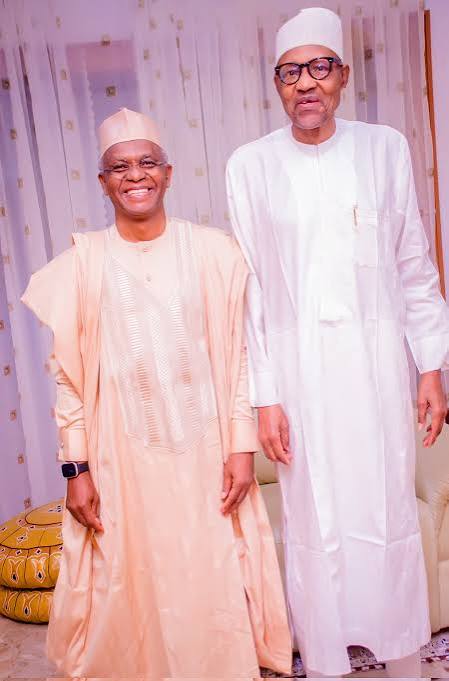
Former Kaduna State governor and opposition leader, Nasir Ahmad El-Rufai, has appealed to Nigerians to stop politicising the life and legacy of late President Muhammadu Buhari, warning that recent activities around his memory risk deepening old divisions and distorting history.
In a statement dated December 17, 2025, El-Rufai said he was disturbed by reports and images from the recent launch of a book on Buhari’s life, which he noted had reopened factional fault lines that existed within the former president’s inner circle while he was alive.
According to him, the event was dominated by one tendency, while other figures who were equally close to Buhari were conspicuously absent, a development he described as troubling and suggestive of selective engagement.
El-Rufai added that both the composition of attendees and the choice of venue raised concerns that Buhari’s legacy may now be shaped to advance narrow political interests rather than reflect historical truth.
He expressed particular unease at what he described as “glowing but clearly faked tributes” from individuals who were long-time critics of Buhari and who now occupy powerful positions in government.
“These are people who blamed Buhari for nearly every problem in Nigeria,” El-Rufai noted, arguing that their sudden praise appeared driven by an attempt to rewrite history, possibly to deflect responsibility for current governance failures.
The former governor also criticised what he called the posthumous celebration of Buhari by individuals who neither enjoyed his trust nor commanded his respect during his lifetime, stressing that the late president was not known to overlook personal or political disrespect.
While disclosing that he had not yet read the book, Soldier to Statesman: The Legacy of Muhammadu Buhari, El-Rufai cautioned that many of the alleged revelations attributed to the former president seemed one-sided, especially given that Buhari was no longer alive to clarify or respond.
He warned that attempting to explain the decisions and motivations of a complex leader through selective anecdotes risked distorting, rather than preserving, Buhari’s true legacy.
El-Rufai acknowledged that Buhari was not a perfect leader and admitted that many of his supporters expected more from his civilian presidency.
However, drawing from his experience of working closely with Buhari for over a decade in opposition politics and in government, he argued that many of the administration’s shortcomings were driven by the failures of a powerful inner circle of relatives, advisers and officials.
He maintained that Buhari himself remained, until his last days, a man of deep faith, personal discipline and unquestioned patriotism, and urged those now invoking his name to reflect on whether they lived by similar standards.
El-Rufai concluded by calling on Nigerians—supporters and critics alike—to allow Buhari rest in peace, urging that he be judged fairly by history, without opportunism or revisionism, and prayed for Allah to grant the late president eternal rest.