A report published by The New York Times on Sunday has revealed that a small-scale tools trader in southeastern Nigeria emerged as a key influence behind claims used by U.S. Republican lawmakers and President Donald Trump to justify recent American airstrikes in Nigeria, despite widespread concerns about the credibility of the data involved.
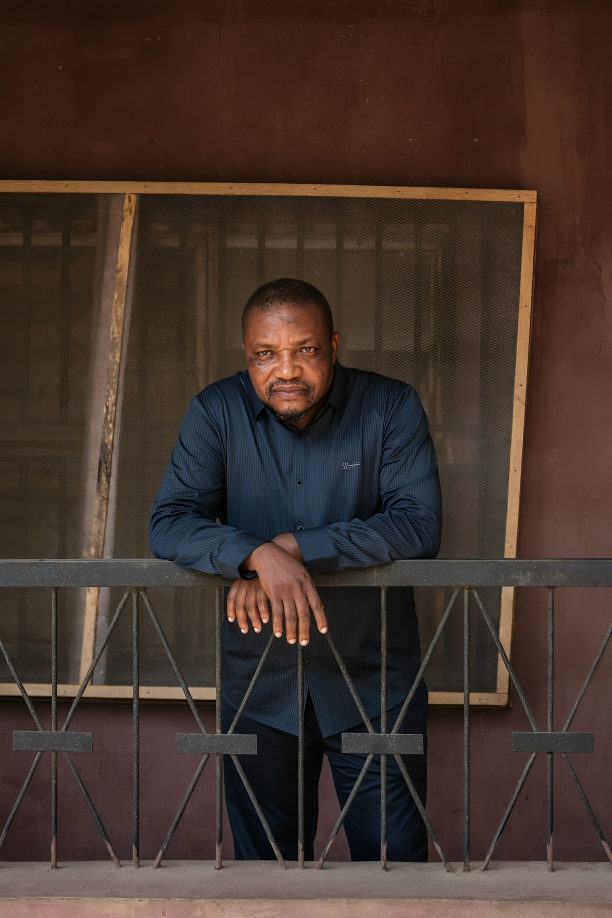
Emeka Umeagbalasi, who runs a modest shop selling screwdrivers and wrenches in Onitsha, is also the founder of the International Society for Civil Liberties and the Rule of Law (Intersociety), a self-styled research group whose reports allege systematic mass killings of Christians in Nigeria.
According to the New York Times report, his figures have been cited by prominent U.S. politicians, including Senator Ted Cruz, Representative Riley Moore and Representative Chris Smith, to advance the narrative that Christians are being selectively targeted for extermination in Africa’s most populous country.
Armed with such claims, President Trump ordered airstrikes on parts of Nigeria on Christmas Day, describing the action as a response to what the White House called the “massacre of Christians by radical, terrorist scum.”
Umeagbalasi has claimed that about 125,000 Christians have been killed in Nigeria since 2009 and that more than 7,000 died in the first seven months of 2025 alone, but he admitted to The New York Times that much of his data is unverified and largely drawn from secondary sources, including advocacy groups, media reports and internet searches.
Independent conflict trackers dispute his figures. The Armed Conflict Location and Event Data Project estimates that around 6,700 people, including combatants and civilians, were killed in Nigeria during the same period in 2025, with about 3,000 recorded as civilians and no breakdown by religion.
The report noted that Nigeria’s government does not publish comprehensive data on deaths from violent attacks, making verification difficult, while experts say insecurity affects both Christian and Muslim communities across the country.
Umeagbalasi also acknowledged that he rarely visits conflict zones and often assumes the religion of victims based on the location of attacks, an approach analysts say introduces severe bias and undermines the reliability of his conclusions.
The Times further reported that his work has drawn criticism for its portrayal of Fulani communities, whom he has broadly blamed for violence, a stance researchers warn could inflame ethnic and religious tensions.
Nigerian officials dismissed his findings as flawed and biased, with the foreign ministry describing his research as riddled with fallacies and confirmation bias.
Security analysts and religious leaders quoted in the report argued that focusing narrowly on religious identity obscures deeper problems of state weakness, poor governance and the inability of authorities to protect citizens regardless of faith.
Despite the criticism highlighted by the New York Times, Umeagbalasi remains defiant and continues to publish reports warning that Nigeria is nearing a “point of no return,” even as experts caution that policies shaped by questionable data could worsen instability rather than resolve it.