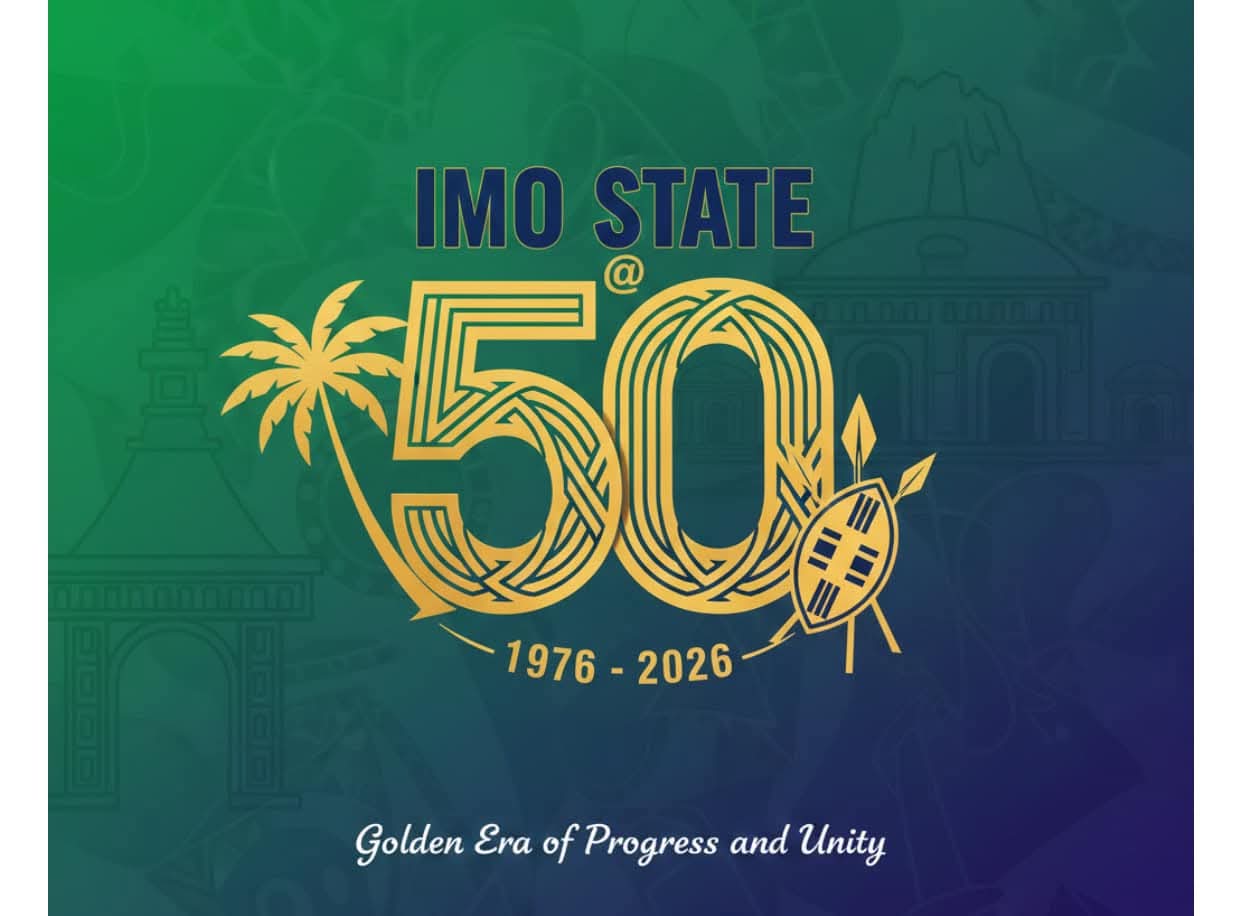
I feel fortunate to have lived long enough to observe, first hand, the sweet and sour journey of Imo State, founded 50 years ago by military fiat. On February 3, 1976, the military administration of the late Head of State, Gen. Murtala Mohammed, created the state, and it took off with a fierce determination to build a better society from the ashes of war. That iron will to achieve, within such a short time, stunned even the midwives of Imo.
What did the creation of Imo evoke at the time? Joy. Undeniable joy. State creation was the fashion of the era, a development that expanded the frontiers of public administration and promised more revenue through allocations from the centre. For many of us who lived far from Enugu, the capital of the old East Central State which gave birth to Imo, life had felt suffocating. Development seemed to crawl from the capital to the hinterlands. The new state came with hope that roads would improve, water and electricity would flow more steadily, schools would rise in standard, and healthcare would become accessible.
With time, however, the scales fell from our eyes. We saw how rot in government siphoned federal allocations into the pockets of a privileged few. We felt how the knife of state creation cut deeply into what once bound us together, breeding acrimony and discrimination against brothers of the same tongue who found themselves in other states. In truth, state creation benefited those in power more than the generality of the people.
It also birthed policies that proved corrosive, including quota systems in education that held certain groups down academically, and other subtle aggressions that denied people infrastructure and political space. Economically, it dulled the national will to be productive. States learned to wait for allocations from Abuja, and when the funds arrived, they were often frittered away rather than invested. The outcome today is plain: unemployment, economic distress, and endless cries of marginalisation.
Yet, Imo’s first military governor, Ndubuisi Kanu, then a lieutenant commander in the Nigerian Navy, was anything but complacent. There was much to fix. Owerri, chosen as the capital to the displeasure of those who wanted Umuahia, had decaying macadamised roads that barely passed as thoroughfares. Douglas and Wetheral Roads, the major roads Owerri knew at that time, were agonising to navigate. Sanitation was appalling. Nightsoil men moved about with buckets on bare heads, assaulting the senses. Children feared them. Mosquitoes thrived. It was a period Owerri was still struggling to rise from the ruins of the civil war, having been a theatre of fierce battles where tanks had rolled and trenches scarred the land. Nevertheless, it carried the vestiges of a town that great multinational, Shell Petroleum, would have settled in.
Kanu’s first major act was to design a master plan for the city. No sooner had implementation begun than the then Head of State, Gen. Olusegun Obasanjo, visited. Soon after, Kanu was transferred to Lagos as governor. While some saw this as elevation, others believed the federal authorities were uncomfortable that a part of the South East that once resisted federal might was rising too quickly.
Looking back now, can we truly say Imo is better after half a century? The master plan Kanu conceived remains largely unrealised. His vision, refined by the state’s first civilian governor, the late Chief Sam Mbakwe, was to site the Government House, House of Assembly, Secretariat and Judiciary in New Owerri to decongest the city centre. Fifty years on, the Government House still sits in the heart of town, choking traffic and distorting the plan.
After Kanu, Imo drifted under non-indigenous military governors who lacked emotional commitment to the state. Relief came in 1979 with the election of Sam Mbakwe, who wasted no time restoring momentum. Within four years, he built a befitting capital, laid proper roads, channelled drains into the Otamiri River, and pursued an independent power station at Amaraku. His one-local-government-one-factory policy promised jobs and prosperity. Under him, Imo led the nation in education. He revitalised agriculture through ADA and ADAPalm, and restored hope, even if teachers quarrelled with his government over welfare.
That progress stalled again after the 1984 coup. Salaries were paid based on “availability of funds,” Imo formula, they called it. Factories collapsed, and promises faded. Then came the Otokoto saga of 1996 under Col. Tanko Zubairu, a social earthquake sparked by the killing of young Ikechukwu Okoronkwo. The riot that followed chased fearsome criminals from Owerri and marked a turning point in the state’s moral history.
In 1999, Chief Achike Udenwa arrived with his AIR programme—Agriculture, Industrialisation and Reorientation. Quiet but effective, he stabilised the state after years of military rule. Imo breathed again. By then, the state had given birth to Abia and parts of Ebonyi.
Since Udenwa’s exit, Imo politics has been turbulent. Oil and gas prospects attracted interests that often overwhelmed the people’s will. Votes were cast, but not always counted. The disputed elections of 2007, the APGA resurgence under Rochas Okorocha, the people’s mandate for Emeka Ihedioha in 2019, and its abrupt reversal by a Supreme Court judgment in 2020 all reinforced a central truth: Imo people know their choices. They only ask to be left alone to make them.
There is a saying that the Imo River refuses to drown certain beings. It washes them ashore. In spite of turbulence, it has not drowned the people’s discerning spirit. Today, roads in the state glitter with fresh asphalt and solar lights, though rural links still cry for attention. There is optimism around the Orashi energy project. Yet unemployment remains high, local governments lack autonomy, and human capital development is insufficient. The glory Imo once enjoyed in education now rests elsewhere.
Seeing old music legends like the Oriental Brothers and the Sweet Breeze at the jubilee celebration reminded me of a time when Owerri was safe, vibrant, and joyful. We moved freely, unafraid, no matter the time of the day, not anticipating kidnappers or other criminals to spoil our fun. No one tries that today without having great anxiety.
Indeed, Imo’s story at 50 cannot be told in just 50 words, not even in 50 pages. As we celebrate, I am grateful that the people’s ability to judge leadership has not been drowned by the river that gave us our name.
Dr. Odu can be reached through [email protected] or SMS 07016722929