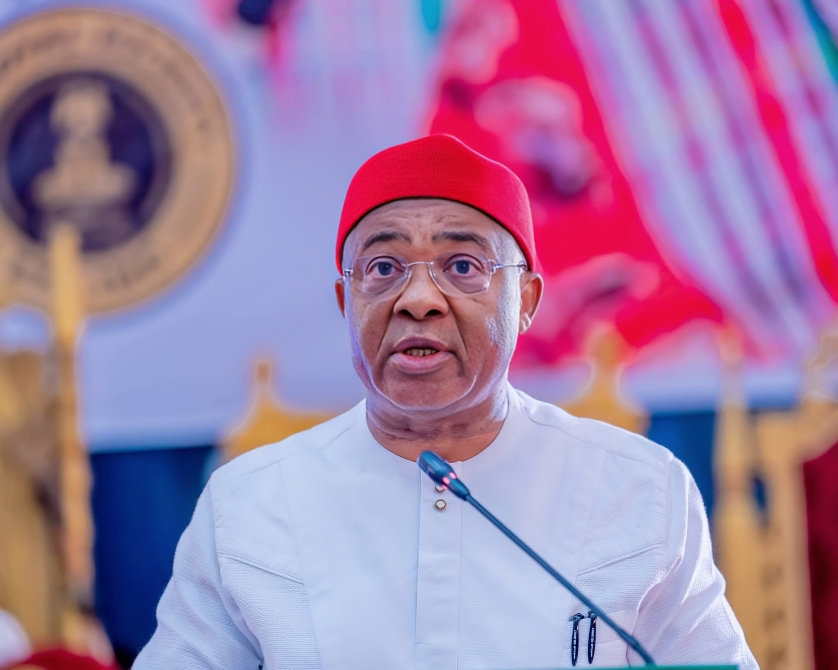
With one year and nine months to Imo State’s next off-cycle governorship election, subterranean alignments and quiet consultations are reshaping the political terrain, even as agitation for power to shift to Owerri Zone gathers renewed intensity. Beneath the surface calm of the second term of Governor Hope Uzodimma, competing interests within his political family are already recalibrating for 2027.
At the heart of the emerging contest is a delicate tension between the moral weight of the Charter of Equity — the informal rotational understanding among Orlu, Owerri and Okigwe zones formulated by the Imo State Council Of Elders— and the hard calculus of political survival within the ruling party. While Owerri leaders insist that equity demands a power shift, strong signals suggest that some of the governor’s closest allies outside the zone are unwilling to cede the field without a fight.
Among those repeatedly mentioned in succession conversations is Senator Osita Izunaso, who represents Orlu Zone in the National Assembly. Though he has not formally declared interest, his proximity to the governor and entrenched structures in Orlu have sustained speculation that he may yet emerge as a contender, should the political equation tilt in favour of continuity from the zone.
Mr Izunaso’s relationship with Mr Uzodimma is longstanding and strategic. Both men have operated within overlapping political currents for years, reinforcing the perception that any succession blueprint emanating from the governor cannot ignore the senator’s place within Uzodimma’s inner circle.
Equally significant is the growing visibility of Charles Orie, former Managing Director of ISOPADEC and a known ally of the governor. Unlike the largely speculative ambition attributed to Mr Izunaso, Mr Orie is said to have intensified structured consultations across Orlu, Owerri and Okigwe, consolidating networks that cut across traditional divides.
Political observers describe Mr Orie’s strategy as incremental but deliberate — building cross-zonal bridges while maintaining loyalty to the governor’s political machinery. His moves come at a time when arguments against extended Orlu dominance are becoming sharper, with critics pointing out that by 2027, the zone would have held the governorship for 24 cumulative years.
The arithmetic of succession is further complicated by persistent speculation about the governor’s own future. Having previously served in the Senate, Mr Uzodimma is rumoured in some quarters to be considering a return to the red chamber. Online reports have even suggested that he could be positioned for the Senate Presidency in the next political dispensation, leveraging his profile as Chairman of the Progressive Governors’ Forum.
Such projections inevitably intersect with Mr Izunaso’s current occupancy of the Orlu Senate seat. Analysts say any senatorial ambition by the governor would require careful political engineering to avoid intra-zonal friction, particularly if both men’s interests converge on the same platform.
Outside Orlu’s immediate power matrix, former governor Ikedi Ohakim from Okigwe zone has also re-entered the succession discourse. Mr Ohakim governed the state between 2007 and 2011 before losing re-election to Rochas Okorocha, an outcome widely seen at the time as a dramatic political upset.
Mr Ohakim’s renewed visibility has not gone unnoticed. A longstanding associate of Mr Uzodimma — their alliance dates back to 2003 when Mr Ohakim was his running mate under the Alliance for Democracy — he has in recent months maintained a conspicuous presence at public engagements alongside the governor, fuelling speculation about unfinished political business.
The appointment of his wife, Chioma Ohakim, as ambassador-designate by President Bola Tinubu, widely believed in political circles to have enjoyed the governor’s backing, initially triggered assumptions that Mr Ohakim might step back from his perceived governorship bid. However, insiders say those assumptions may have been premature.
Against this backdrop of layered ambitions, Owerri Zone leaders are consolidating. Last week, prominent stakeholders in the zone announced a harmonised platform under the banner of Owerri Zone United, collapsing previously fragmented advocacy groups into a single bloc to press what they describe as a historic and non-negotiable claim to the governorship.
The agitation draws moral authority from earlier remarks attributed to Governor Uzodimma following his 2023 re-election, when he indicated an intention to hand over to Owerri Zone. Yet subsequent comments credited to him — suggesting that competence and legacy preservation, rather than zoning, would guide his preference — have injected ambiguity into the succession narrative.
As 2027 inches closer, the battle lines remain fluid but unmistakable. Between equity and expediency, loyalty and ambition, the contest to inherit Imo’s most powerful office is already unfolding — quietly, strategically and with implications that could redefine the state’s political order.