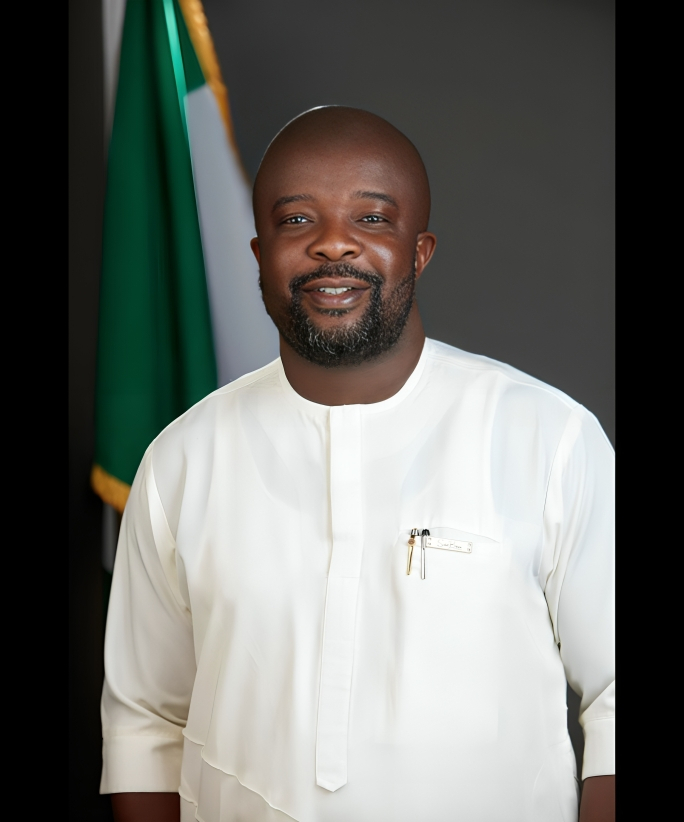
The decision by Hon. Tony Chinedu Nwulu to formally enter the 2027 race for the Imo East Senatorial seat on the platform of the National Democratic Congress, NDC, is already unsettling the political architecture of Owerri Zone in ways many established political actors did not anticipate. The former federal lawmaker, who represented Oshodi/Isolo Federal Constituency, Lagos State in the House of Representatives, has strategically inserted himself into two emotionally charged political conversations capable of reshaping the zone’s future — generational leadership transition and the unresolved rotational imbalance within Owerri Zone.
The National Identity Behind Nwulu’s Ambition
Unlike many aspirants whose relevance begins and ends with election season, Nwulu arrives in the Senate race with a nationally recognizable legislative identity tied to one of the most consequential constitutional reforms in Nigeria’s democratic history. His sponsorship of the Not Too Young To Run Bill fundamentally altered Nigeria’s political participation structure by reducing constitutional age limits for elective offices and dismantling barriers that had for decades insulated power within an aging political elite. The law was not merely symbolic; it has produced visible political outcomes across the federation.
The Political Fruits Of Not Too Young To Run
Nwulu’s Bill, now law has led to the emergence of young politicians whose rise became possible because the constitutional door was widened. They include Akarachi Amadi, the 30-year-old federal lawmaker representing Mbaitoli/Ikeduru Federal Constituency, Amara Chyna Iwuanyanwu, Deputy Speaker of the Imo State House of Assembly, and Rukayat Shittu, who emerged at 26 as one of Nigeria’s youngest lawmakers after winning election into the Kwara State House of Assembly. These examples are living political evidence that the law Nwulu championed did not end as legislative theory but translated into practical democratic inclusion.
International Recognition
Beyond Nigeria, the Not Too Young To Run Law and its broader democratic philosophy attracted commendation from the United Nations and the European Union, both of which have repeatedly advocated increased youth participation in governance across emerging democracies. Within civic advocacy circles, the law became one of the rare Nigerian constitutional amendments celebrated internationally as a democratic expansion project capable of reshaping political participation in Africa.
The Equity Battle In Owerri Zone
But while the national significance of the Not Too Young To Run movement provides Nwulu with ideological capital, the real battlefield of the 2027 contest may ultimately rest on a far older and deeply emotional issue — the zoning equation within Owerri Zone. His supporters are already constructing a forceful political narrative around what they describe as the unfinished equity arrangement among the three major blocs in the zone. Their argument is gaining traction precisely because it is rooted in historical political distribution that many voters can easily verify.
Why Mbaise Bloc Deserves Owerri Senate Seat
Within the framework of the Charter of Equity, the Mbaise bloc where Nwulu comes from, Ezinihitte Mbaise to be precise, should naturally produce the next senator on the basis that the other blocs in Owerri Zone have occupied the Senate seat multiple times while Mbaise has only produced a senator once through Chris Anyanwu. And if equity must genuinely mean fairness rather than political convenience, then the next senatorial ticket should logically move toward Mbaise bloc.
The Rotational Arithmetic
This arithmetic is difficult to dismiss. Owerri Federal Constituency bloc has produced senators more than once, including Ezenwa Onyewuchi, who is winding up eight years in the Senate, and Eze Ajoku, who completed the tenure of the late Amah Iwuagwu. The Mbaike bloc, on the other hand, has produced senators three different times through Evan Enwerem, who served as Senate President in 1999, the late Amah Iwuagwu, and Samuel Anyanwu (Sam Daddy) Against that background, proponents of the Mbaise argument insist that 2027 naturally belongs to Mbaise bloc if Owerri zone genuinely intends to uphold rotational justice in line with the operational Imo Charter of Equity. More specifically, Nwulu’s emergence has revived calls for Ezinihitte Mbaise to produce the senator on grounds that Ahiazu Mbaise had already produced Senator Chris Anyanwu while Ezinihitte remains the only flank within the broader Mbaise axis yet to occupy the seat.Aboh Mbaise had.one time produced a State governor, Emeka Ihedioha.
Youth Politics Meets Equity Politics
What makes Nwulu’s candidacy particularly significant is that it intersects both generational agitation and geopolitical balancing simultaneously. He is presenting himself not only as the face of youth-oriented politics, but also as the acceptable bridge through which Owerri Zone can resolve lingering internal tensions without provoking accusations of exclusion. His decision to contest is therefore being interpreted in many political circles as more than an ordinary senatorial ambition; it is increasingly viewed as a convergence point between youth inclusion and equity politics.
A Campaign Built Around Accessibility And Digital Strategy
His recently unveiled campaign introduction speech reflects that strategy with remarkable clarity. Rather than relying on conventional political rhetoric, Nwulu has projected himself as a reform-oriented candidate focused on accessibility, civic responsiveness and human-centered representation. Repeatedly, he returned to one central phrase — “closing the gap” — arguing that many citizens no longer believe elected officials are reachable when urgent intervention becomes necessary. Perhaps the most striking component of his plans when elected is the proposed “Closing The GAP X Spaces,” a live digital citizen engagement programme expected to run weekly from Monday to Friday between 9pm and 10pm.
The initiative, according to his proposal, would serve as a public civic interface where citizens can report human rights violations, abuse, insecurity, gender-based violence and urgent social emergencies requiring legislative intervention. At a time when many lawmakers are routinely criticized for disappearing after elections, the initiative appears carefully designed to portray Nwulu as a permanently accessible public official rather than a ceremonial politician. He also announced plans for a Citizens Complaint and Response Centre intended to coordinate interventions, process complaints and escalate urgent community concerns to relevant authorities. Political analysts say the proposal reflects a deeper understanding of changing voter psychology, especially among younger Nigerians who increasingly measure representation not merely by constituency projects, but by visibility, responsiveness and continuous engagement.
More Than A Senate Race
It is important to state that Tony Nwulu’s entry into the race has already changed the conversation in Owerri Zone. He is no longer being discussed merely as a former lawmaker seeking another office. He is increasingly emerging as the focal point of a larger political movement built around generational inclusion, democratic accessibility and a carefully constructed equity argument that many in Owerri Zone may find difficult to ignore.