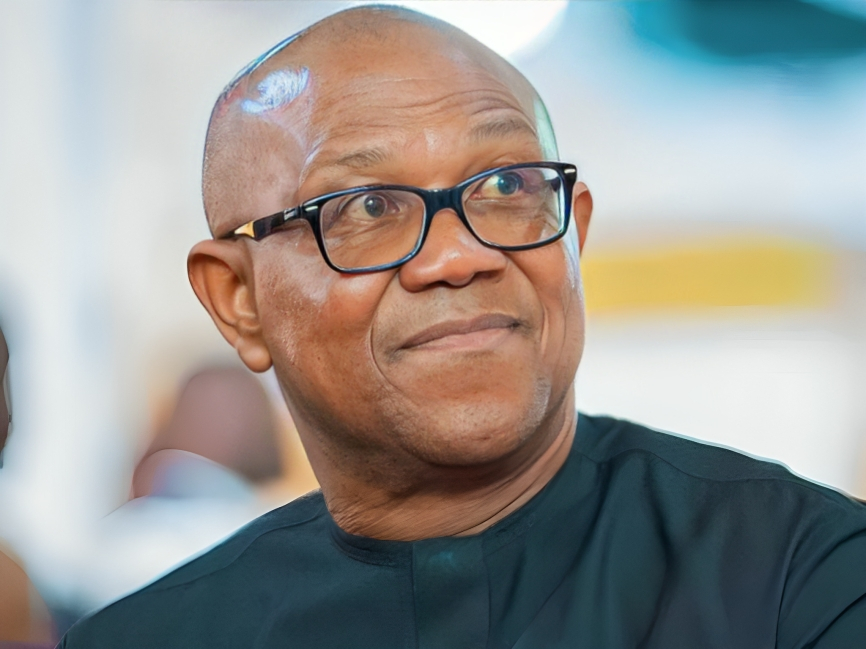
Former Anambra governor and 2027 presidential candidate of the Nigeria Democratic Congress, Peter Obi, has vowed to more than double Nigeria’s electricity generation capacity if elected president, describing the country’s current power output as a national embarrassment.
Mr Obi made the pledge on Saturday after emerging as the party’s presidential flagbearer at its national convention in Abuja, where delegates formally ratified his candidacy ahead of the 2027 election.
In his acceptance speech, the former governor criticised Nigeria’s electricity sector, noting that a country of over 200 million people currently generates and distributes only about 4,000 megawatts of power, a figure he said falls far below what is required to drive economic growth and industrialisation.
“It is totally unacceptable,” Mr Obi said. “Nigeria has the highest number of people without access to electricity in the world. About 100 million Nigerians do not have electricity, yet countries with far smaller populations generate several times more power than we do.”
The presidential hopeful compared Nigeria’s electricity output with that of South Africa and Egypt, saying both countries generate more than 40,000 megawatts each despite having significantly smaller populations. According to him, Nigeria currently produces less than 10 per cent of the electricity generated by the continent’s leading economies.
Mr Obi pledged that his administration would increase power generation and distribution to at least 10,000 megawatts within four years in office, arguing that reliable electricity remains critical to job creation, industrial expansion and economic development.
The former governor also dismissed official unemployment figures released by the National Bureau of Statistics, which placed Nigeria’s unemployment rate at 4.3 per cent in the second quarter of 2024. He said the data did not reflect the realities faced by millions of Nigerians struggling to find gainful employment.
Mr Obi promised to address unemployment through support for small businesses, targeted incentives and policies aimed at stimulating productivity. His comments come amid modest improvements in the power sector, with the federal government recently announcing that electricity generation rose from 3,951 megawatts in late March to more than 4,300 megawatts in April 2026.