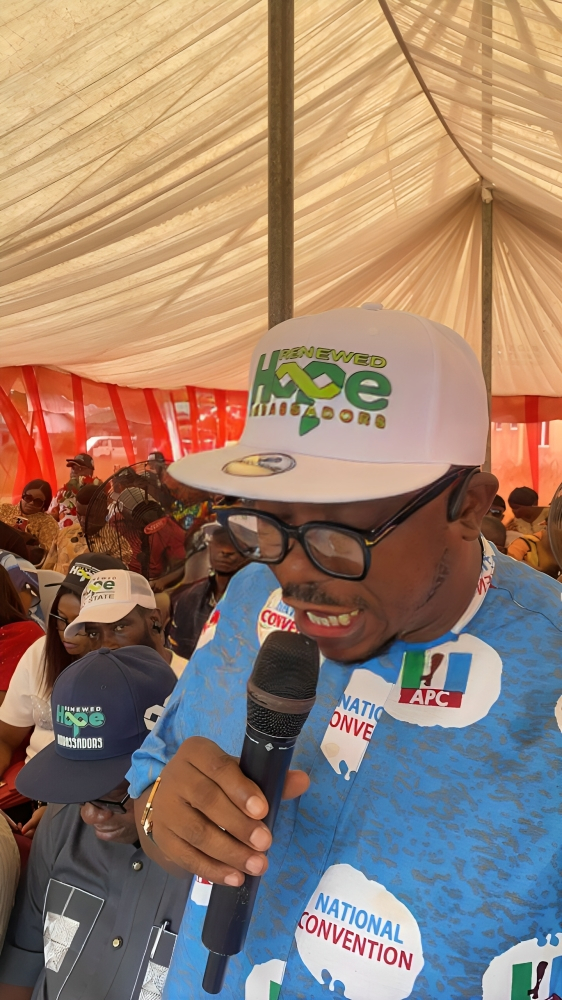
In a decisive shift aimed at revitalizing President Bola Ahmed Tinubu’s political outreach in Nigeria’s Southeast, the Renewed Hope for Greater Nigeria (RHGN) has appointed Mazi Franklin Ngoforo as its Deputy National Leader (Southeast), entrusting him with the critical task of re-engineering grassroots mobilization and youth engagement ahead of the 2027 presidential election.
The move comes amid indications that the once-vibrant City Boy Movement, initially designed to galvanize Southeast youths in support of President Tinubu, has significantly lost momentum across the region. Political strategists within the pro-Tinubu camp are said to have recognized the urgent need for a more credible, structured, and locally resonant platform, one driven by experienced young politicians with a fresh and compelling message.
Ngoforo’s appointment, formalized in a letter signed by RHGN National Leader, Hon. Calistus Anyanwu, is widely seen as a strategic recalibration of the President’s Southeast political architecture. The letter mandates him to coordinate and drive the group’s activities across the five Southeast states, with a particular focus on rebuilding trust, energizing the grassroots, and delivering measurable political support.
A seasoned political actor from Ideato in Imo State, Ngoforo brings to the role a track record of electoral participation, grassroots mobilization, and message-driven campaigning. Having contested elections within the state, he is regarded as a politician who understands both the dynamics of local politics and the complexities of voter behavior in the region. Observers note that his experience positions him as a stabilizing force capable of navigating the Southeast’s often turbulent political terrain.
His emergence signals a deliberate pivot toward a more intentional and structured engagement with the region’s youth demographic. Rather than relying on populist movements with waning influence, RHGN appears to be prioritizing tested leadership and political experience among younger actors who can translate strategy into tangible electoral outcomes.
Analysts argue that the Southeast presents a unique political challenge, requiring not just visibility but authenticity, credibility, and sustained grassroots presence. In Ngoforo, the group believes it has found a figure who embodies these qualities, one capable of bridging generational divides while aligning local aspirations with the broader Renewed Hope agenda.
Since news of his appointment broke, reactions across political circles in the Southeast have been mixed but largely attentive. Supporters describe it as a bold and timely intervention, while others view it as a litmus test for the Tinubu camp’s seriousness in engaging the region beyond symbolic gestures.
With the 2027 election cycle gradually taking shape, Ngoforo now stands at the center of what many consider a crucial political experiment: whether a recalibrated, youth-inclusive, and grassroots-driven strategy can reshape electoral dynamics in the Southeast. For RHGN and the broader Tinubu political structure, the stakes are high, and the success of this renewed approach may well define their fortunes in one of Nigeria’s most politically sensitive regions.