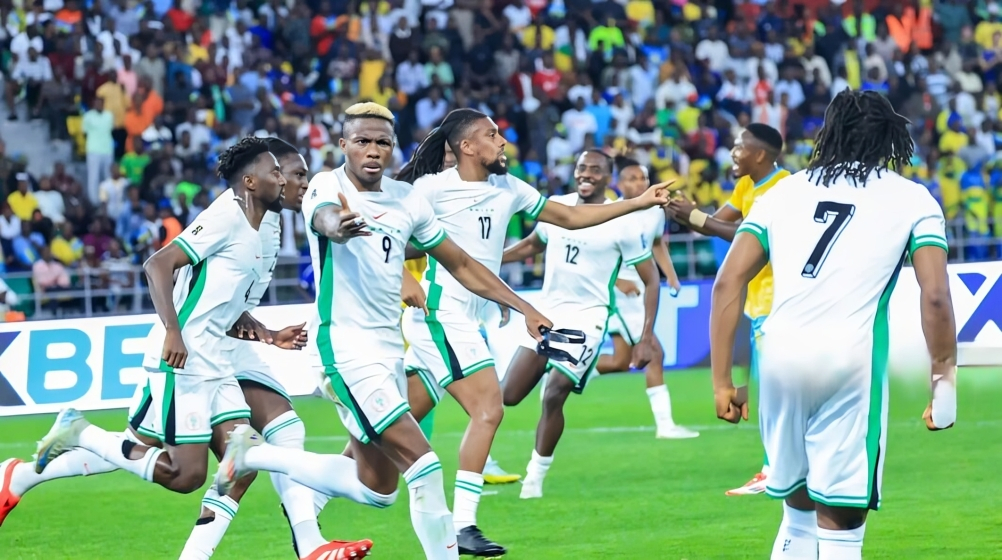
The most painful image of the ongoing World Cup in the United States, Canada and Mexico is not the goals, the packed stadiums or the emergence of new football powers. It is the absence of Nigeria. Once again, the Super Eagles are spectators at football’s biggest festival. Once again, Nigerians are adopting foreign countries, supporting former colonies and borrowing football identities because their own national team failed to arrive. The world moved on. Nigeria did not.
This is no longer an accident. It is no longer bad luck. It is not a conspiracy by referees, CAF or FIFA. Missing Qatar 2022 was supposed to be a national embarrassment. Missing the 2026 World Cup after the tournament expanded to 48 countries is a national indictment. A football nation that cannot qualify for an enlarged World Cup has no business describing itself as a giant. Giants do not repeatedly miss the biggest stage. Giants qualify. Giants compete. Giants win.
The tragedy is that Nigeria continues to live on football memories that are older than most of its current supporters. The 1980 AFCON triumph still occupies a sacred space in national memory because players like Segun Odegbami, Muda Lawal, Christian Chukwu and Godwin Odiye played for something larger than themselves. Fourteen years later came the miracle generation of 1994. Rashidi Yekini, Stephen Keshi, Emmanuel Amunike, Austin Okocha, Sunday Oliseh and others conquered Africa and announced Nigeria to the world in the United States. They played with hunger, patriotism and a frightening sense of collective responsibility.
That generation was not richer than today’s players. They were not more celebrated. They did not have private jets, luxury endorsements or millions of followers on social media. Yet they achieved more because the national shirt meant something. Playing for Nigeria was not a commercial opportunity. It was a duty. The green and white jersey carried emotional weight. Defeat carried shame. Victory carried national significance.
The arrival of Clemens Westerhof transformed Nigerian football and opened Europe to Nigerian players. It was a necessary revolution. But somewhere along the line, Nigeria confused exporting players with developing football. European transfers became our trophies. Club performances became substitutes for national achievements. Every transfer window became a national celebration while the domestic league collapsed into irrelevance. The result is a country that produces footballers but no longer produces football teams.
The current Super Eagles generation may be the most talented collection of Nigerian players in decades. Victor Osimhen, Alex Iwobi, Samuel Chukwueze, Ademola Lookman and Moses Simon play at respectable levels in Europe. Yet this generation has won absolutely nothing. Since 2015, the Super Eagles have become specialists in potential. They promise much, excite occasionally and deliver little. Apart from reaching the 2023 AFCON final in Ivory Coast, where they finished second, this supposedly golden generation has produced no silverware, no defining moments and no lasting legacy.
Victor Osimhen perhaps represents the deepest tragedy. He may retire as one of the greatest strikers Nigeria has ever produced without playing a single minute at the World Cup. By 2030, Osimhen, Iwobi, Chukwueze and many others will be in their thirties. The frightening possibility is that this entire generation will pass through Nigerian football as perhaps its most gifted and yet most unfulfilled collection of players. Talent without achievement eventually becomes another word for failure.
But blaming the players alone is intellectually dishonest. The greater failure sits in the offices of football administrators, the NFF. Nigerian football has become one of the few sectors where failure attracts promotion. Officials survive repeated disappointments. Administrators remain in office after disasters. Politicians dominate football. Elections matter more than development. Contracts matter more than coaching. The domestic league is weak, poorly funded and commercially unattractive. The national teams operate without continuity, without philosophy and without long-term planning.
The contrast with Morocco is humiliating. While Nigeria was fighting over football politics, Morocco was building football institutions. They invested heavily in infrastructure, youth development, coaching and administration. The Mohammed VI Football Academy became a factory for talent. The federation became professionally managed. The result was a World Cup semifinal in 2022 and continued competitiveness in 2026. Morocco built a football system. Nigeria built football politics.
The painful truth is that the world has moved on from Nigeria. Morocco has moved ahead. Senegal has become stable. Ivory Coast won AFCON. South Africa has returned to the World Cup. Smaller nations now speak the language of planning while Nigeria speaks the language of nostalgia. The country still introduces itself with 1994 and Atlanta 1996, achievements that happened three decades ago. No serious football power survives on memories alone.
Perhaps the greatest insult to Nigerian football today is not that the Super Eagles are absent from the World Cup. It is that the tournament no longer misses them. Once upon a time, Nigeria brought excitement, flair and unpredictability to global football. Today, the competition proceeds comfortably without them. Stadiums are full. The games continue. New heroes are emerging. The football world has adjusted to Nigeria’s absence.
Unless Nigeria summons the courage to reform football administration, revive the domestic league, empower competent professionals and remove politicians from the game, the country should retire the title of African football giant. Greatness is not inherited. It is renewed. And until Nigeria learns that painful lesson, the most accurate description of the Super Eagles is not that they are unlucky, unfortunate or talented. It is that the world moved on while Nigeria stood still.