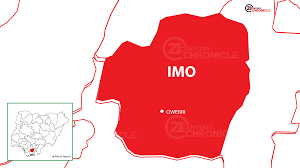
The Independent National Electoral Commission’s (INEC) final list of candidates for the January 2027 Senate election in Imo State shows that 18 of the 45 candidates have clearly stated tertiary or post-secondary qualifications, while 27 entries contain only primary or secondary credentials, unspecified qualifications, or no higher qualification.
The 45 candidates are contesting across the three senatorial districts, with 16 candidates in Imo East, 14 in Imo West and 15 in Imo North. They are sponsored by various political parties, including the All Progressives Congress, Peoples Democratic Party, Labour Party, All Progressives Grand Alliance, African Democratic Congress, Social Democratic Party, Young Progressives Party, New Nigeria Peoples Party, Zenith Labour Party, National Rescue Movement, National Democratic Congress, Allied Peoples Movement, Action Alliance and Action Democratic Party, among others.
In Imo East, nine of the 16 candidates have clearly identifiable tertiary or post-secondary qualifications. They are Chima Matthew Amadi (APP), MSc; Uchenna Daniel Ofoegbu (ADC), B.Tech; Kelechi J. Soribe (APGA), Nigerian Certificate in Education; Basil Udochukwu Maduka (LP), MBA; Chiazor Ahumibe (NRM), B.Sc; Uchechukwu Onyeagocha (NDC), B.Sc; Prince Eze Madumere (PDP), Applied Science Degree in Management Development; Augustine Okere (SDP), B.Eng; and Kemdi Chino Opara (YPP), B.Sc, MBA and two doctorates.
The remaining seven Imo East candidates are Ugochukwu I. Amadi (A), who listed FSLC and SSCE; Ezebuihe Anayochukwu Uzodinma (AA), First School Leaving Certificate and WAEC; Ugochi Ohazurike (ADP), FSLC; Gerald Katchy Okoro (AAC), FSLC and NABTEB; Alexander Mbata (APC), FSLC and WAEC; Clinton Chibuike Edoziem (APM), First School Leaving Certificate and SSCE; and Levi Uche Ekeh (ZLP), FSLC and WAEC.
In Imo West, only three of the 14 candidates have clearly stated tertiary or post-secondary qualifications. They are Vincent Ogadinma Nnabugo Iwuchukwu (ADC), OND, HND and a master’s qualification; Christopher Ugochukwu Acholonu (LP), MSc; and Chukwudi Victor Jones Onyereri (PDP), PhD in Marketing. The other candidates largely list FSLC, school-leaving certificates, WAEC or SSCE, while Chikezie Batos Nwadike (APM) and Febian Metu (SDP) have no qualification stated. Chukwudi Leonard Eze (NDC) lists primary and secondary schools as well as Abia State University, but does not specify a higher qualification.
Rufus Omeire (APP), also contesting in Imo West, lists “Diploma” in the INEC document. However, the entry does not identify the institution, type or level of the diploma, making it impossible to determine from the document alone whether it qualifies as tertiary education. He has therefore not been included among the 18 candidates with clearly identifiable tertiary qualifications.
In Imo North, six of the 15 candidates clearly list tertiary or post-secondary qualifications. They are Friday E. Obasi (AA), Certificate in Education; Patrick Chiwuba Ndubueze (APC), B.Sc; Chika Anii Agugbue (LP), degree; Mathew Mahaekwe Omegara (NDC), B.Sc; Micheal Duru Ejiogu (PDP), B.Sc; and Jude Agomuo (SDP), Bachelor of Education. The remaining nine entries contain FSLC, primary-school certificates, WAEC or SSCE, school details without a specific higher qualification, or no clearly stated tertiary credential.
Overall, the 18 candidates with clearly identifiable tertiary or post-secondary qualifications comprise nine from Imo East, three from Imo West and six from Imo North. The remaining 27 entries should not, however, be interpreted as proof that those candidates have no higher education, as the figures reflect only what was expressly stated in the qualifications section of the INEC final list.
The INEC entries also do not amount to a legal determination of any candidate’s eligibility to contest the Senate election. The distinction is between a qualification being stated in the published list and a candidate actually possessing or not possessing an additional qualification. Some of the 27 candidates have clearly disclosed WAEC, SSCE or primary-level credentials, while others have incomplete or nonspecific entries. The list, therefore, provides a record of the qualifications disclosed in the document, not a definitive assessment of the educational history or statutory eligibility of the candidates.