(A Journalist’s Diary)
The morning wore a shawl of mist. A cool wind drifted lazily across the fields as I turned off Ulakwo Junction, heading for Ngwoma Obube in Owerri North Local Government Area. It is one of those villages that would ordinarily escape the headlines, except that destiny sometimes chooses quiet places to tell loud stories. My destination was the palatial residence of Prince Alex Mbata. But, as I would soon discover, the real encounter began long before I arrived at his gate.
The drive itself supplied the first answer. From Ulakwo Junction, a smooth ribbon of asphalt stretched gracefully into Ngwoma Obube. It is a road made possible through Mbata’s intervention, replacing years of discomfort with ease of movement. Roads are more than infrastructure; they are like signatures written on the landscape, like words chiselled on marble. Development often speaks before men do. By the time I arrived at his residence, the quality of the road had already introduced the man who made it possible.
A few kilometres ahead, I pulled over at a modest roadside eatery. Beside it stood a cluster of commercial motorcycle riders waiting for passengers. Curious, I decided to play the stranger.
“Please, can someone direct me to Prince Alex…”
Before the name “Mbata” escaped my lips, the riders answered in a joyous chorus, “ABM!” Laughter erupted, not as performance but as affection. Then came story after story—school fees paid, businesses revived, roads built, hospital bills settled, widows supported and young people empowered.
It was not a rehearsed political advertisement. It was gratitude speaking in its natural language, unprompted and unembellished.
That brief encounter explained why Ngwoma Obube breathes differently. Mbata is not celebrated here because posters adorn every street corner. He is celebrated because his fingerprints are visible everywhere. The community bears the imprint of his generosity.
Even the Catholic Seminary located in the heart of the community, Seat of Wisdom, has at different times found reason to publicly acknowledge his contributions. Gratitude, after all, is the most authentic monument a benefactor can erect. In Ngwoma, Mbata is not merely admired; he is embraced because his kindness has become woven into the identity of the community.
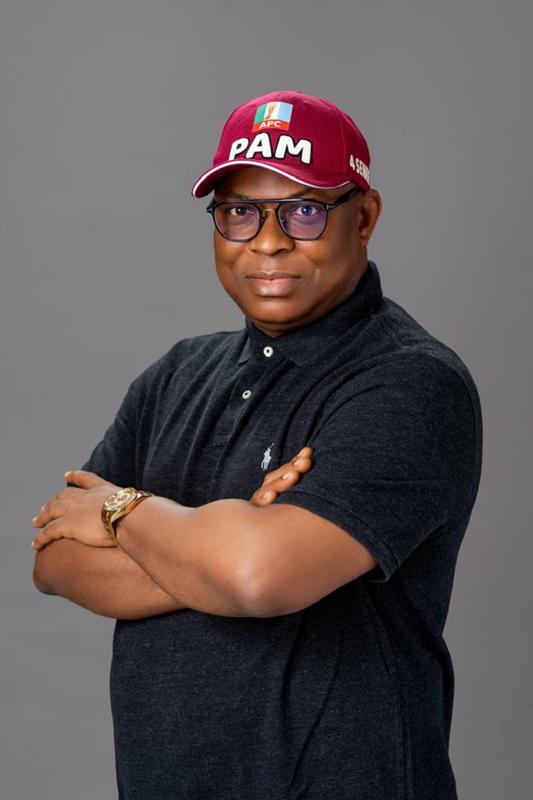
His residence reflected accomplishment without vanity. Grandeur stood comfortably beside simplicity. Then he emerged. The smile was genuine, the handshake firm and the welcome warm.
Alex Mbata carries confidence without conceit. There was none of the theatrical arrogance that too often trails political ambition. He listened carefully, responded thoughtfully and engaged every question with remarkable patience. He spoke with measured calm rather than rehearsed certainty. One left with the impression that civility still survives in public life.
Naturally, our conversation drifted to the Senate. Why seek elective office after years of philanthropy?
His answer was remarkably uncomplicated.
“Service,” he said.
He explained that his commitment to Owerri Zone predates politics. Long before the thought of contesting elections crossed his mind, he had invested in education, healthcare, youth development and community projects. His annual interventions have gradually expanded to cover the nine local government areas of Owerri Zone because, in his words, every community deserves a sense of belonging.
There was something persuasive about that explanation. The old politics of grand promises is steadily losing its appeal. Nigerians have heard enough speeches to last several lifetimes.
Mbata offers something different—a visible record upon which to measure future expectations. His argument is straightforward: if his private resources have touched thousands of lives, public office should multiply that impact. Through legislation, effective oversight and purposeful representation, he believes the Senate offers a stronger platform to attract federal projects, influence national policy and advance the collective interests of Owerri Zone.
A senator is not merely a maker of laws; he is the voice of his people, their advocate in national discourse and their bridge to the opportunities of the federation. Mbata believes that bridge can be strengthened.
Owerri Zone understands the weight of representation. It produced the late Evan Enwerem, one of Nigeria’s most accomplished parliamentarians, who rose to become President of the Senate. Others have also served the zone with dignity and distinction. It is a legacy built on intellect, courage and leadership.
Should Mbata earn the confidence of the electorate, he would be expected not merely to occupy a seat but to preserve that tradition. Judging from his disposition, he appears fully aware that public office is measured less by titles than by tangible outcomes.
As I drove back towards Ulakwo Junction on my way to Owerri, the journey acquired a different meaning. The road no longer looked like ordinary asphalt. It looked like evidence. Roads connect communities, but service connects generations.
Ngwoma Obube is no longer just another village tucked away in the heart of Imo State. It has become a quiet reminder that genuine leadership begins long before elections are won.
Whether Alex Mbata eventually secures the mandate of Owerri Zone belongs to the people alone. But one truth is difficult to ignore: before asking for their votes, he had already earned their attention. Before seeking their trust, he had already invested in their future. And perhaps that is the strongest campaign any politician can make.
The author of this piece, Innocent Onyeukwu is an Owerri based journalist