The 2023 Electoral Arithmetic
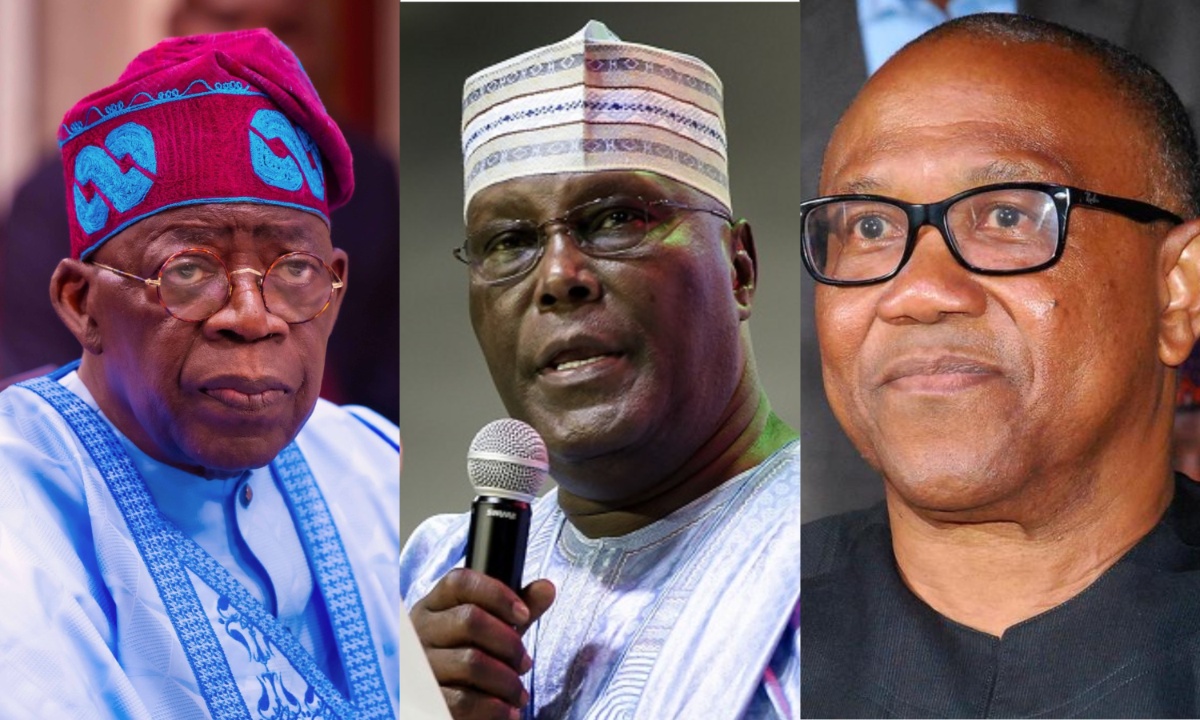
The question of who, between former Vice-President Atiku Abubakar and former Anambra State Governor Peter Obi, can defeat President Bola Ahmed Tinubu in 2027 goes beyond popularity. It is about electoral arithmetic, political structure, regional reach and the ability to turn public sentiment into votes. The 2023 presidential election offers the clearest starting point: Tinubu polled 8,794,726 votes, Atiku 6,984,520 and Obi 6,101,533. Combined, Atiku and Obi’s votes were significantly higher than Tinubu’s. But elections are not won by adding figures after the ballot; they are won by building coalitions before it. Atiku’s greatest advantage is experience, a formidable northern network and decades of political relationships. His weakness is voter fatigue and the perception that he represents an old political order. Obi, on the other hand, has the advantage of a powerful grassroots movement and strong appeal among young Nigerians, urban voters and the politically energised middle class. His challenge is translating that emotional support into a broader national political structure, particularly across the North and parts of the South-West.
Tinubu’s Incumbency Advantage
Tinubu remains a formidable opponent because he combines incumbency, party machinery, political experience and a deeply established network. His ability to build alliances and attract politicians from opposition parties demonstrates the strength of his political organisation. However, his administration’s economic reforms, including the hardship associated with subsidy removal, inflation and the rising cost of living, could become his greatest vulnerability. The 2027 election may therefore serve partly as a referendum on whether Nigerians believe the sacrifices demanded by his government are producing meaningful results. On credibility, the three men offer different propositions: Obi is seen by supporters as a symbol of prudence and managerial competence; Atiku brings extensive executive and political experience but carries the controversies of a long career; while Tinubu’s record is judged between supporters who see his reforms as necessary and critics who consider them economically painful.
The Strengths of Atiku and Obi
The central difference is in the nature of their political strengths. Obi appears to have the strongest emotional connection with a highly motivated voter constituency, while Atiku possesses the more established political network, especially in the North. Tinubu, meanwhile, controls the machinery of the governing APC and benefits from incumbency. The opposition’s attempt to create a united platform ahead of 2027 has therefore become critical, particularly after the division of votes among Tinubu, Atiku, Obi and Rabiu Musa Kwankwaso in 2023. New alignments involving the ADC and the emergence of the NDC have shown both the possibility and difficulty of opposition unity, with questions of leadership, zoning and the presidential ticket remaining major obstacles.
Obi-Kwankwaso Alliance and the Northern Factor
Obi may, however, have gained an additional advantage from his emerging alignment with Kwankwaso, who secured 1,496,687 votes in the 2023 presidential election. If their political understanding develops into a credible alliance, it could significantly expand Obi’s reach in the North, where his structure has historically been weaker. The reported one-term understanding between the two men could also help address succession concerns and make the alliance more politically attractive. Such an arrangement would potentially combine Obi’s strong 2023 momentum with Kwankwaso’s Kano-based support and northern political network, creating a broader coalition capable of mounting a more serious challenge to Tinubu.
The Decisive Atiku-Obi Contest
This is where the Atiku-versus-Obi contest becomes decisive. Atiku may have the stronger traditional political structure, but Obi arguably has the greater mass momentum. Atiku can reach constituencies where Obi remains weaker, while Obi can energise a generation that Atiku may struggle to inspire. Atiku’s challenge is that decades of political experience have not yet produced a presidential victory; Obi’s challenge is that his remarkable 2023 momentum has not been fully tested within a comprehensive national political machine. The candidate who can combine Obi’s popular energy with Atiku’s northern reach, while building credible structures across the South and North, would pose a much greater threat to Tinubu than either man contesting separately.
Who Has the Greater Capacity to Win?
My assessment is that Obi has the greater capacity to generate the popular movement capable of unseating Tinubu, while Atiku has the greater capacity to build the traditional coalition required to win nationally. Obi commands stronger emotional followership; Atiku commands deeper political experience and networks. Yet neither strength is sufficient on its own. Obi’s potential alignment with Kwankwaso could partly address his northern weakness and give him a more credible national coalition. If Obi expands beyond his strongest regional and demographic constituencies, he becomes a serious national threat. If Atiku overcomes voter fatigue and unites the opposition behind himself, he remains equally formidable. The real 2027 question, therefore, is not simply whether Atiku or Obi can defeat Tinubu, but whether the decision by both men to pursue separate political platforms will once again divide the opposition vote and ultimately work to Tinubu’s advantage. If they remain apart, the mathematics of 2023 could repeat itself, leaving Tinubu to benefit from an opposition divided by competing ambitions and platforms.