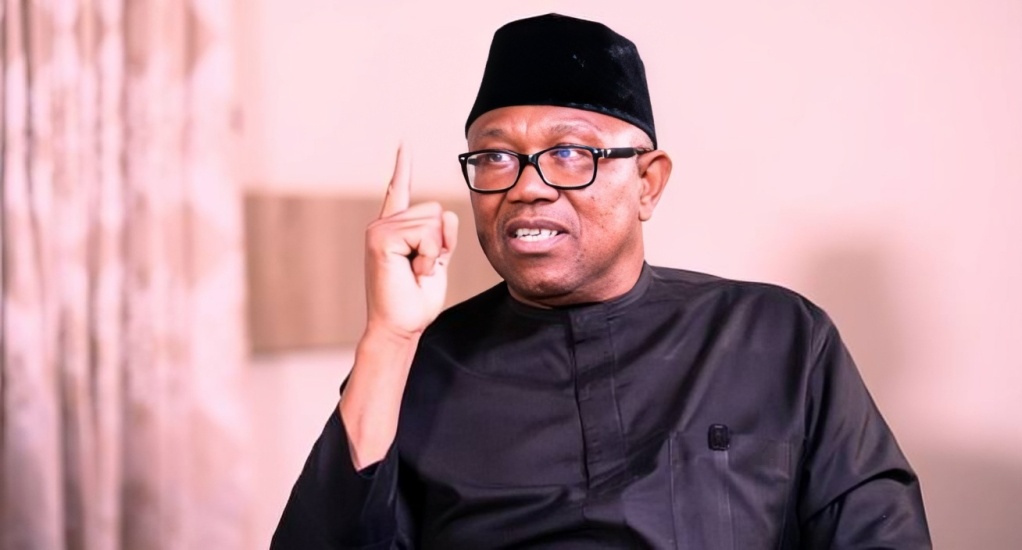
Stanley Nkwocha, media aide to Vice President Kashim Shettima, in his write-up titled “Did Peter Obi Negotiate Four Years for Ndigbo or for Himself?”, raised a question that deserves a response. His argument that Peter Obi would be negotiating for himself rather than for Ndigbo if he accepts a four-year presidential arrangement is a curious distortion of both history and political reality. What exactly is wrong with four years in office if those four years are used to fundamentally redirect Nigeria? Must an Igbo man first secure an eight-year guarantee before he is allowed to contest for the presidency? That logic is not only absurd; it is precisely the mentality that has kept the Igbo presidential aspiration perpetually trapped in the politics of “next time.” Nelson Mandela did not need eight years to lay the foundation for a new South Africa. The real measure of leadership is not the length of time spent in office but the quality of transformation achieved. If a president cannot make appreciable progress in four years, what evidence is there that he will suddenly become competent after eight? And if eight years is the magic number, Nigerians have every right to ask what those who have enjoyed eight years in office have actually done with it. Nigeria is still battling hunger, poverty, insecurity, unemployment and economic hardship. Four years is enough to demonstrate capacity. Eight years is enough to consolidate it. Forty years cannot rescue a country from leaders who lack the vision or competence to govern.
Peter Obi, unlike those who have spent decades perfecting the art of political postponement, has already demonstrated that he understands the urgency of Nigeria’s predicament. His support in the 2023 presidential election was not manufactured in a political laboratory. Millions of Nigerians, including a massive majority of voters in the South-East, voluntarily gave him their votes. They did not vote for him because he promised to occupy Aso Rock for eight years. They voted because they believed he could offer a different direction for Nigeria. If Obi has chosen to negotiate a four-year term as part of a broader political strategy, then he has every right to do so. An Igbo man becoming president, even for one term, would break a political barrier that has existed since independence. More importantly, it would give him the opportunity to prove his capacity before Nigerians. The notion that a four-year presidency is an insult to Ndigbo is political sophistry. If anything, the refusal to seize an available opportunity because it does not come with a guaranteed eight-year tenancy would be the greater disservice to the Igbo cause.
The attempt to dismiss Obi’s competence is equally unconvincing. Those who watched his interview with Seun Okinbaloye of Channels Television did not see a man without an understanding of Nigeria’s problems. They saw a politician who spoke in practical terms about production, human capital development, education, healthcare, infrastructure, security and the need to redirect public expenditure toward productive sectors. One may disagree with his methods or question his political strategy, but pretending that he has no grasp of what Nigeria needs is simply dishonest. Indeed, the more important question should be directed at those defending the status quo: after all the years of experience and all the promises of successive administrations, how much better off is the average Nigerian today? President Bola Tinubu has spent years in Nigerian politics and is now seeking another four-year term. What fundamental transformation has the ordinary Nigerian experienced so far? Nigerians are confronting a cost-of-living crisis, widespread hardship and deep economic anxiety. If eight years automatically produces good governance, then Nigeria should have become a model of prosperity long ago. Leadership is not an endurance contest. A bad government does not become good simply because it stays longer.
The argument that Ndigbo must continue waiting for a “perfect” eight-year opportunity is even more dangerous. Ndigbo have waited. They have negotiated. They have supported national coalitions. They have played the political game according to rules largely written by others. And what has been the result? Since 1999, the presidency has been occupied by leaders from the South-West, the North and the South-South, while the Igbo remain spectators in the presidential rotation. The South-West has produced Olusegun Obasanjo and Bola Tinubu. The North has produced Umaru Yar’Adua and Muhammadu Buhari. The South-South produced Goodluck Jonathan. Yet, whenever the Igbo question arises, the answer is invariably the same: wait, negotiate, build alliances and try again later. Later when? After another eight years? After another sixteen? Or after every other region has taken its turn twice? It is worth remembering that in the political realignment preceding the 1999 presidential election, Chief Ogbonnaya Onu, who had emerged as the presidential candidate of the APP, stepped aside for Olu Falae, who ultimately contested against Olusegun Obasanjo. The broader political consequences of that era shaped the Fourth Republic and the trajectory of the Igbo presidential quest. Since then, Ndigbo have continued to wait for the political class to “do the right thing.” The result is visible: the presidency remains elusive.
This is why Peter Obi must not be lectured into surrendering his political ambition in the name of a vague and endlessly postponed Igbo presidency. If he can build a coalition that gives him a realistic pathway to Aso Rock, he should pursue it. If the price of that coalition is a single term, then let Nigerians decide whether four years of competent leadership is preferable to eight years of misery. The argument should be about what Obi can achieve, not how long he is permitted to stay. The Igbo people do not need political gatekeepers to tell them when their aspirations are legitimate. They demonstrated their position in 2023 with their votes, and millions of Nigerians beyond the South-East also rallied around Obi. The task now is to build on that movement, expand it nationally and negotiate from strength. The South-East cannot continue to be told to wait while others occupy the presidency, consolidate their networks and then return to tell Ndigbo that their time has not yet come. If Peter Obi has found a political route to the presidency, he should take it. Because the real question is not whether he negotiated four years for himself or for Ndigbo. The real question is this: after decades of waiting, why should Ndigbo reject a legitimate opportunity to produce a president simply because the opportunity comes with four years instead of eight?