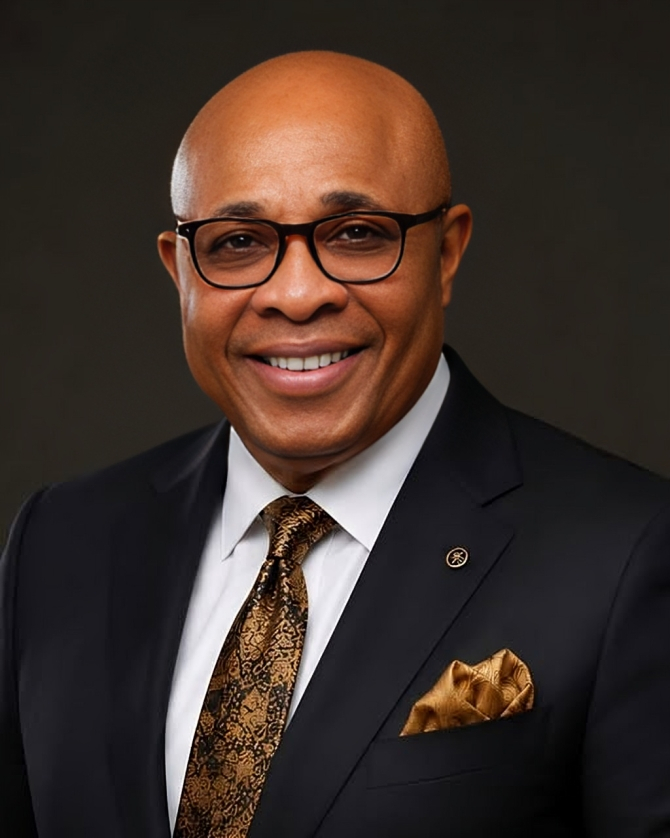
Some politicians contest elections. Others become part of the political memory of the places they seek to govern. Martin Agbaso belongs to the latter category. He has been around Imo politics long enough to understand its poetry and its profanity, its lofty promises and its recurring betrayals. He is not a political newcomer seeking relevance. He is among the men who gave Owerri zone political muscle when the struggle for power in Imo was at its fiercest.
He entered the arena with more than ambition. He came with charm, charisma, finesse and an instinctive understanding of the theatre of politics. Popularly known as Ochoudo—an Igbo appellation meaning one who seeks peace—Agbaso built a political identity around dialogue, accommodation and bridge-building. Beneath that calm disposition, however, lay an unwavering ambition to govern Imo State, an aspiration he has neither hidden nor abandoned.
Agbaso’s political story cannot be told without revisiting the extraordinary governorship crisis of 2007. On April 14, Imo people went to the polls, only for the election to be cancelled by INEC, leading to a rerun on April 28. Agbaso and APGA challenged the process, insisting the original election had produced a different outcome. The rerun eventually returned Ikedi Ohakim as governor, closing one political chapter while opening another that has lingered in the consciousness of many Imo people.
Around that episode grew allegations that the cancellation was politically motivated and that Maurice Iwu, then INEC chairman, influenced the eventual outcome in Ohakim’s favour. Whether accepted or disputed, those allegations became part of Imo’s political folklore. In the state’s politics, history seldom disappears; it merely waits for another season.
That enduring memory inevitably feeds today’s debate about succession after Governor Hope Uzodimma. What does equity truly require? When a zone has waited decades for its turn, should justice be measured only by chronology, or should it also acknowledge circumstances that disrupted genuine political aspirations?
Agbaso’s subsequent political journey also reveals remarkable consistency. From APGA to his association with Peter Obi’s political movement during the 2023 presidential election, and now his place within the NDC, a discernible thread runs through his choices. He has repeatedly aligned himself with platforms that resonate with the aspirations of many Igbo people and broader conversations about the future of the South-East. In an era when politicians frequently change parties for expediency, his trajectory reflects a political instinct shaped as much by conviction as by calculation.
Yet the case for Agbaso extends beyond history or political sentiment. It is anchored equally in experience. Few politicians understand the architecture of Imo politics as intimately as he does. He has witnessed the rise and collapse of alliances, experienced both the exhilaration of near-victory and the disappointment of defeat, and navigated the shifting currents of the state’s political evolution. Those experiences have endowed him with the strategic judgment, emotional intelligence and political depth that the office of governor demands.
This is where the Charter of Equity assumes greater significance, and where the Agbaso question becomes impossible to ignore. If the Charter is to be more than a slogan revived every election cycle, it must rest on justice, consistency and historical fairness. Owerri zone has waited patiently while power rotated elsewhere. As attention turns to 2027, the debate cannot be limited to producing just another candidate from the zone; it must also consider those whose pursuit of Douglas House was interrupted by circumstances beyond their control. Within that conversation, Martin Agbaso’s political journey deserves serious consideration.
For many across Owerri zone, therefore, 2027 represents more than another governorship election. It is an opportunity to close one of the longest-running chapters in Imo’s political history. The Agbaso question is no longer whether he possesses the experience, capacity or political stature to govern the state. Decades in public life have answered those questions. The real issue is whether Imo is prepared to bring closure to a political narrative that has endured for nearly two decades.
History does not always repeat itself, but it often revisits unfinished chapters. Martin Agbaso’s political journey is one of them. Whether 2027 becomes the moment that chapter is finally completed is a decision that now rests not with history, but with the people of Imo State.
“The events of 2007 transformed Agbaso into more than a politician who lost an election. They made him the symbol of an interrupted political journey. His supporters have remained convinced that a man who came within touching distance of Douglas House was denied the opportunity to fulfil what they believe was a legitimate democratic mandate”