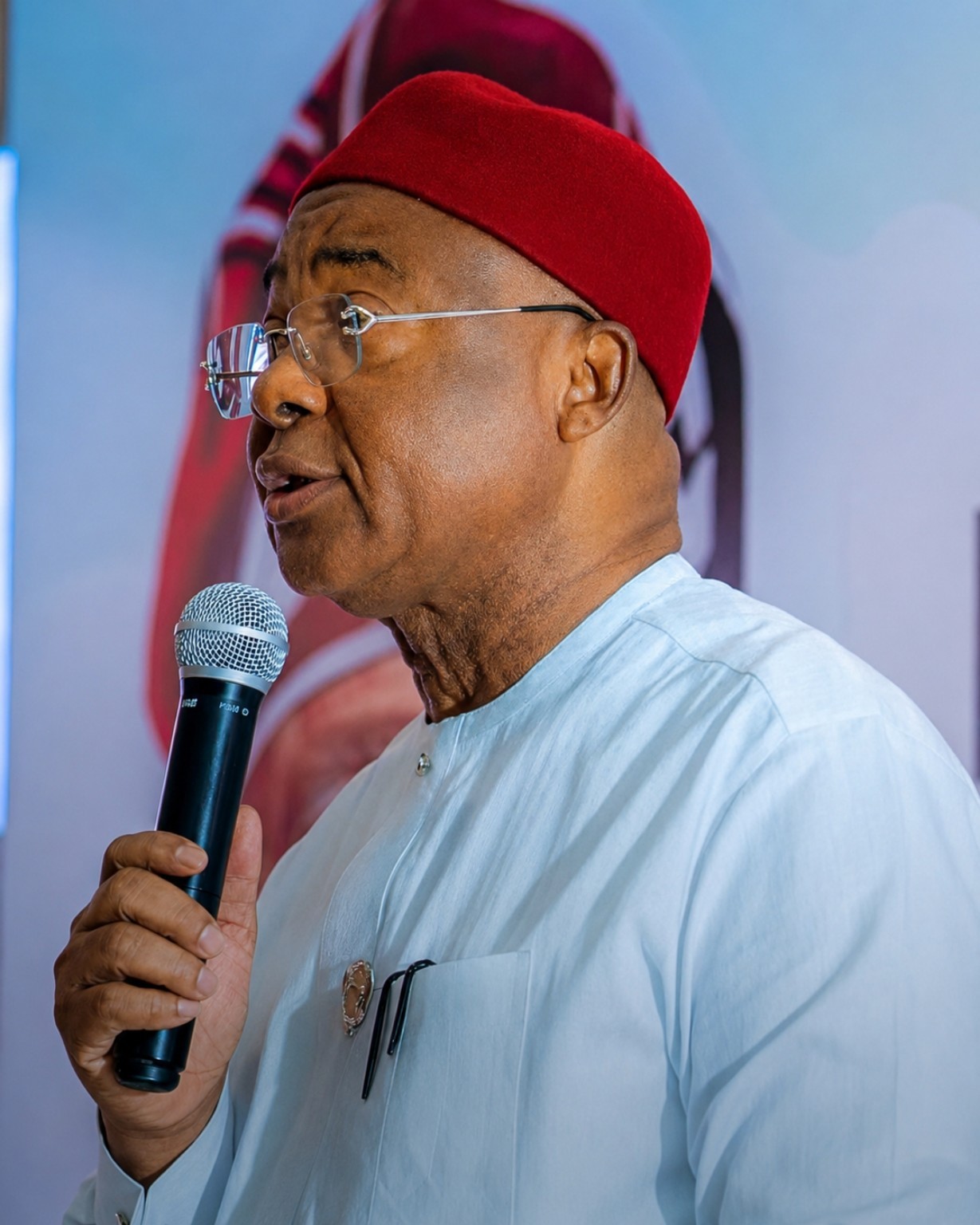
Succession politics is not charity. It is control. It is also fear. The man leaving power wants to know who will occupy the chair after him. More importantly, he wants to know who will not. He wants a successor strong enough to win, but not so independent that the successor becomes a political threat. He wants loyalty without weakness. He wants influence without appearing to dictate. Above all, he wants the political house he built to remain standing after he leaves it. That is the puzzle confronting Governor Hope Uzodimma as Imo moves towards 2027.
For now, there is little reason to believe Uzodimma has lost control of the chessboard. His grip on the APC structure, both in Imo and at the national level, remains substantial. His influence within the state remains formidable. His relationship with the political establishment in Abuja gives him another layer of political cover. There is therefore no obvious external force currently capable of frightening the governor into making a hurried succession choice. That matters. A governor under no immediate political pressure has the luxury of waiting. And waiting, in politics, is often power.
But control has a second side. It is the fear of what comes after. A successor can be a loyal ally today and an independent power centre tomorrow. Political children grow teeth. Some eventually bite the political father. That is why succession is rarely about finding the most popular candidate. It is about finding someone whose ambition can coexist with the interests of the man leaving office. The calculation is delicate. Choose a weak candidate and the opposition may defeat him. Choose a political heavyweight and he may inherit the mantle only to dismantle it after victory.
This is where Owerri Zone enters the equation. The Charter of Equity has given the zone its strongest political argument for 2027. After Orlu’s long dominance, the demand for rotation has become difficult to dismiss. Uzodimma has associated himself with the principle. Owerri Zone politicians have carried the message across the state. Alliances are being built. The political ground is being prepared. But beneath the obvious question lies another.Is the campaign merely about giving Owerri the governorship, or is it also creating the political environment in which Uzodimma can choose his own candidate — his anointed one — from Owerri Zone?
That distinction matters. Political movements sometimes build the road to a destination they do not control. Those demanding an Owerri Zone governor may believe they are narrowing Uzodimma’s options. They may actually be expanding them. Once the principle of Owerri’s turn becomes broadly accepted, the real question becomes more delicate. Should the APC stakeholders in Owerri Zone sit down, agree on a candidate and present their choice to the governor, or should Uzodimma himself decide whom he wants to support from the zone? The latter may well play out. Owerri may secure the right to produce the next governor, but that does not automatically settle who gets the governor’s backing.
And Uzodimma has never appeared obsessed with conventional political pedigree. His choices have sometimes gone beyond the familiar ranks of career politicians. His first deputy, Professor Placid Njoku, came from academia. His second-term deputy, Chinyere Ekomaru, also came from the academic world. Doris Uzoka-Anite moved from medicine and finance into government and eventually became a federal minister via him. None was a conventional, grassroots political heavyweight when brought into the political arena. The lesson is not that Uzodimma will necessarily choose another outsider as sucessor. However, nobody should assume that the loudest governorship and visible contender from Owerri Zone and within his party is automatically the governor’s preferred choice. Uzodimma has shown that he can surprise.
There is another reason to watch the succession closely. If Uzodimma eventually chooses a relatively unfamiliar figure from Owerri Zone, those who have spent months building the argument for Owerri’s turn could find themselves trapped by their own advocacy. How do you oppose an Owerri candidate after insisting that Owerri must produce the next governor? The political cost could be heavy. The governor could therefore satisfy the principle of equity while retaining considerable influence over the political structure carrying his choice. It would be a sophisticated succession strategy. Give Owerri the destination, but determine the passenger.
Yet there is danger in believing that control of the party automatically means control of the electorate. It does not. APC’s dominance in Imo is real. Uzodimma’s 2023 governorship victory demonstrated that. But the 2023 presidential election exposed another truth. Imo voters can behave differently when the political context changes. Peter Obi’s sweeping victory in the state showed that a national wave can puncture local assumptions and political calculations. The opposition may look weak today. Anything can change. An APC miscalculation, a national political realignment or an unpopular candidate could give the opposition the oxygen it currently lacks.
This is why Uzodimma’s succession puzzle is not simply about choosing a successor. It is about choosing one while there is still no serious external force compelling his hand. Control remains his greatest advantage. Fear of external forces remains his greatest potential complication. Thus far, neither appears to have forced the governor into a corner. He can wait. He can watch. He can test loyalties. He can measure popularity. He can read the political temperature across the three zones. And when he finally speaks, many who think they understand the script may discover that they have only been reading the stage directions.
The final choice, therefore, may not be the man currently standing closest to the governor. It may not be the loudest Owerri Zone politician in the APC in Imo. It may not even be the person whose supporters have already begun behaving as though victory is guaranteed. Uzodimma’s calculation will likely be colder: Who can win? Who can be trusted? Who can preserve the party structure? Who will not become an independent force against the political behemoth he leaves behind? That is the real succession question. In politics, the departing king does not merely ask who can wear the crown. He asks what happens after the crown changes hands.
Should the APC stakeholders in Owerri Zone sit down, agree on a candidate and present that choice to the governor, or should Uzodimma himself decide whom he wants to support from the zone? The latter may well play out. Owerri may secure the right to produce the next governor, but that does not automatically settle who gets the governor’s backing.