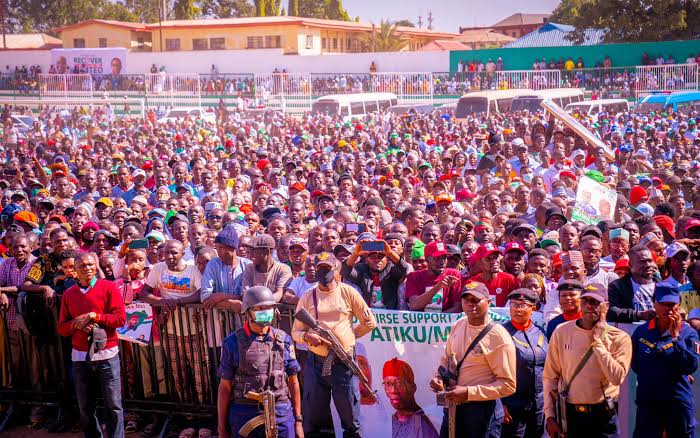
Campaigns for the January 16, 2027 Presidential and National Assembly elections in Imo State have increasingly degenerated into political mudslinging and personal attacks, with analysts lamenting what they described as a conspicuous absence of ideas and meaningful debate.
Rather than presenting detailed programmes and explaining how they intend to improve representation, legislation, constituency development, security and economic opportunities, candidates and their supporters have, in recent weeks, engaged in a war of words across WhatsApp and other social media platforms.
Three senatorial seats and 10 House of Representatives seats are up for grabs in the election, with major political parties, including the All Progressives Congress (APC), African Democratic Congress (ADC), Nigeria Democratic Congress (NDC), Peoples Democratic Party (PDP) and Action Peoples Party (APP), fielding candidates. But since the Independent National Electoral Commission (INEC) lifted the ban on campaign activities, political communication from some camps has been dominated by attacks on opponents rather than a serious contest of ideas.
Some candidates have reportedly engaged agents and supporters to fire salvos at political opponents on WhatsApp and other platforms, while some aspirants have themselves been quoted making scathing remarks considered inflammatory and out of tune with what should ordinarily be expected during an election campaign.
Political analyst, Mr Remigius Eke, said he had so far been unimpressed by the quality of the campaigns, arguing that candidates and political parties appeared to be repeating the mistakes of previous election cycles.
According to him, there is a conspicuous absence of fresh ideas, policy proposals and meaningful debate, as politicians appear more interested in attacking one another than telling voters why they deserve their votes.
Another political analyst, Mr Linus Okorie, was equally critical of the campaign so far.
“Yes, the ban has been lifted, but the intensity of the campaigns has been very poor. The debates are not there. There are no ideas. None of the candidates are showing any ideas,” he said.
Okorie, however, noted that the campaign season was still at an early stage and expressed optimism that the situation could change between now and December as candidates and parties intensify their activities.
He urged candidates to submit themselves to public debates, while calling on the media to create platforms where party flagbearers would be compelled to explain their programmes and offer concrete solutions to the problems confronting their constituencies.
Ironically, while the Senate and House of Representatives elections are the immediate political contests before Imo voters, public conversation in the state appears increasingly dominated by the November 2027 governorship election, which is still more than a year away.
The growing attention to the governorship race, analysts say, risks overshadowing the National Assembly campaigns and the issues that should define the January election.
With 13 National Assembly seats at stake, the candidates and political parties face the immediate challenge of moving the campaign away from WhatsApp warfare, inflammatory rhetoric and political name-calling and turning it into a genuine contest of ideas, competence and vision.