Women’s education is not merely an investment in an individual woman; it is an investment in the family, the community and the future of society. The family is the first school of every human being, and the woman, particularly in many African societies, often plays a central role in nurturing, educating and shaping the character of children. An educated woman is better equipped to understand health, nutrition, child development, financial management, moral values and the changing demands of contemporary society. UNESCO notes that maternal education has significant intergenerational effects, influencing children’s health, nutrition, language development and educational outcomes. The philosopher and educator John Dewey famously observed that “education is not preparation for life; education is life itself.” This becomes particularly meaningful when applied to women, because the knowledge acquired by a woman does not remain confined to her classroom, profession or personal life; it is often transmitted directly into the home. Likewise, the ancient philosopher Aristotle regarded the proper formation of the young as central to the wellbeing of the community. If the family is the first environment in which character is formed, then educating the woman who plays a major role in that environment is an essential investment in human development.
The importance of women’s education becomes even clearer when we examine its effect on children. A mother who can read and write, understand basic health information, communicate effectively with teachers, assist with schoolwork and make informed decisions is in a stronger position to raise confident and responsible children. Research cited by the World Bank shows that educated mothers tend to have healthier children, possess greater knowledge of healthcare and nutrition, and are more likely to invest resources in their children’s wellbeing. The World Bank has also reported that maternal schooling can increase the educational attainment of children, particularly daughters, and that in many settings the mother’s education has a substantial influence on whether and how far her children go in school. This demonstrates that educating a woman can create a powerful intergenerational chain: the educated girl becomes an educated mother; the educated mother raises children who are more likely to value education; and those children subsequently contribute to a more educated society. In this sense, the woman is not simply a beneficiary of education—she becomes an important carrier of education from one generation to another. As Nelson Mandela famously stated, “Education is the most powerful weapon which you can use to change the world.” When that weapon is placed in the hands of women, its influence can reach an entire household and extend into generations yet unborn.
Women’s education is also essential for building economically stable and socially responsible families. Education increases a woman’s capacity to obtain employment, establish businesses, manage resources and participate meaningfully in economic decision-making. The World Bank reports that educating girls and women contributes to employment, poverty reduction and economic growth, while also improving outcomes in health, household welfare and decision-making. An educated woman is more likely to understand the importance of saving, budgeting, investment and responsible financial planning. More importantly, education gives women greater confidence to participate in decisions concerning the family rather than remaining passive recipients of decisions made by others. The philosopher Mary Wollstonecraft argued in A Vindication of the Rights of Woman that women should be educated as rational beings rather than being confined to a narrow social role. Her argument remains relevant today: education should not prepare women merely to serve the household but should equip them to become intellectually capable partners in building the household. An educated wife and mother can contribute ideas, income, wisdom and leadership to the family while also nurturing children who understand that both men and women have valuable roles to play in society. Consequently, investment in women’s education should not be viewed as a challenge to the traditional family; properly understood, it is a means of strengthening the intellectual, economic and moral foundations of that family.
Ultimately, the education of women should be regarded as one of the most strategic investments any family, community or nation can make. A society that educates only its men while neglecting its women effectively educates only part of itself. UNESCO emphasises that education can expand women’s agency, strengthen their ability to know and exercise their rights, and contribute to greater equality and social development. The philosopher Plato, in discussing education and the organisation of society, recognised that the development of human potential should not be unnecessarily restricted by gender. In the family, therefore, an educated woman should be seen not merely as a wife or mother but as an intellectual resource, a moral influence, an economic partner, a teacher and a builder of future generations. When a man is educated, an individual is empowered; when a woman is educated, a family is transformed; and when families are transformed, society is renewed. The future of every nation is ultimately connected to the quality of its families, and the quality of those families is profoundly influenced by the knowledge, values and capacity of the women within them. Educating women is therefore not simply a matter of gender equality—it is a matter of family survival, national development and the creation of a wiser generation.
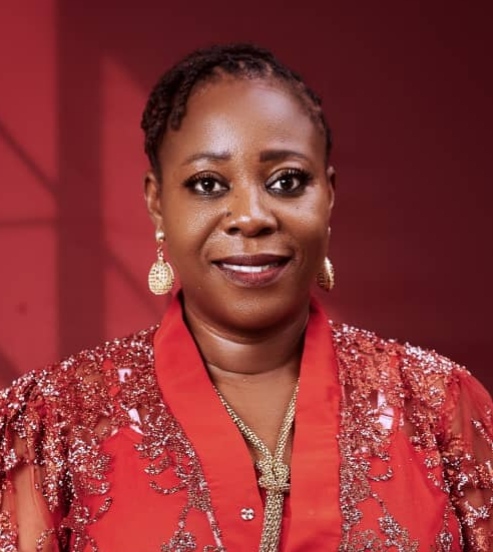
Mrs. Precious C. Onyekwere
Is a staff of Alvan Ikoku Federal University of Education Owerri, Imo State