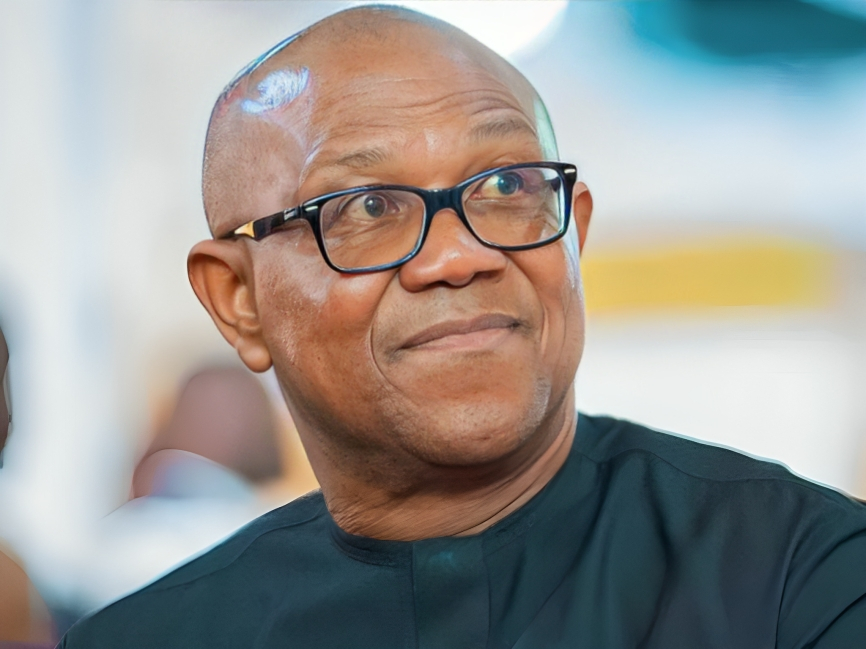
Peter Obi has spent about a decade asking Nigerians to mistake his opinion of himself for a verdict on his fitness to govern. Give him a microphone and you will soon hear the familiar stories about money he saved as governor and expenses he personally supervised. His admirers are invited to marvel at his attention to the smallest purchase until governing an entire state begins to resemble one prolonged argument over a receipt. And yet these self-absorbed profiles are meant to establish that Nigeria’s redemption depends on a man drunk on his own supposed righteousness. After eight years governing Anambra, he owes the country rather more than that.
His supporters demand that Bola Tinubu answer for government policy and its consequences. That is fair enough. But when their own candidate comes forward, we are expected to accept his recollections as evidence, his intentions as achievements, and his mere desires as qualification. How much longer must Nigerians humour this arrangement?
If the old adage holds true that you show me your friends and I will tell you who you are, then his chosen alliances quickly shatter the illusion of the saint.
In 2022, Obi called for dismantling the structure of criminality, condemning a political order sustained by connections, ethnicity, and religion. His own years within that establishment somehow escaped the indictment. Everyone else had a political history, but Saint Obi apparently had a conversion story.
Today, Rabiu Kwankwaso says they have signed an agreement limiting Obi to one presidential term before power returns to the North. The grand departure from the old politics has produced a written bargain over whose region takes the presidency next, and this deal was negotiated with another veteran of the establishment. Nigerians who thought they were being summoned to overthrow that order might reasonably wonder when the assignment became finding Obi a comfortable place inside it. What became of the sermon? Did the establishment acquire better habits or did it simply become more receptive to his ambition?
Obi cannot spend one election denouncing the political class in sweeping moral terms and then expect the next election to erase the meaning of his words. He owes an explanation of what changed. He cannot demand applause for condemning these arrangements and applause again for embracing them. His standards remain severe only until they inconvenience him.
His celebrated savings deserve the same unsentimental treatment. Obi says he left substantial cash and investments. However, his successor’s administration publicly and categorically stated that it inherited one hundred and eighty-five billion naira in liabilities. Yet we are expected to discuss the handover as though his version cleared all reasonable doubt. Any sane person knows that a disputed account does not become an audited truth simply because its chief beneficiary repeats it at every opportunity.
Show Nigerians the complete account and the grand illusion falls apart. Even if we accept the numbers, the more damning question remains unaddressed. We must ask what the money was saved for, at whose expense it was kept, and which competing needs were starved to secure it. Anambra’s treasury was not a personal investment portfolio because it belonged to its people. Obi was merely an agent under the law, explicitly mandated to deploy those resources for their immediate survival and benefit. To deliberately hoard billions in cash while vital public infrastructure decayed is not financial prudence, but a direct breach of trust. He must be forced to explain why burying public funds in a bank vault served the public interest better than saving human lives.
The indictment is written in the thirteen agonizing months his administration allowed a doctors’ strike to paralyze the state. A government that looks away while its own health system suffers a prolonged, year-long collapse is not merely incompetent, but also morally bankrupt. Sick and dying patients had urgent medical needs that could not politely wait for the governor’s personal financial reputation to mature in a high-yield account. What comfort was a glowing bank balance to an Anambrarian who lost a loved one because the hospitals were locked? In the final analysis, this celebrated fiscal restraint looks less like governance and more like a cruel, calculated hoarding of wealth built on the backs of the vulnerable.
The poverty figures puncture Obi’s celebration of his own financial genius. National Bureau of Statistics estimates put Anambra’s poverty rate at forty-one point four per cent in 2003 and 2004, before he became governor, and 53.7 per cent in 2009 and 2010, during his administration. That is an increase of 12.3 percentage points between the surveys. By the latter measurement, more than half the population of famously industrious Anambra lived in poverty. How does that grim reality fit his glowing account of stewardship?
Calling the unspent balance prudence answers none of these systemic failures. A governor cannot turn a bank balance into a trophy and ask people struggling to obtain essential services to admire it. Nor does his cultivated image of personal modesty settle questions about transparency. The Pandora Papers reporting raised serious allegations concerning offshore holdings and asset disclosure, which Obi denied. Those questions require documentary answers rather than defensive rhetoric. His preferred seat on an aircraft contributes nothing to the explanation. Nigerians should be tired of being offered a story about a modest purchase when the subject is accountability.
Even the tales intended to establish his administrative genius expose deep weaknesses in the argument. Take the account of his personally following drivers to petrol stations to prevent inflated bills. His admirers applaud when they should be asking why the administration needed the governor at the pump. Who checked consumption when he travelled? What happened to the officials paid to prevent fraud, and what system ensured that dishonesty carried consequences? A governor has finite hours and responsibilities that cannot be delegated to a petrol attendant. If every honest transaction depended on Obi’s personal presence, his administration had a management problem. Making him president would give that problem a much larger territory.
His record on local democracy raises another awkward question. Anambra held its first local government elections since 1998 in January 2014, just as his governorship approached its end. This suspicious eleventh-hour exercise is recognised in the Nigerian context as a calculated political ambush for the incoming administration rather than a triumph for grass-roots democracy.
Elected local councils were entirely absent through most of his tenure. The man now promising democratic renewal should explain why such a basic constitutional obligation spent so many years waiting under his government.
On security, the questions become significantly graver. When Arise Television’s Rufai Oseni raised Special Anti-Robbery Squad violations during their interview, Obi callously dismissed the atrocities by replying that “all those things they are talking never existed”, before pivoting immediately to the necessity of decisive action. But the complaints existed, the testimony exists, and the bodies recovered from the Ezu River were horribly real. Dismissing that history so casually is an affront to the people demanding answers.
Consider the case of Bonaventure Mokwe, the businessman whose Upper Class Hotel was demolished by the Anambra government in 2013. Mokwe alleged that his brother Gregory’s political conflict with Obi lay behind his treatment. He said he had been framed. His account raises an ugly question about the governor’s celebrated decisiveness, forcing us to ask whether the machinery of government was being used to settle a personal score.
The authorities justified the operation by reporting the discovery of human remains and weapons at the hotel. Mokwe subsequently alleged detention and torture at Awkuzu SARS. His former hotel manager, Justin Nwankwo, told the judicial panel that officers detained him for eighty-one days, burned him with an electric iron, and injured his genitals while trying to force him to implicate his employer. If the evidence was sound, we must ask why, according to Nwankwo’s testimony, officers needed to torture him into supplying an incriminating account. Obi’s lawyer challenged Mokwe’s petition because related proceedings were already before the courts, but that legalistic objection answered none of the public questions.
The Ezu River discovery adds another grim chapter to this unexamined tenure. In January 2013, dozens of decomposing bodies were found floating at Amansea. Obi offered five million naira for information and the Senate ordered an investigation, but the public is still waiting for justice. While this gruesome discovery does not establish who killed those people or connect their deaths directly to Mokwe’s case, it does establish a horror that no honest account of the period can wish away. We must demand to know what answers those investigations produced and what real accountability followed. Each case demands a ruthless evaluation of the evidence because Obi cannot collect the political credit for security while brushing aside the very people whose lived experiences complicate his tardy narrative. A man who claims to remember every small expense he ever supervised should understand why Nigerians expect a fuller account when the subject is human life.
His broader claim to exceptional leadership also faces a structural comparison that he cannot resolve through trivial anecdotes. Look at the generation of leaders Bola Tinubu recruited and entrusted with consequential work. Babatunde Fashola served as his chief of staff, succeeded him as governor, and later became a federal minister. Yemi Osinbajo served in his cabinet as Lagos attorney-general before ascending to the vice-presidency. Rauf Aregbesola moved from the Lagos works portfolio to the Osun governorship and then to the federal cabinet. These careers give Nigerians something concrete to examine when Tinubu’s capacity to recognise and develop talent is discussed.
Lai Mohammed, Tinubu’s first-term chief of staff, became information minister under Muhammadu Buhari. Dele Alake carried experience from Lagos into federal responsibility for solid minerals, while Wale Edun went from Lagos finance commissioner to federal finance minister. Yemi Cardoso, formerly responsible for economic planning and budget in Lagos, became Central Bank governor. Add Ben Akabueze, whom Tinubu appointed commissioner for economic planning and budget in January 2007. He continued under Fashola and later became director-general of the Budget Office of the Federation under Buhari. That progression shows expertise surviving a change of governor and finding application at the highest national level.
Tinubu left the Lagos governorship in 2007 and became president sixteen years later, yet his influence and important relationships survived that massive interval without his occupying executive office. The attraction of an immediate appointment scarcely explains such durability because his judgement, organisation, and political vision gave people reasons to keep working with him far beyond the tenure that brought them together. Some later disagreed with him after they developed the stature to do so, which is to be expected because leadership that produces truly capable people will also produce people with ambitions of their own.
Where is Obi’s comparable account of institutional legacy? The temporary enthusiasm of 2023 cannot answer that question indefinitely. He received an extraordinary opportunity to turn public frustration into an organisation capable of enduring beyond an election cycle. Yet among the Labour Party legislators who moved to the All Progressives Congress in December 2024, barely a year after the elections, were Donatus Mathew, Chinedu Okere, and Bassey Akiba. Obi’s own history of moving between political parties hardly supplies a compelling example of organisational commitment. Whatever those lawmakers’ individual reasons, their swift departures demand more from his leadership than another predictable complaint about corrupt Nigerian politicians. Holding a movement together is the actual work of a leader. Establishing procedures, resolving internal disputes, and giving people reasons to remain committed test the very management abilities he claims to possess. He cannot claim the public enthusiasm as proof of his personal greatness while assigning every organizational failure to somebody else.
On economic policy, he must also answer for his own contradictory words. In January 2023, Obi promised the immediate removal of the petrol subsidy, but after Tinubu actually removed it, he argued that he would have handled the process differently. Let him show the precise costs, the timetable, and the administrative means by which his approach would have protected households while ending the arrangement he condemned. Having promised immediate action himself, he owes Nigerians more than the vague assurance that his version would have hurt less.
Tinubu has had to make agonizing decisions whose consequences people experience directly, and the burden of turning reform into household relief remains his to carry. But the World Bank’s April 2026 Nigeria Development Update records progress in economic stability alongside continuing pressure. Nigerians have an actual course of government to assess, challenge, and improve, which means Obi must demonstrate how his alternative would perform better under the exact same pressures.
He has enjoyed the easier assignment for far too long by describing the country everyone wants and allowing admirers to assume that wanting it proves he can deliver it. His experience in office should have cured him of that conceit. Eight years governing a state ought to have produced a case that can withstand questions about public money, the treatment of citizens, and the institutions developed to carry the work forward. Those questions cannot be shouted down by noisy admirers or smothered with another story about personal thrift. Peter Obi wants Nigerians to entrust him with their future, so he must first give a convincing account of what he did with the authority they already entrusted to him. The presidency is far too consequential a prize to award a man merely for speaking so well of himself.
Nkemjika writes from Enugu